
Solar for Your Home
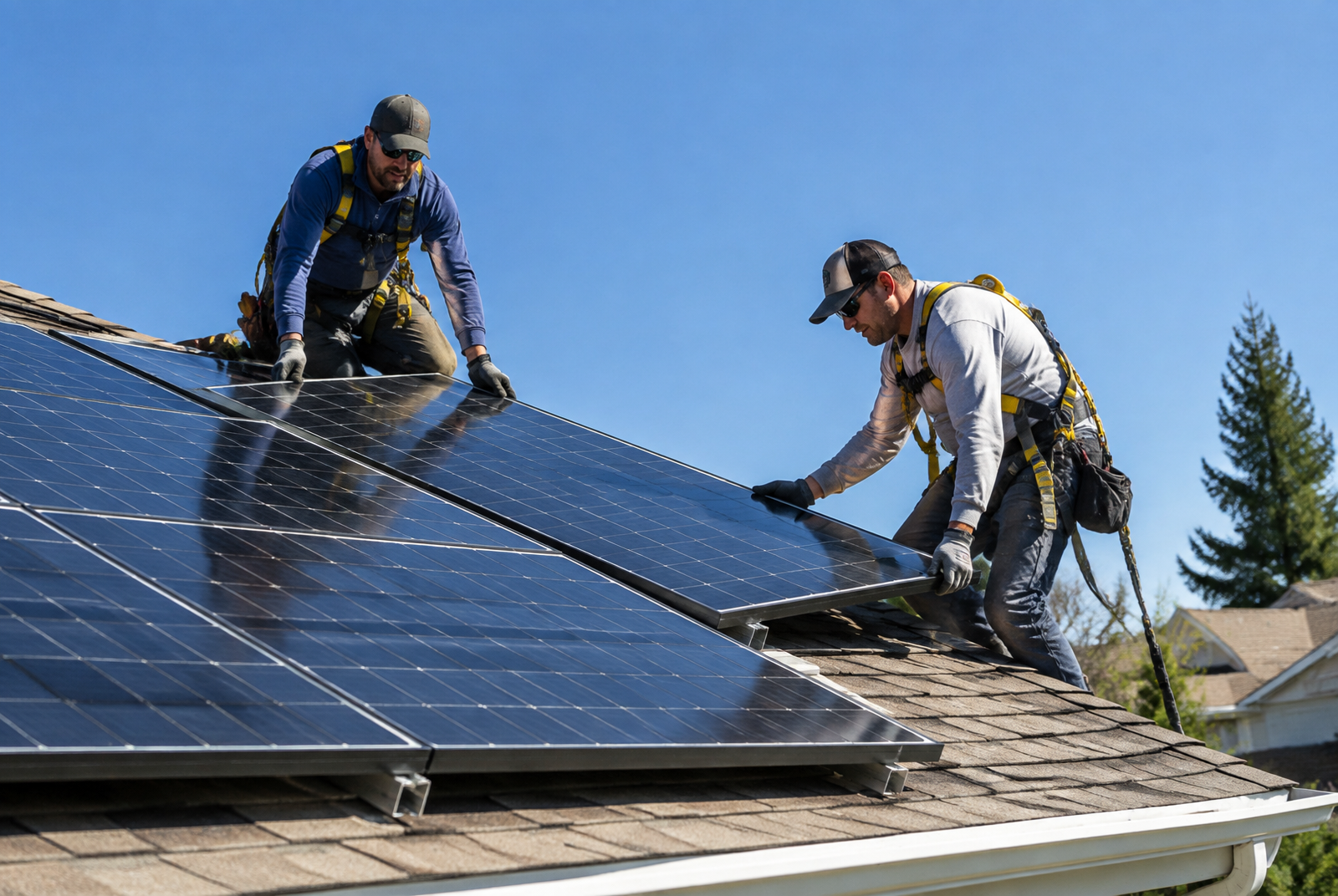
Solar panel installation. Answer a few questions about your roof and your power bill and we'll help you reach solar pros who work your area.
Request solar quotes
A few quick questions, and you can stop at any point.
Prefer to speak with someone now?Call (888) 334-6072
- No obligation to hire
- You decide whether to proceed
- Your information is used to help with the request you submitted
- No account required
Hire Best Pros helps connect you with professionals who handle this type of work. We don't perform the work ourselves.
What decides whether solar makes sense
- How much electricity you use and what you pay for it
- Roof condition, age, angle and shading
- Local rules, incentives and how excess power is credited
- Whether you buy, finance, lease or sign a purchase agreement
Start with the roof
If the roof has under ten years of life left, it is usually cheaper to replace it before panels go on than to pay for removal and reinstallation later. A solar company should raise this before quoting.
Compare ownership options carefully
Buying, financing, leasing and power purchase agreements can look similar in monthly terms but differ in incentives, ownership and what happens when you sell the house. Ask for each in writing.
How hiring through Hire Best Pros works
- Tell Hire Best Pros what you need, in plain language.
- We help determine which type of professional handles it.
- The next step is either a call or a short request form.
- Nothing happens until you choose to continue.

How it works
- STEP 01
Tell us what you need
Tell us about the project or problem.
- STEP 02
Billy helps find the right path
Hire Best Pros identifies the relevant service and the best available way to connect.
- STEP 03
Take the next step
Depending on the service, you can call a professional, submit a short request, or continue to a provider that offers what you're looking for.
Frequently asked questions
How much does home solar cost?
It varies widely with system size, roof complexity, equipment and local incentives, so a real quote needs your roof and your usage. Ask for the price before and after any incentives, and the total if financed.
Do solar panels work on a shaded roof?
Partial shade reduces output rather than stopping it, and equipment choices can limit the loss. Heavy shade through most of the day usually makes a system hard to justify.
What maintenance do solar panels need?
Very little day to day. Most owners monitor output, keep panels reasonably clear of debris, and have the system inspected if production drops.
What happens to solar panels if I sell the house?
An owned system normally transfers with the property, while a lease or purchase agreement usually has to be transferred or bought out. Read those terms before signing.
Related services


Solar for Your Home
Solar panel installation. Answer a few questions about your roof and your power bill and we'll help you reach solar pros who work your area.