
Hail damage to a roof
What hail actually does to different roofing materials, how damage is assessed after a storm, and how to approach contractors who show up at the door.
By Elijah Canfield, Founder, Hire Best Pros · Updated August 26, 2026
Elijah Canfield is the founder of Hire Best Pros. He writes and edits the site's consumer guides, with a focus on how home service and moving projects are priced, scoped and compared.
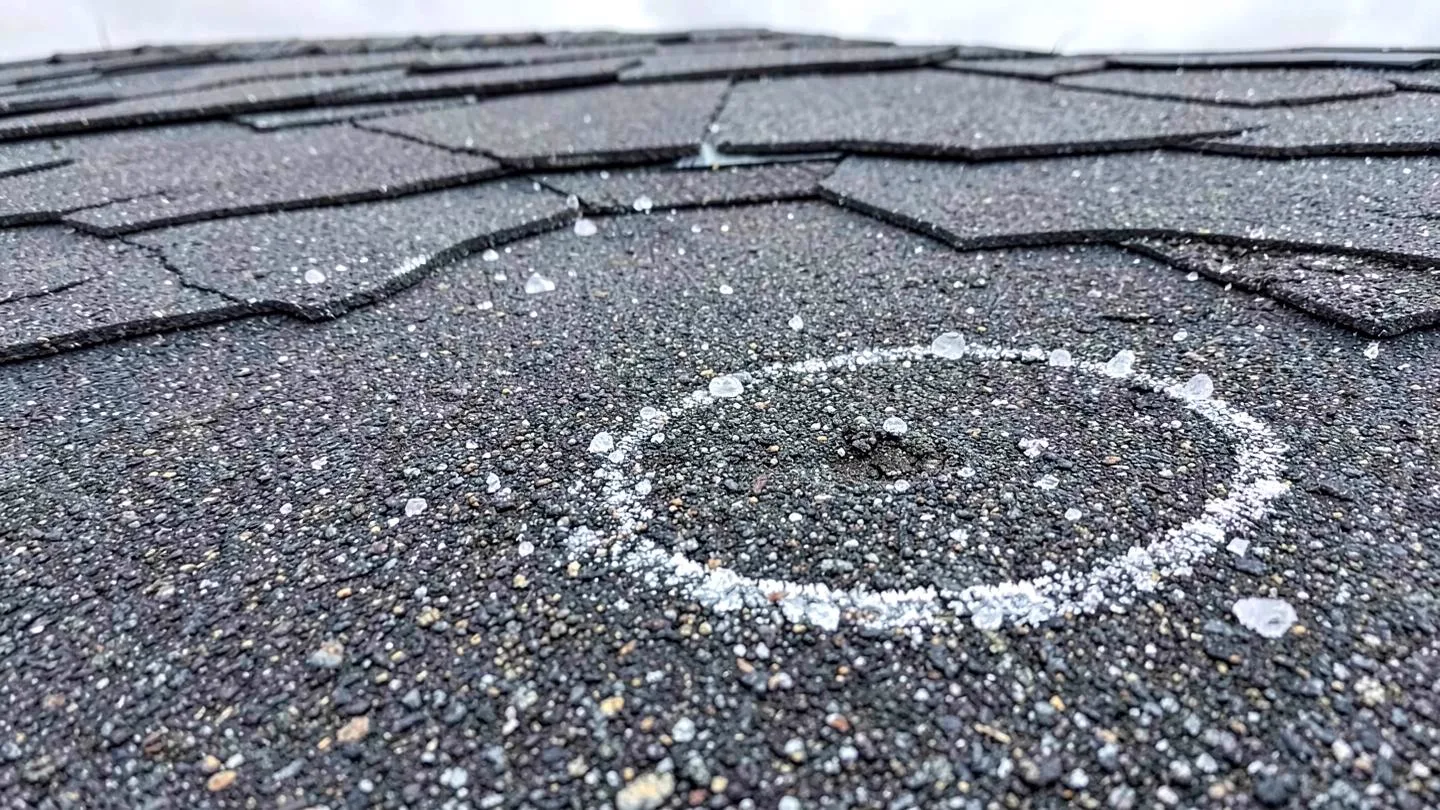
Hail damage is often not visible from the ground. On asphalt shingles it shows as bruised spots where granules are knocked away and the mat is soft, and it also shows on soft metal surfaces such as gutters, vents and flashing. Have the roof assessed after a significant hail event, document everything, notify your insurer within the policy timeframe, and be careful with unsolicited door to door offers.
What hail damage looks like
- Round bruises on asphalt shingles where granules are missing and the surface feels soft
- Granule accumulation at downspout outlets
- Dents on gutters, downspouts, vents, flashing and metal roof panels
- Cracked or shattered tiles and slate
- Damage to window screens, siding, air conditioner fins and other soft surfaces, which supports the timeline
After the storm
- Photograph the roof from the ground and photograph damage to soft metal and screens
- Note the date of the storm
- Have a roofer inspect the roof surface rather than climbing up yourself
- Report to your insurer within the time your policy requires
Want the roof inspected after a storm?
Find roofing helpStorm chasers and door knockers
Widespread hail brings out out of area crews. Be cautious with anyone who asks you to sign before an adjuster has been out, who offers to cover your deductible, or who cannot give you a local address and a licence or registration you can check. There is nothing wrong with a company that markets after a storm, but you should still be able to verify who they are and find them next year.
Repair, replacement and the claim
Whether a hail damaged roof is repaired or replaced depends on the density of impacts, the age and condition of the roof and what your policy covers. Ask the roofer to document the damage in a way the adjuster can follow, and get the scope in writing before work begins.
Common questions
- Can I see hail damage from the ground?
- Sometimes, and dented gutters or metal vents are a good clue, but bruising on shingles usually needs a closer look by someone who can safely get up there.
- Should I file a claim for every hail storm?
- Have the roof assessed first. A documented inspection tells you whether there is real damage worth reporting, which is a better basis for the decision than the storm alone.