
What to do about a leaky roof
How to limit damage from an active roof leak, why the stain is rarely below the hole, and what a roofer will look for when they investigate.
By Elijah Canfield, Founder, Hire Best Pros · Updated August 26, 2026
Elijah Canfield is the founder of Hire Best Pros. He writes and edits the site's consumer guides, with a focus on how home service and moving projects are priced, scoped and compared.
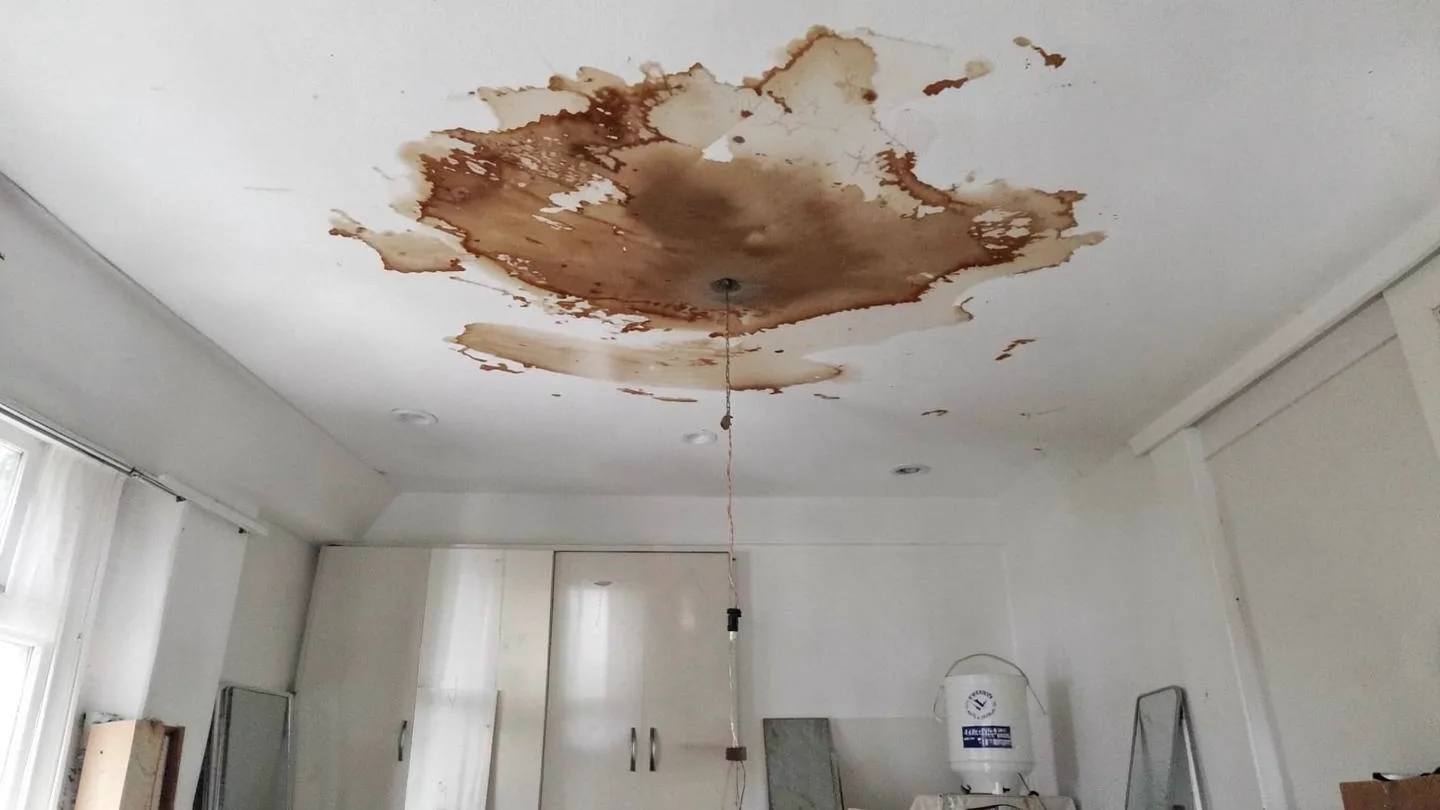
Protect the inside first: move belongings, contain the water, and relieve a bulging ceiling from a safe position so it drains in one place instead of collapsing. Photograph everything for insurance. Then have a roofer trace the source, because water usually travels along decking and rafters before it appears, so the stain is rarely directly under the entry point.
Key points
- Contain and document first, then diagnose.
- Most leaks start at flashing, penetrations and valleys rather than in the middle of a field of shingles.
- Do not go onto a wet, steep or storm damaged roof.
First, limit the damage
- Move furniture and electronics and lift rugs out of the area
- Catch water in a container and put a towel in it to stop splashing
- If a ceiling is bulging, relieve it at the low point from a safe position so it drains in one spot
- Turn off power to affected circuits if water is near fixtures or outlets
- Photograph the damage before cleaning up
Where roof leaks usually start
- Flashing at chimneys, walls, skylights and valleys
- Around plumbing vents and other penetrations
- Damaged, lifted or missing shingles after wind
- Ice dams at the eaves in cold climates
- Clogged gutters that let water back up under the shingle edge
Need a roofer to find the source?
Find roofing helpWhat a roofer will do
A good investigation looks at the attic side as well as the roof surface, because staining and daylight inside often locate the entry point faster than walking the roof. From there the recommendation should be specific: this flashing, this valley, this section of decking, with an explanation of why a patch will or will not hold.
Insurance and documentation
- Keep photographs, dated notes and receipts for temporary protection
- Report storm related damage promptly, since policies have notice requirements
- Get the repair scope in writing before work starts
Common questions
- Can I tarp the roof myself?
- Only from a safe position, and not in wind, rain or on a steep or damaged roof. Emergency tarping is a service many roofing companies provide, and it is safer to hand it over.
- Does one leak mean I need a new roof?
- Not necessarily. A single flashing failure on an otherwise sound roof is a repair. Repeated leaks in different places on an older roof are a different conversation, covered in our guide on repair or replacement.