
What a roof inspection actually covers
Why roof inspections belong to professionals, what a real inspection covers beyond shingles, and the monthly checks you can safely do without a ladder.
By Elijah Canfield, Founder, Hire Best Pros · Updated August 26, 2026
Elijah Canfield is the founder of Hire Best Pros. He writes and edits the site's consumer guides, with a focus on how home service and moving projects are priced, scoped and compared.
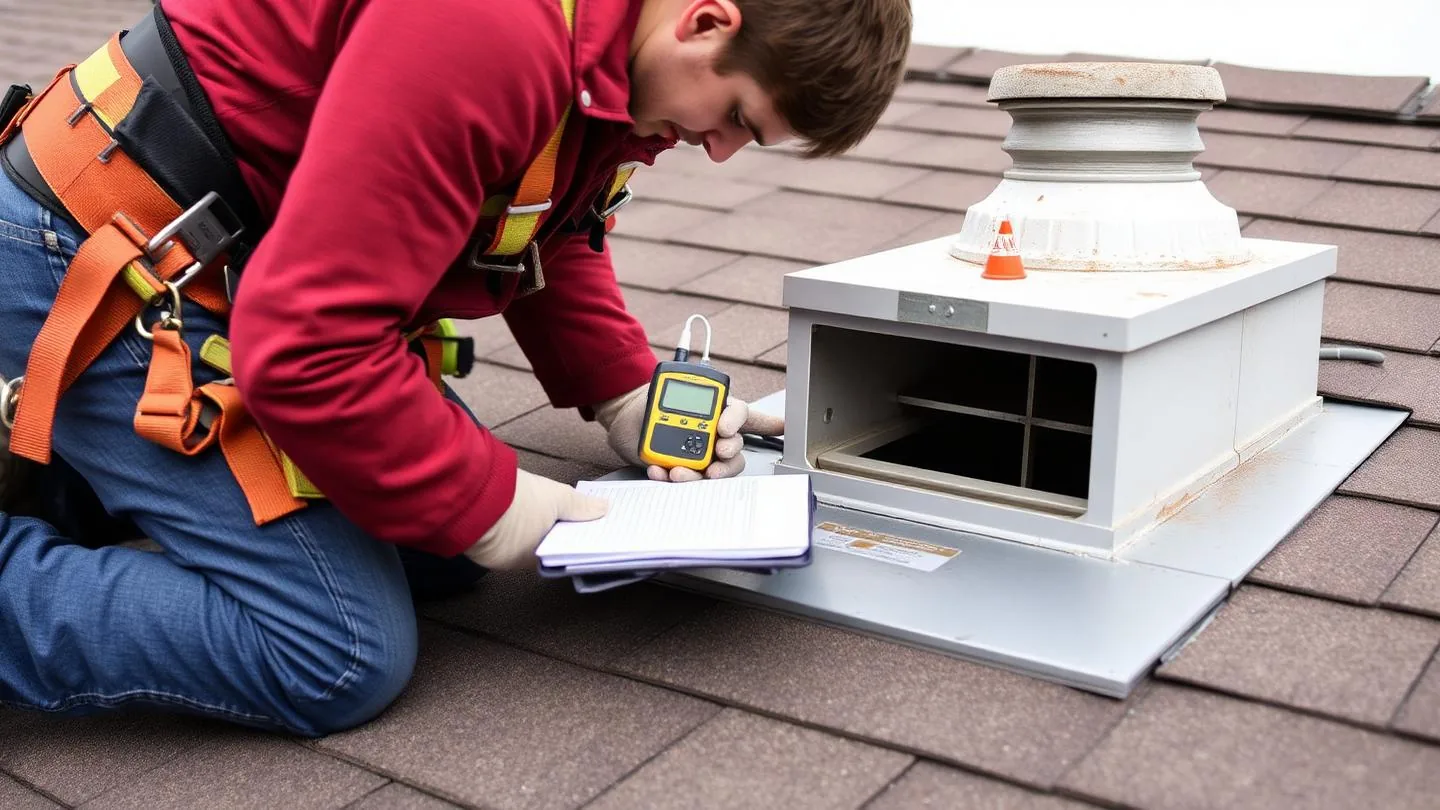
A professional roof inspection covers far more than the shingle surface. It looks at flashing, penetrations, valleys, the drip edge, ventilation, gutters and the attic underside for moisture and daylight. Homeowners can do useful monthly checks from the ground and from inside the attic, but walking a roof is where most homeowner injuries in this category happen.
Key points
- Most leaks start at a transition or penetration, not in the middle of a field of shingles.
- The attic tells you more than the roof surface does.
- Binoculars from the ground are a legitimate inspection tool.
What a professional inspection covers
- Flashing at chimneys, walls, skylights and vents
- Valleys, ridge and hip lines, and the drip edge
- Shingle condition: lifting, curling, granule loss and prior repairs
- Sealant and boot condition at every penetration
- Ventilation balance between intake and exhaust
- Gutters, downspouts and where water actually lands
- Attic underside for staining, damp insulation, mold and daylight
The monthly check you can safely do
Walk the perimeter with binoculars after any significant weather. Look for missing or displaced shingles, a shiny patch where granules washed off, a sagging line along the ridge or gutter, and debris piling in valleys.
Then go into the attic with a flashlight on a bright day. Turn the light off and look for daylight at the roof plane, then look for dark staining on the sheathing and any insulation that feels damp.
Found something you cannot identify?
Find roofing helpWhy walking your own roof is a poor trade
Roof surfaces are slick with dew, granules act like ball bearings underfoot, and a step in the wrong spot on aged decking can go through. Professionals carry fall protection and know how to move on a given material.
There is also a diagnostic reason. Untrained walking damages shingles and can create the leak you were looking for.
When to schedule one
- After hail, high wind or a storm that brought down branches
- Before buying or selling a home
- Before an insurance renewal if the roof is aging
- Once a year on any roof past the midpoint of its expected life
- Any time you see an interior stain, even a small one
Common questions
- How much does a roof inspection cost?
- Pricing varies by market and by roof size, pitch and access, and some roofing companies inspect at no charge when you are considering repair or replacement work. Independent inspectors typically charge a flat fee and provide a written report. Ask up front what you receive: a verbal opinion, a written report, photos, or a documented condition assessment.
- What should I receive after the inspection?
- Ask for a written report with photos of any problem areas, the condition of shingles or panels, flashing, penetrations, ventilation and gutters, notes on the attic if it was accessed, and a clear statement of what needs attention now versus what to monitor. That documentation is useful for insurance, for a sale and for comparing repair quotes later.
- Should I get an inspection before buying or selling a home?
- It is worth considering in both cases. A buyer learns whether a major expense is coming and can plan for it. A seller learns what a buyer inspection is likely to find and can address it or price accordingly. A general home inspection is broader and does not always include a close examination of the roof surface.
- How often should a roof be inspected?
- A reasonable habit is a professional look every couple of years for a newer roof, annually as the roof ages, and after any significant storm, hail or high wind event. Between visits, do the ground level check yourself and look in the attic after heavy rain. Problems found early are repairs; problems found late are replacements.