
How to choose interior paint
How paint quality tiers, sheens and primers actually differ, how to test color properly, and what to specify so a painter's quote is comparable.
By Elijah Canfield, Founder, Hire Best Pros · Updated September 9, 2026
Elijah Canfield is the founder of Hire Best Pros. He writes and edits the site's consumer guides, with a focus on how home service and moving projects are priced, scoped and compared.
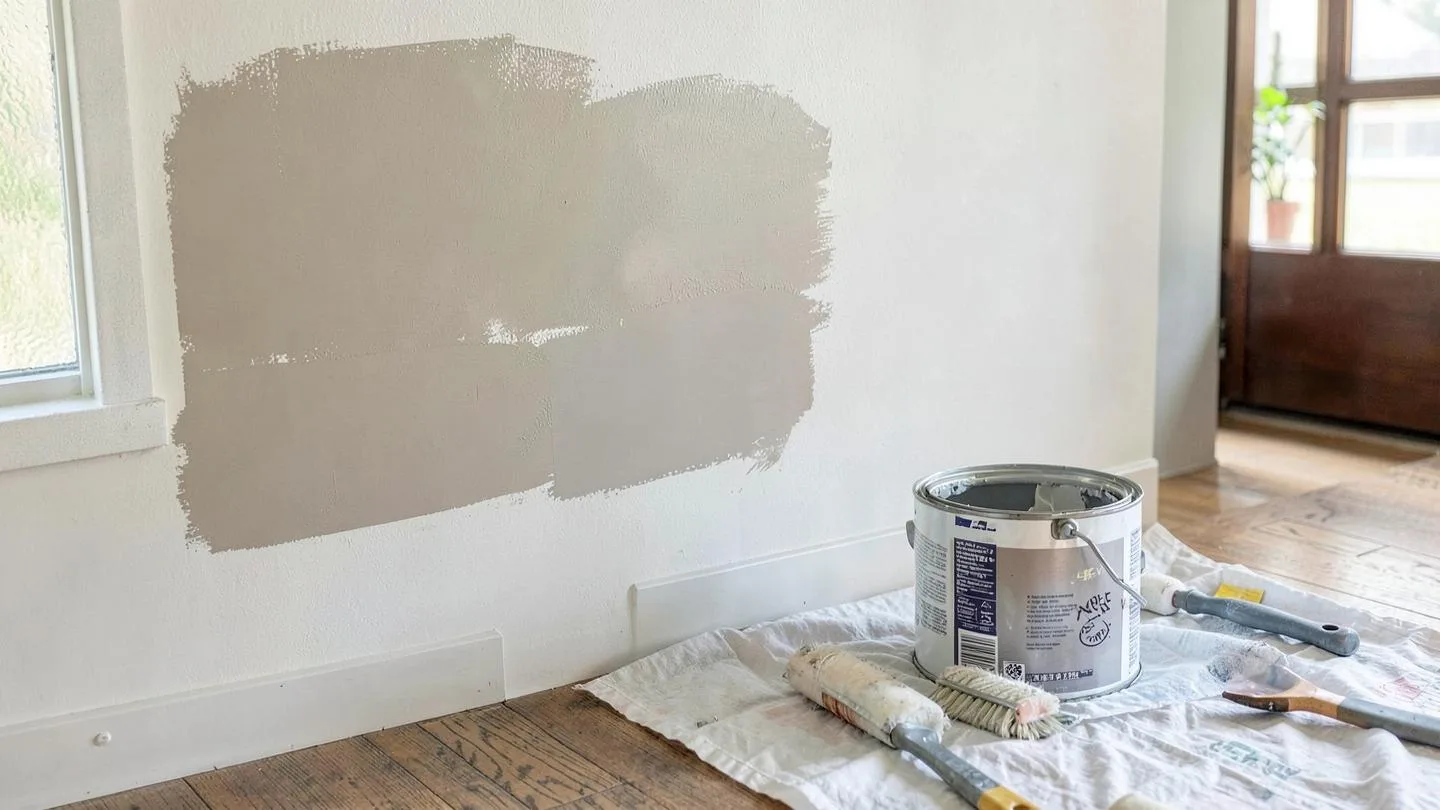
Choose paint on three decisions: the quality tier within a product line, the sheen for the room, and whether the surface needs a dedicated primer. Higher tiers generally hide better, level more smoothly and hold up to cleaning, which often means fewer coats and less labor. Test colors on the actual wall in the actual light before you commit, because a chip under store lighting is not a preview.
Key points
- Sheen is a durability decision as much as a look.
- A better paint that covers in two coats can cost less installed than a cheap one needing three.
- Sample on the wall, in daylight and at night, before ordering.
Sheen by room
| Sheen | Look | Cleanability | Common use |
|---|---|---|---|
| Flat or matte | Hides surface flaws best | Lowest | Ceilings, low traffic bedrooms |
| Eggshell | Soft low luster | Moderate | Living rooms, bedrooms, hallways |
| Satin | Slight sheen | Good | Kitchens, kids rooms, busy hallways |
| Semi gloss | Noticeable sheen | High | Trim, doors, bathrooms |
| Gloss | Reflective | Highest | Accent trim and cabinetry |
What separates quality tiers
- Pigment and binder content, which drive hide and color retention
- How well the paint levels, which affects roller and brush marks
- Scrubbability, which matters in kitchens, halls and homes with children
- Touch up behavior, since some paints flash when spot repaired
- Spread rate, since a paint that covers in two coats saves labor
When you need a primer
- Bare drywall, patched areas and new joint compound
- Bare or previously stained wood
- Stains from water, smoke or tannin bleed
- A dramatic color change, especially over deep colors
- Glossy existing surfaces after deglossing
- Any surface where a stain blocking primer is specified by the manufacturer
Testing color properly
Paint a large sample directly on the wall, or on a poster board you can move around the room. Look at it in morning light, in afternoon light and under your evening lamps, because artificial light shifts color noticeably.
Check it next to the trim color, the flooring and any large fixed surfaces such as countertops or stone.
Would rather hand the whole job over?
Find a painterSpecify it so quotes match
- Product line and quality tier, plus sheen for walls, ceilings and trim
- Number of coats included
- Prep included: patching, sanding, caulking and priming
- Whether the painter supplies the paint or you do
- Protection of floors, furniture and fixtures, and daily cleanup
- Who moves furniture and removes wall plates
Common questions
- Is expensive paint worth it?
- Often, because better hide can mean fewer coats and better durability means fewer repaints. On a professionally painted room, labor is usually the larger cost, so saving on materials can be a false economy.
- What sheen should I use in a bathroom?
- Satin or semi gloss are the usual choices, because they tolerate moisture and cleaning better than flat finishes.
- Do I need primer if the paint says it includes it?
- Self priming paints work on sound, previously painted surfaces in similar colors. Bare substrates, stains, tannin bleed and dramatic color changes still call for a dedicated primer.