
Drywall installation: what homeowners should know
Board types, hanging, taping and finish levels explained, plus why the finish level you agree to decides how the paint will look.
By Elijah Canfield, Founder, Hire Best Pros · Updated August 26, 2026
Elijah Canfield is the founder of Hire Best Pros. He writes and edits the site's consumer guides, with a focus on how home service and moving projects are priced, scoped and compared.
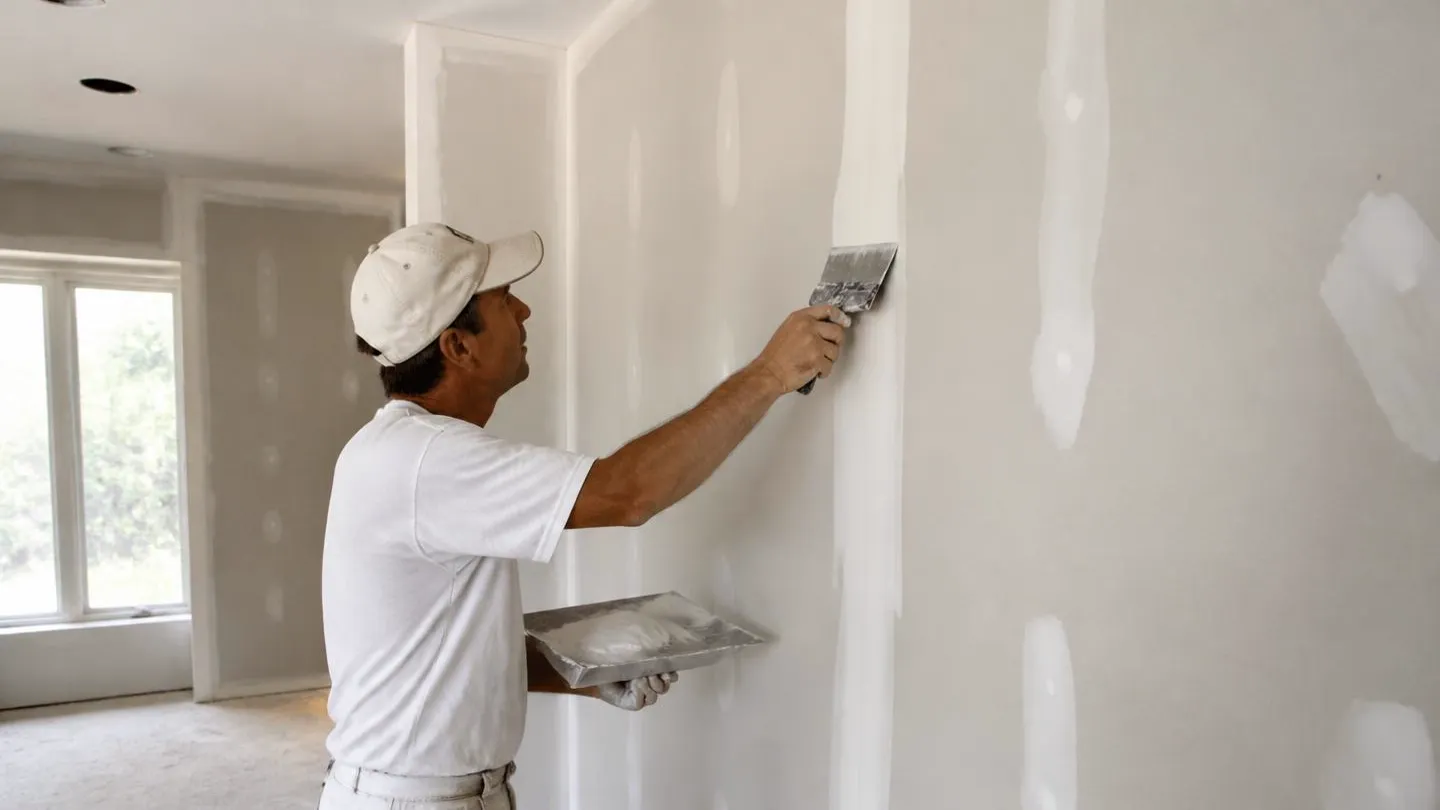
Drywall work happens in three stages: hanging the board, taping and coating the joints, then sanding to a specified finish level. The finish level is the detail most homeowners never discuss and the one that most affects the final appearance, especially on walls under strong side lighting.
Key points
- Agree on a finish level in writing before the crew starts coating.
- Moisture resistant and fire rated boards exist for specific locations and are not interchangeable.
- Dust control is worth discussing before sanding day, not after.
Board choice by location
- Standard board for most walls and ceilings
- Moisture resistant board for bathrooms and other damp areas
- Cement board or a tile backer where tile meets water, such as shower walls
- Fire rated board where code requires it, commonly at garage and utility separations
- Thicker or specialty board for ceilings and sound control assemblies
The three stages
Hanging sets the geometry. Sheets are cut around openings and fastened to framing, with attention to seam placement so joints do not land in awkward places.
Taping and coating fills the joints and fastener heads in successive coats, each wider than the last. This is where skill shows.
Sanding levels the coats. It is the dustiest part of any interior project, and containment matters if the rest of the house is occupied.
Finish levels and why they matter
The industry describes drywall finishes in levels, from a basic taped joint in unfinished spaces up to a smooth, fully skim coated surface for critical lighting and gloss paints. A wall finished to a lower level will show joints once a satin paint and a window's raking light are involved. Ask which level your quote assumes and what an upgrade costs.
Getting drywall or paint work quoted?
Find painting helpHanding off to paint
New drywall needs priming before finish coats, because bare board and joint compound absorb paint differently. Skipping the primer is the classic reason a fresh wall shows every seam. Our guide on hiring a house painter covers what a proper prep and paint scope includes.
Common questions
- Can I paint straight over new drywall?
- Not without primer. Paper facing and joint compound absorb differently, so finish paint applied directly will flash and reveal every taped seam. A dedicated drywall primer evens the surface first.
- How long does drywall work take?
- Hanging can be quick, but the coating stages need drying time between them, and that is what sets the schedule. Ask your contractor for the day by day sequence rather than a single duration.
- Should I hire a drywall contractor or a general contractor?
- For a defined job such as a repair, a single room or a basement hang and finish, a drywall contractor is usually the direct route. Bring in a general contractor when drywall is one trade among several, when framing, electrical or plumbing has to happen first, or when you need someone coordinating inspections and sequence across the whole project.
- How do I keep dust out of the rest of the house?
- Ask what dust control is included before work starts. Reasonable measures are plastic barriers at doorways, covered floors and a path to the exit, taped off returns so the HVAC system does not distribute dust, and vacuum assisted sanding where practical. Confirm who does final cleanup and whether it includes wiping surfaces or only removing debris.