
Clogged kitchen sink: what to try, and when to stop
A safe order of steps for a slow or blocked kitchen drain, why chemical cleaners usually make things worse, and the signs that the clog is not in the sink at all.
By Elijah Canfield, Founder, Hire Best Pros · Updated August 26, 2026
Elijah Canfield is the founder of Hire Best Pros. He writes and edits the site's consumer guides, with a focus on how home service and moving projects are priced, scoped and compared.
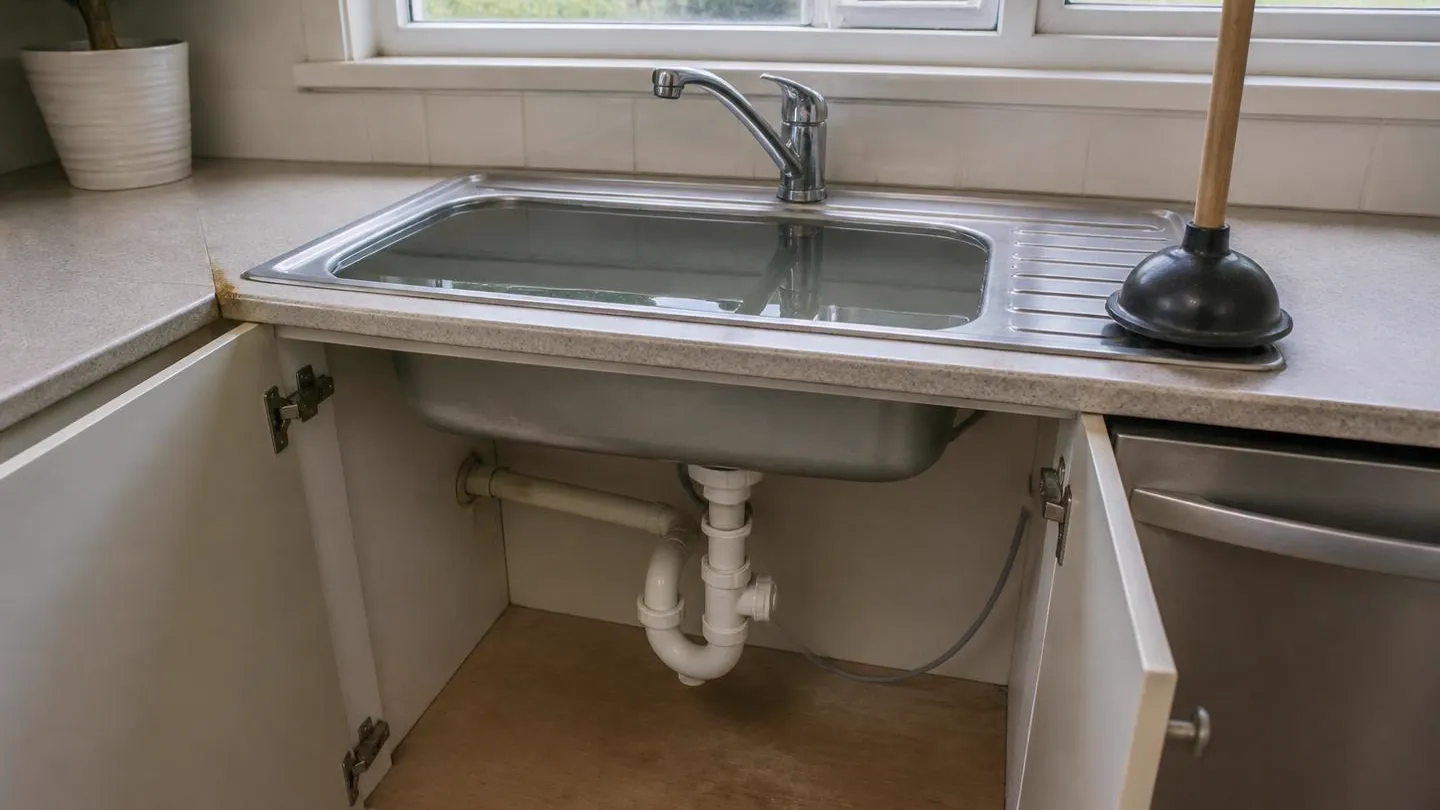
Start with the simplest causes. Clear the strainer, plunge with the other basin sealed, and if that fails, empty and remove the p-trap under the sink to check for a grease and food plug. Stop and call a plumber when the clog returns quickly, when both basins back up together with the disposal off, or when other fixtures in the house are also draining slowly.
Key points
- Grease is the usual cause. It cools and coats the pipe rather than washing away.
- Chemical drain cleaner can damage pipes and makes the job hazardous for whoever opens the line.
- A clog that returns within weeks is a symptom, not the problem.
Work through the easy causes first
- Clear the strainer basket and remove standing debris
- If there is a disposal, make sure it is running freely before assuming a pipe clog
- Plunge with a cup plunger while sealing the second basin and the disposal outlet, otherwise the pressure goes sideways
- Flush with hot water from the tap, not boiling water, which can soften some plastic connections
Checking the trap
The p-trap under the sink is the most common place for a kitchen clog to sit. Put a bucket underneath, loosen the slip nuts by hand where possible, and lift the trap out. Most of the time the blockage is visible inside it.
This is a reasonable homeowner job if the fittings turn freely. If they are corroded metal or the joint is glued, leave it. A broken drain arm turns a clog into a leak.
When to call a plumber
- The drain clears and then slows again within days or weeks
- Water backs up into the second basin or the dishwasher
- Other drains in the house are slow at the same time
- You can hear gurgling from another fixture when this one drains
- Someone has already poured chemical cleaner down the line, which the plumber needs to know about
Clog keeps coming back?
Find plumbing helpKeeping it clear afterwards
Kitchen lines clog for predictable reasons. Scrape plates into the trash, pour cooking fat into a container rather than the drain, and run cold water while the disposal is working so fats stay solid and get carried out instead of coating the pipe. Our guide on preventing clogged drains covers the same habits for the rest of the house.
Common questions
- Does baking soda and vinegar actually work?
- It can loosen light residue in an otherwise open drain. It does not dissolve a grease plug, and it will not do anything for a blockage further down the branch line.
- Is a chemical drain cleaner ever the right choice?
- It is generally the last thing to try and the first thing to regret. It can damage older pipes, it can sit in a fully blocked line, and it makes the line dangerous to open for the next person working on it.