
Common plumbing problems and what they usually mean
Dripping taps, running toilets, low pressure and slow drains explained in plain language, with a clear line between homeowner upkeep and professional work.
By Elijah Canfield, Founder, Hire Best Pros · Updated August 26, 2026
Elijah Canfield is the founder of Hire Best Pros. He writes and edits the site's consumer guides, with a focus on how home service and moving projects are priced, scoped and compared.
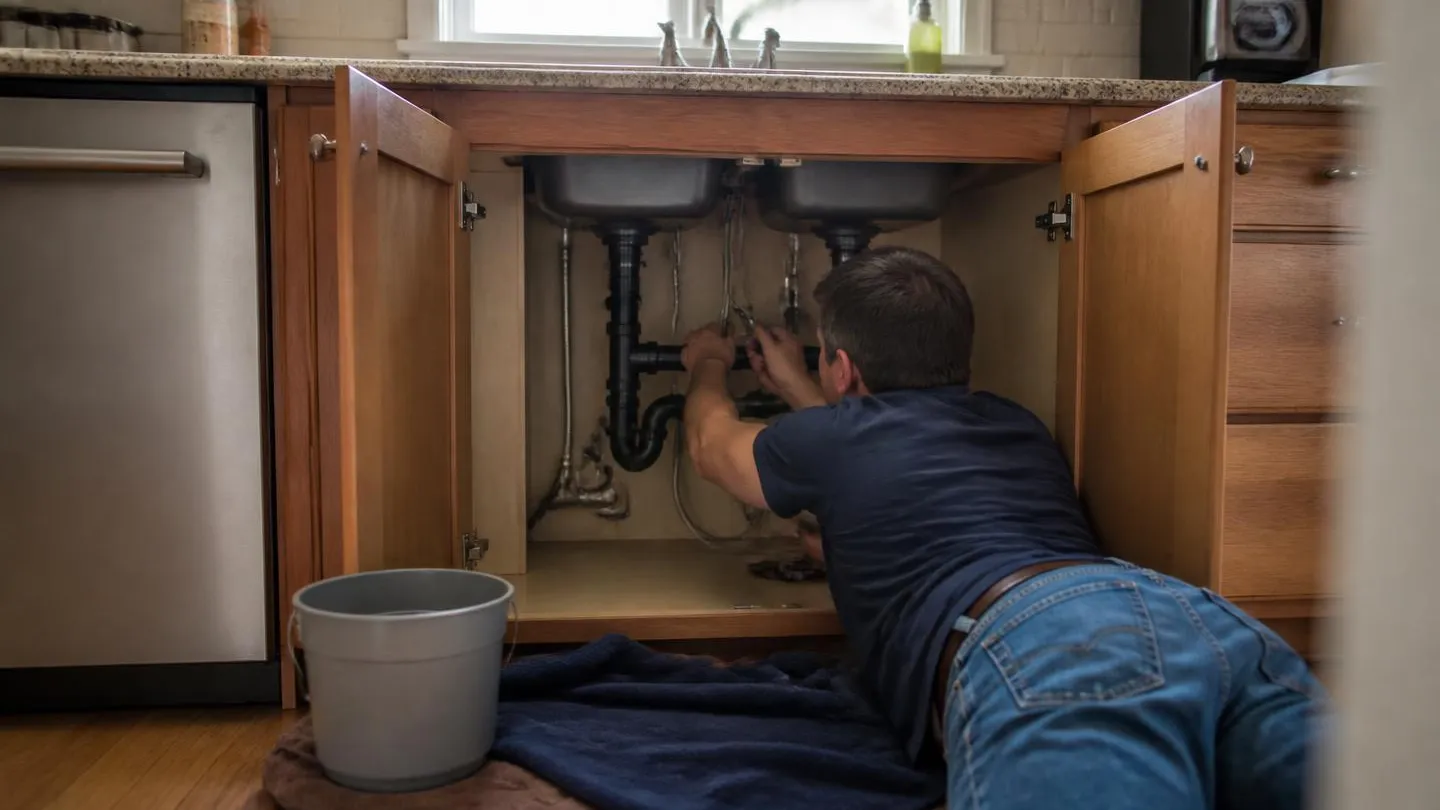
Most household plumbing complaints come from a short list: worn tap and valve parts, failing toilet flappers and fill valves, partial clogs in traps and branch lines, mineral buildup in fixtures, and aging water heaters. Each has a normal repair path. The reason to call early is that water damage, not the part itself, is what makes these problems expensive.
Dripping taps and valves
A steady drip is usually a worn washer, cartridge or seat. It is a small repair, but it wastes water continuously and often signals that other fixtures of the same age are close behind.
Running toilets
When a toilet refills on its own or never quite stops, the flapper or fill valve is normally the culprit. This is one of the most common causes of an unexplained increase in water use.
Slow or blocked drains
- Kitchen lines clog with grease and food solids
- Bath and shower lines clog with hair and soap residue
- Repeat clogs in the same line suggest a partial blockage further down rather than at the trap
- Multiple slow drains at once point at the main line or a vent problem
Same drain clogging again?
Find plumbing helpLow water pressure
Low pressure at one tap is often a clogged aerator or a partially closed valve. Low pressure across the house is a bigger question: a pressure regulator, a supply issue, or corrosion in older galvanized piping.
Water heater trouble
- Rumbling or banging usually means sediment in the tank
- Rusty hot water can indicate tank corrosion
- Water at the base of the tank means it is time to plan a replacement, not a repair
Common questions
- Which plumbing repairs are reasonable to do myself?
- Clearing an aerator, plunging a fixture, replacing a toilet flapper and tightening a visible compression fitting are within reach for many homeowners. Anything inside a wall, on a gas appliance, or on the main line belongs with a licensed plumber.
- How do I know if I have a hidden leak?
- Turn off every fixture and watch the water meter. If it keeps moving, water is going somewhere. Warm spots on a slab, a running sound in a quiet house and unexplained damp are other common signals.