Concrete driveways and walkways
Why the base matters more than the mix, how cracks and joints work, and what to check in a concrete quote.
By Elijah Canfield, Founder, Hire Best Pros · Updated August 27, 2026
Elijah Canfield is the founder of Hire Best Pros. He writes and edits the site's consumer guides, with a focus on how home service and moving projects are priced, scoped and compared.
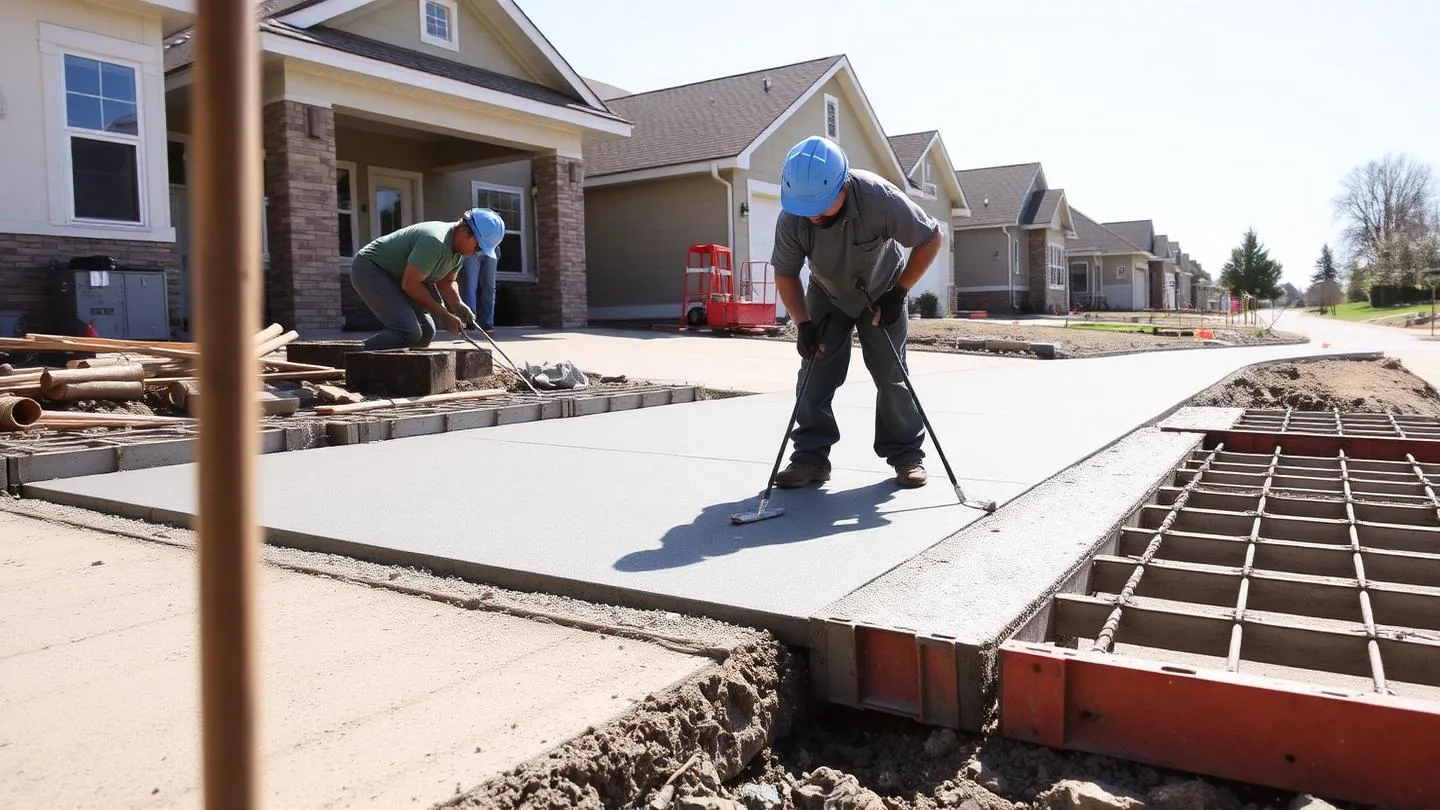
A concrete slab lasts because of what is underneath it. A properly compacted base, correct thickness, adequate reinforcement, control joints cut at the right time and good drainage do more for longevity than any surface finish. Some cracking is expected, which is exactly what control joints are for.
Key points
- Base preparation and drainage decide whether a slab settles.
- Control joints do not prevent cracks, they decide where cracks go.
- Curing conditions matter, so weather affects scheduling for a reason.
What a quote should specify
- Excavation depth and base material, compacted
- Slab thickness, which differs for a walkway and a vehicle driveway
- Reinforcement type, whether mesh or rebar
- Control joint spacing and how the surface will be finished
- Drainage and slope away from the house
Repair or replace
Surface spalling and hairline cracks are often repairable. Sections that have settled unevenly, heaved or broken into multiple pieces usually indicate a base or drainage problem that resurfacing will not solve. Slab lifting can address settlement without a full replacement in some cases.
Costs vary based on location, project size, materials, complexity, access and the provider you hire.
Care after it is poured
- Keep vehicles off until the contractor says the slab is ready
- Seal on the schedule the contractor recommends for your climate
- Avoid deicing salts in the first winter
- Keep drainage paths and downspout discharge clear of the slab edge
Getting concrete quotes?
Find local pros