
The plumbing problems that get expensive
Hidden leaks, sewer line failures, burst supply lines and failing water heaters. Why these four cost the most, and the early signals that let you act sooner.
By Elijah Canfield, Founder, Hire Best Pros · Updated August 26, 2026
Elijah Canfield is the founder of Hire Best Pros. He writes and edits the site's consumer guides, with a focus on how home service and moving projects are priced, scoped and compared.
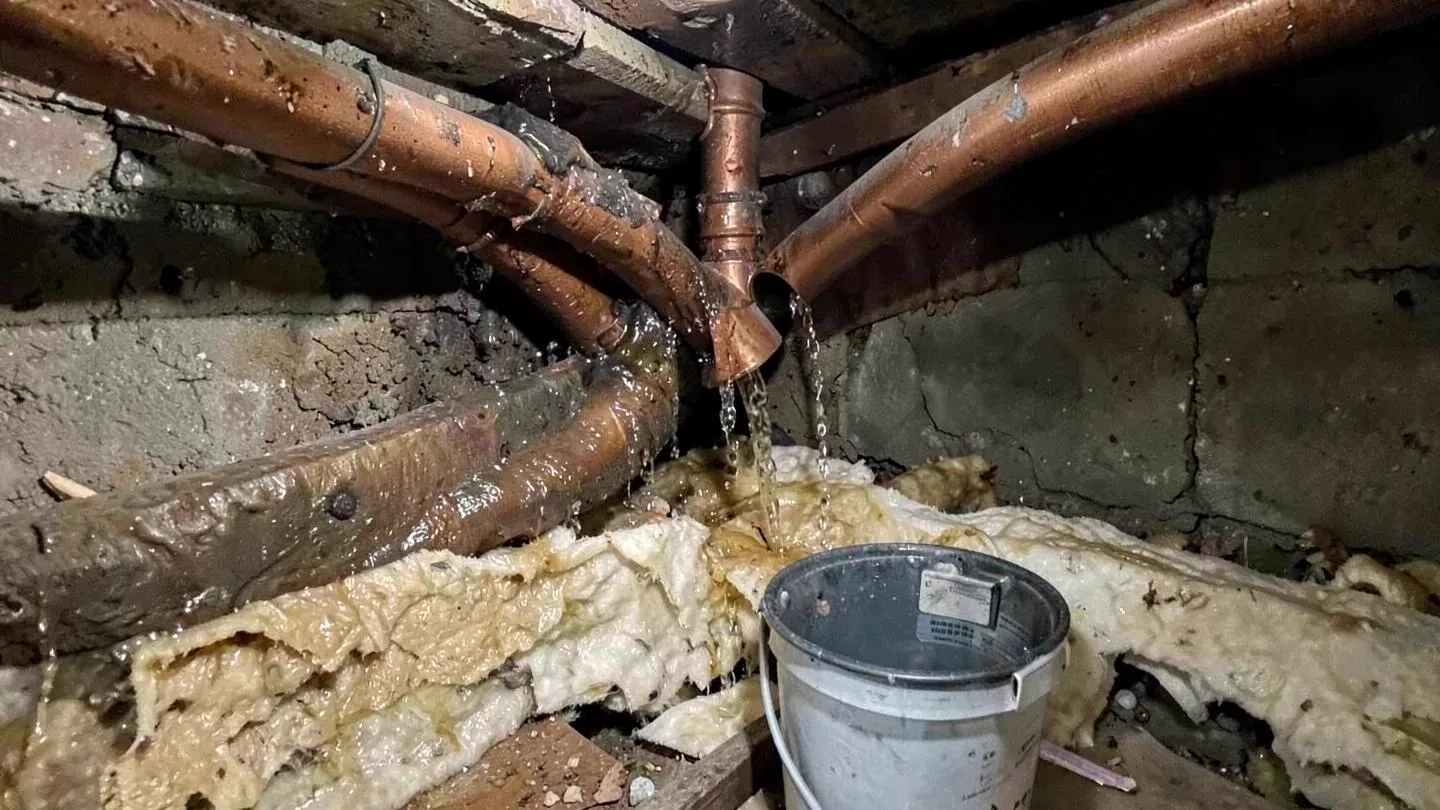
Plumbing rarely gets expensive because a part is expensive. It gets expensive because water reaches building materials and stays there. The four failures that most often turn into large bills are a slow hidden leak inside a wall or slab, a blocked or collapsed sewer line, a supply line or valve that lets go while nobody is home, and a water heater that fails at the tank. All four give warning signs first.
Key points
- The repair is usually small. The damage around it is what costs money.
- Check the water meter with everything off. Movement means a leak somewhere.
- Know where the main shutoff is and make sure it actually turns.
Sewer and main drain line failures
Sewer problems announce themselves through the lowest drain in the house. Repeated backups, gurgling toilets when a washing machine drains, or several slow fixtures at once point past the trap and into the main line.
A camera inspection tells you whether you are dealing with roots, grease, a belly in the pipe or a break. That distinction decides whether the fix is a cleaning or an excavation, which is covered in more detail in our guide to what happens during a sewer repair.
- Waste backing up at a floor drain, tub or basement fixture
- Two or more fixtures draining slowly at the same time
- Patches of unusually green or soggy lawn over the line
- Sewage odor indoors or at the yard cleanout
Supply lines, valves and shutoffs
- Braided supply lines to toilets, sinks and washing machines age and should be inspected when you are already under there
- Angle stops that will not turn are worth replacing before an emergency proves it
- Outdoor spigots and the pipe behind them are common freeze failure points
- If you travel, shutting the main off is cheap insurance
Water heaters
Rusty water, popping or banging during heating, moisture at the base, or an age past the manufacturer's expected service life all suggest the tank is nearing the end. A planned replacement is a scheduled expense. A tank failure is a scheduled expense plus flooring, drywall and whatever was stored nearby.
Common questions
- How do I check for a leak without any tools?
- Turn off every tap and appliance that uses water, then look at your water meter. Most meters have a small low flow dial or triangle that moves with any flow at all. If it moves with everything off, water is leaving the system somewhere.
- Is a slow drain worth calling about?
- One slow fixture usually is not. Several at once, or one that keeps returning after being cleared, is worth a professional look because the cause is likely further down the line.
- What should I do first when I find water where it should not be?
- Shut off the water at the fixture stop or the main, then move belongings out of the area and start drying. Photograph everything before you clean up, since documentation matters for both the plumber and any insurance conversation. Once the water is stopped, call for service rather than waiting to see whether it happens again.
- How can I keep a small plumbing issue from becoming a large one?
- Handle drips and slow drains early, know where your main shutoff is, replace aging supply lines to washers, toilets and sinks, and pay attention to water pressure that suddenly changes. Have a plumber look at recurring backups rather than clearing them repeatedly, because repetition usually points to something structural in the line.