
Hard water and water softeners
How to recognize hard water, what it costs you in appliances and plumbing, and how softeners and filters differ.
By Elijah Canfield, Founder, Hire Best Pros · Updated August 27, 2026
Elijah Canfield is the founder of Hire Best Pros. He writes and edits the site's consumer guides, with a focus on how home service and moving projects are priced, scoped and compared.
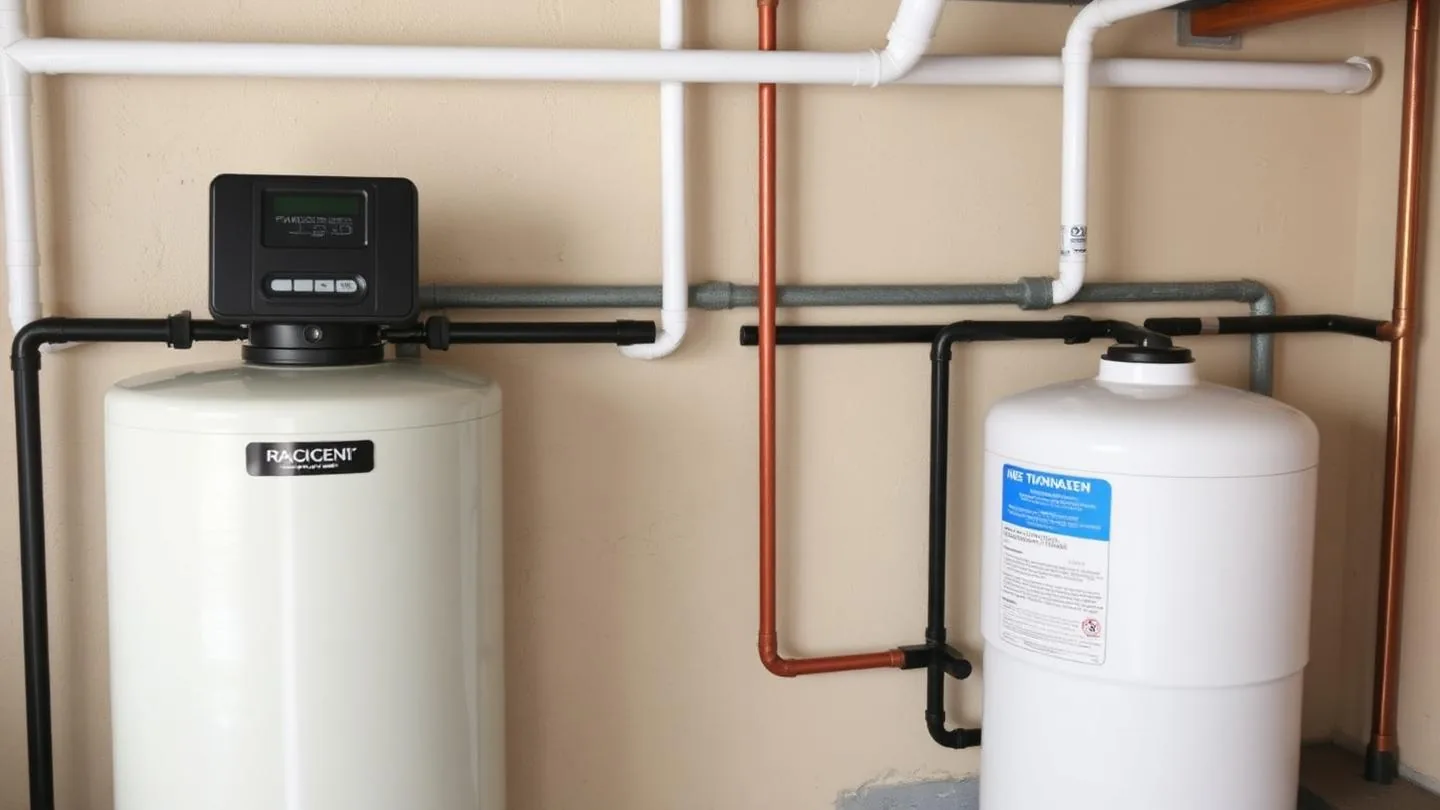
Hard water carries dissolved calcium and magnesium. It leaves scale on fixtures, shortens the life of water heaters and dishwashers, and makes soap less effective. A softener exchanges those minerals for sodium or potassium. A filter, by contrast, targets taste, sediment or contaminants and does not address hardness.
Key points
- Test before you buy. Hardness is measurable, not a guess.
- A softener treats scale. It is not a drinking water purifier.
- Salt free conditioners change how scale forms rather than removing minerals.
Signs you have it
- White crust on faucets, shower heads and kettle elements
- Spotting on glassware after a dishwasher cycle
- Soap and shampoo that lather poorly
- Stiff laundry and gradually reduced water pressure at fixtures
Softener, conditioner or filter
An ion exchange softener removes hardness minerals and needs salt and periodic regeneration. A salt free conditioner does not remove minerals, it alters them so they are less likely to stick. A filtration system addresses sediment, chlorine taste or specific contaminants and is a separate decision from hardness.
Costs vary based on location, project size, materials, complexity, access and the provider you hire.
Before you install
- Get a hardness test, either a home kit or a lab result
- Confirm where the unit will sit and whether a drain is available
- Ask about salt use, regeneration frequency and ongoing maintenance
- Check whether local rules restrict softener discharge
Talk to a plumbing pro
Find a plumber