
Drainage problems around the house
How to spot a drainage problem before it reaches the foundation, the difference between surface and subsurface solutions, and how to maintain what gets installed.
By Elijah Canfield, Founder, Hire Best Pros · Updated August 26, 2026
Elijah Canfield is the founder of Hire Best Pros. He writes and edits the site's consumer guides, with a focus on how home service and moving projects are priced, scoped and compared.
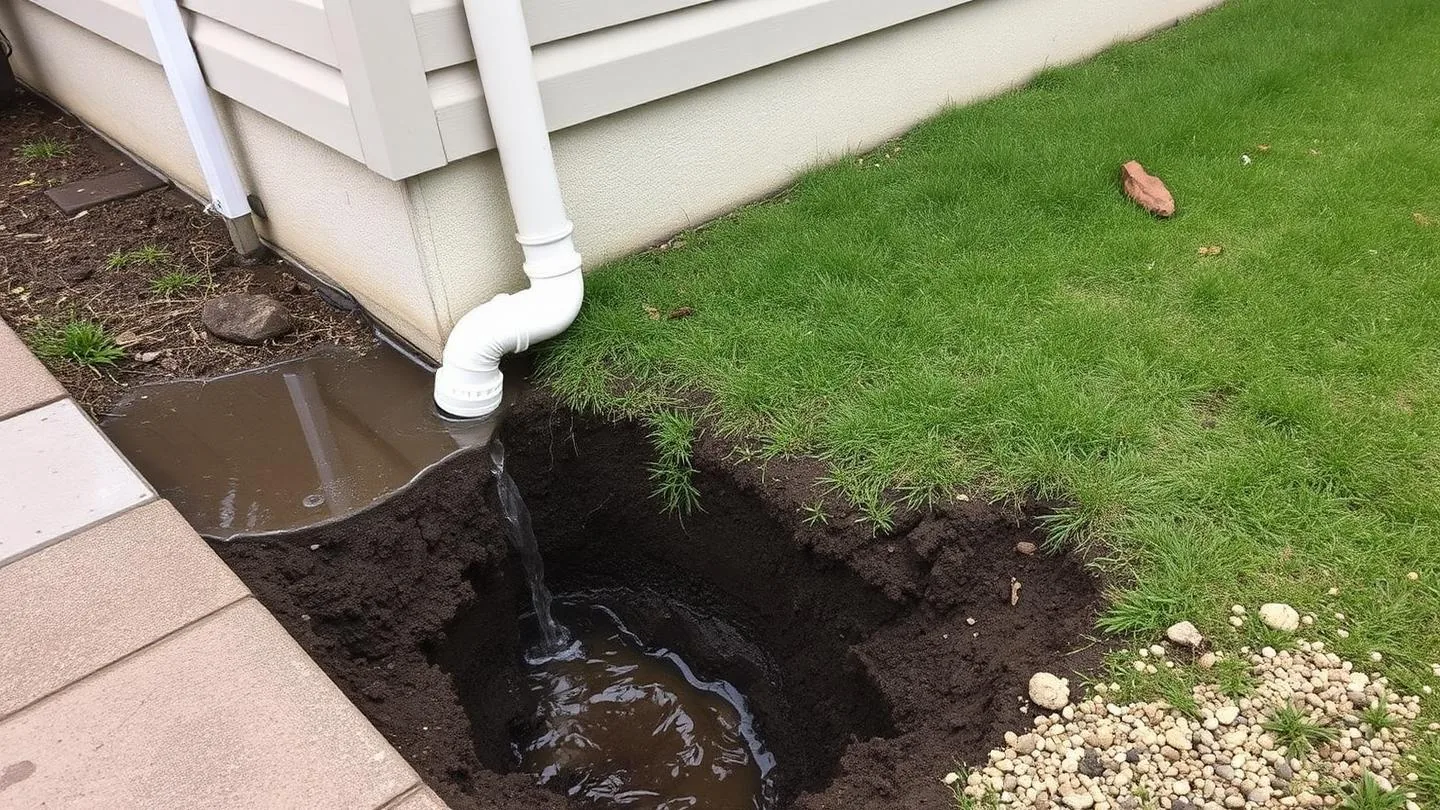
Drainage problems announce themselves as standing water, soggy ground days after rain, erosion channels, efflorescence on basement walls or mulch that keeps washing out. The fix depends on the cause: roof water needs gutters and extended downspouts, surface water needs grade correction or a swale, and subsurface water needs a French drain or a sump system.
Key points
- Roof water is the cheapest problem to fix and the most commonly ignored.
- Grade should fall away from the house for the first several feet.
- Every buried drain needs an outlet you can find and clean.
Five signs you have a drainage problem
- Standing water in the yard more than a day after rain
- Water stains, white powdery deposits or damp corners in the basement
- Soil eroding away from the foundation, or mulch washing across walkways
- Cracked or settled hardscape near downspout discharge points
- Mosquitoes, moss or persistent muddy patches in the same spots each year
Start with roof water
A single downspout can discharge a large volume of water in one storm. If it empties next to the foundation, that water is going into the soil that supports the house.
Clean the gutters, confirm they are pitched correctly, and extend every downspout well away from the wall or tie it into a buried line that daylights downhill.
Gutters overflowing or pulling away?
Find roofing helpSurface versus subsurface solutions
| Problem | Typical approach | What it needs to work |
|---|---|---|
| Water sheets toward the house | Regrade so soil falls away from the wall | Consistent slope and no new low point |
| Runoff crosses the yard | Swale or surface channel | A defined path to a legal discharge point |
| Saturated soil, wet basement wall | French drain or footing drain | Filter fabric, clean stone and a real outlet |
| Water entering below grade | Interior drain and sump pump | Backup power and a tested float switch |
Maintaining a drainage system
- Clear outlets and pop up emitters so they can discharge freely
- Flush buried lines periodically, and know where every cleanout is
- Test the sump pump before the wet season, including the check valve
- Keep gutters clean, because a buried system fed by clogged gutters is useless
- Watch new landscaping so it does not create a dam against the house
Common questions
- Who do I call about a drainage problem?
- It depends on the source. A landscape or drainage contractor handles grading, surface drains and subsurface systems. A foundation or waterproofing specialist handles water entering the basement or crawlspace. A roofer or gutter contractor handles roof water that is not being carried away. Start with the roof water and grading, since those are the least expensive fixes.
- What should a drainage quote include?
- Ask for the diagnosis in writing, the proposed route and outlet for the water, pipe type and size, depth, fabric and stone specification where applicable, connections to downspouts, restoration of lawn or paving, and what happens if the outlet cannot be reached by gravity. Water has to go somewhere, so the discharge point is the detail to confirm.
- Can I fix a drainage problem myself?
- Extending downspouts, clearing gutters, correcting a small negative slope near the foundation and clearing debris from surface drains are reasonable homeowner tasks and solve a surprising share of complaints. Bring in a professional for standing water that will not clear, water entering the structure, retaining walls, or anything requiring excavation near the foundation.
- How urgent is water pooling near the foundation?
- Treat it as a priority rather than an emergency. Water sitting against the foundation is the common cause of basement seepage, efflorescence, soil movement and long term structural issues, and each rainfall repeats it. Handle the quick fixes now, then get an assessment before the wet season if the pooling continues.