
How a septic system works
The tank, the drain field and the bacteria in between, explained plainly, with the maintenance schedule and warning signs that matter for homeowners.
By Elijah Canfield, Founder, Hire Best Pros · Updated August 26, 2026
Elijah Canfield is the founder of Hire Best Pros. He writes and edits the site's consumer guides, with a focus on how home service and moving projects are priced, scoped and compared.
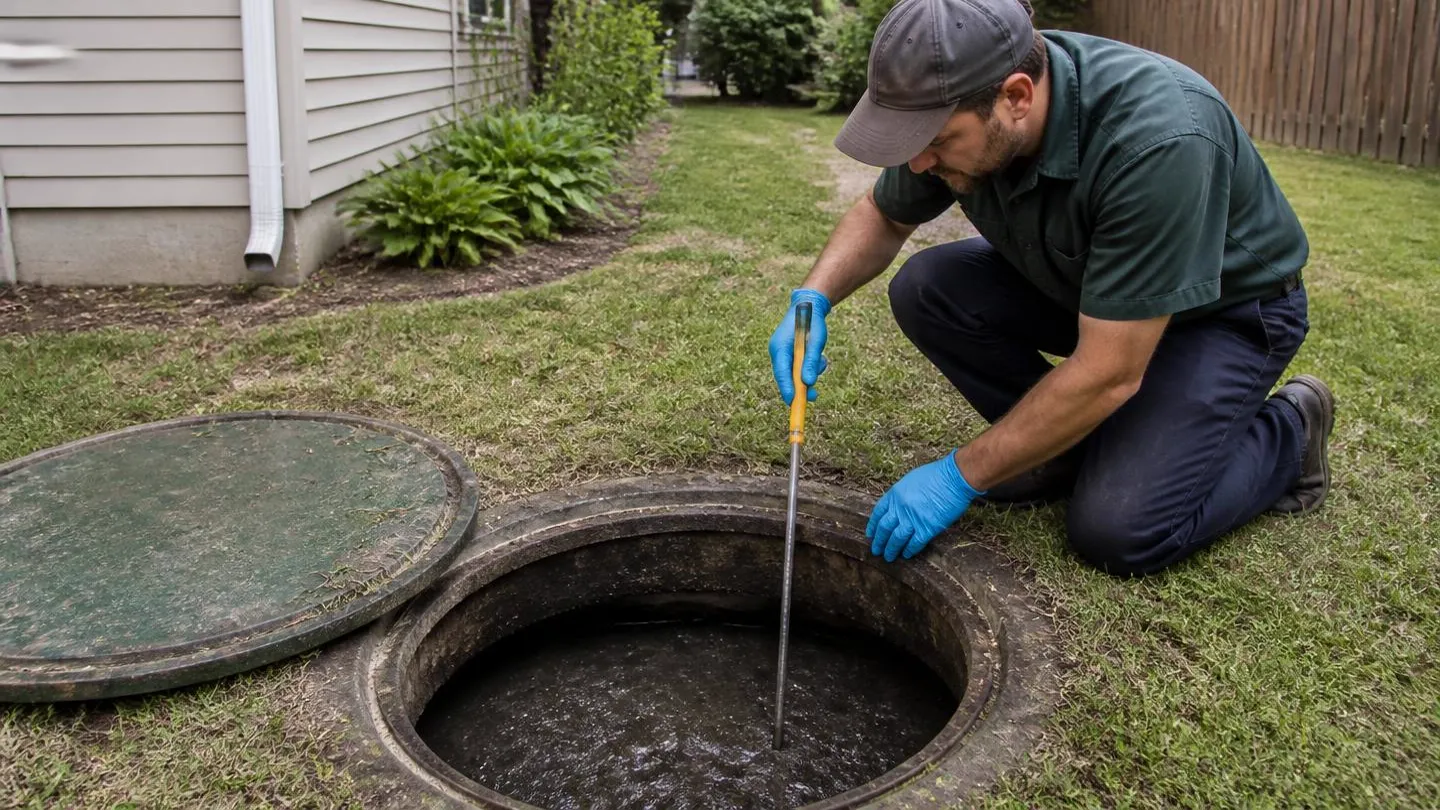
A septic system treats wastewater on your own property. Waste flows into a buried tank where solids settle, grease floats, and the relatively clear liquid in the middle flows out to a drain field where soil finishes the treatment. It works as long as solids are pumped out periodically and the drain field is not overloaded, compacted or flooded.
Key points
- The tank separates. The drain field treats. Protect both.
- Pumping frequency depends on tank size, household size and use, so ask your pumper what your interval should be.
- Nothing but waste and toilet paper. Wipes, grease and harsh chemicals all shorten system life.
What happens inside the tank
Everything from the house drains into the tank. Heavier solids sink into a sludge layer, fats and oils rise into a scum layer, and the liquid between the two exits through an outlet baffle. Bacteria in the tank break down some of the solids, but not all of them, which is why pumping is required rather than optional.
What happens in the drain field
The liquid moves into perforated pipes in gravel trenches and soaks into the soil. Soil organisms do the final treatment. A drain field fails when it is saturated, when solids have carried over from a tank that was never pumped, or when the soil is compacted by vehicles or construction.
- Keep vehicles, trailers and heavy equipment off the field
- Keep trees with aggressive roots away from the lines
- Route downspouts and surface runoff away from the field
- Do not build a deck, shed or patio over it
Signs of a problem
- Slow drains throughout the house rather than at one fixture
- Sewage odor indoors, near the tank, or over the field
- Wet ground or unusually lush grass above the drain field in dry weather
- Gurgling in the plumbing or backups at the lowest drain
Seeing any of these at home?
Find plumbing helpWhat to ask at a pump out
- How deep were the sludge and scum layers, and what interval does that suggest for your household
- What condition are the inlet and outlet baffles in
- Is there any sign of solids having carried into the field
- Where exactly are the tank lid and the field, so you can record it
Common questions
- Do septic additives replace pumping?
- No. Additives do not remove the accumulated solid layer, and only pumping does. Follow the schedule your service provider recommends based on what they measure in your tank.
- Can I use a garbage disposal on a septic system?
- It is possible, but it adds solids the tank has to hold, which usually means pumping more often. If you use one, keep it light and ask your pumper how it is affecting your interval.