
How to pack for a move
A room by room packing method, the supplies that actually matter, how to protect fragile items, and the labeling habits that make unpacking fast.
By Elijah Canfield, Founder, Hire Best Pros · Updated August 26, 2026
Elijah Canfield is the founder of Hire Best Pros. He writes and edits the site's consumer guides, with a focus on how home service and moving projects are priced, scoped and compared.
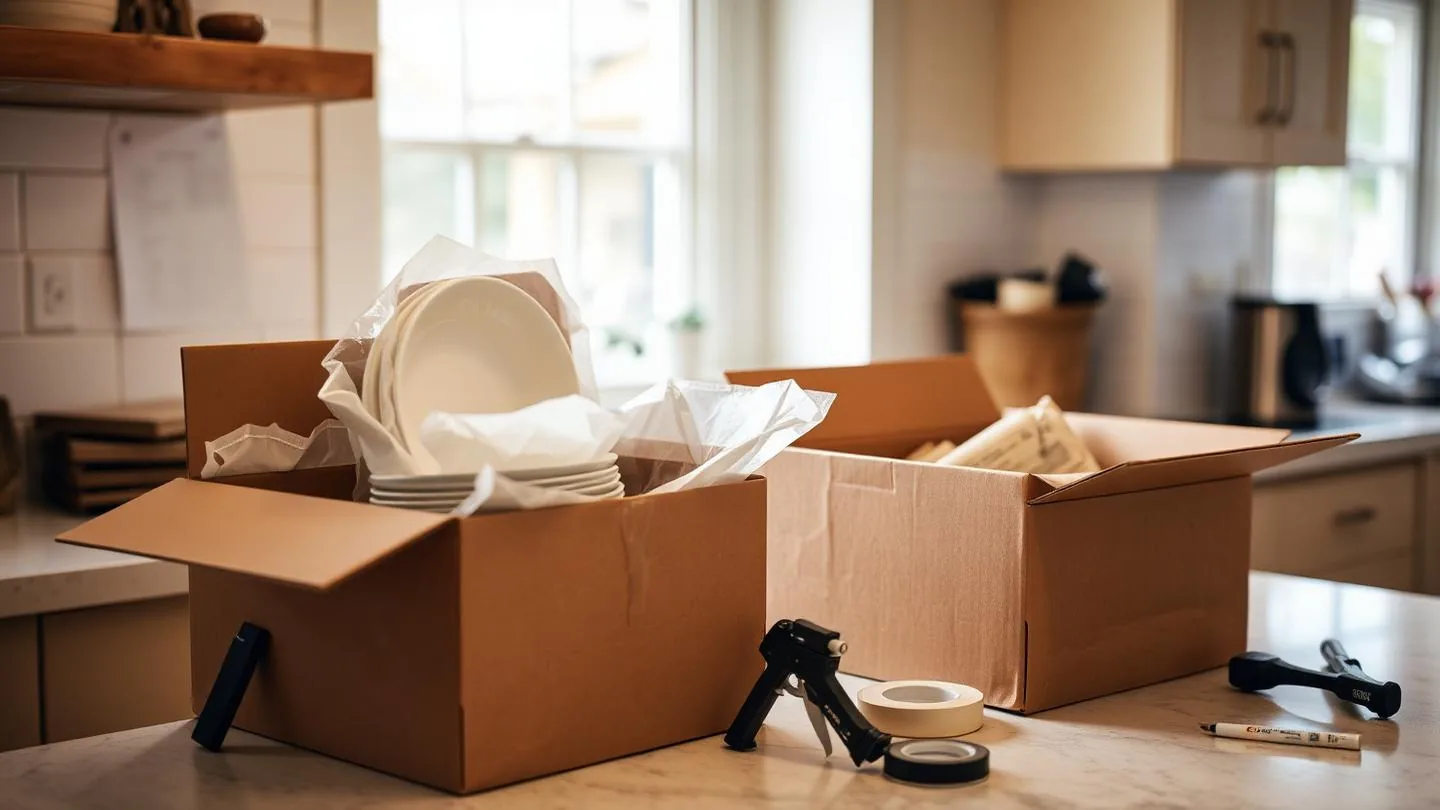
Pack in the order you stop using things. Start with storage, decor and off season clothing weeks ahead, keep daily use items for the last two days, and treat the kitchen as its own project. Use small boxes for heavy items and large boxes for light ones, fill every void so nothing shifts, and label each box on two sides with the destination room and a one line summary of the contents.
Key points
- Weight belongs in small boxes. Volume belongs in large ones.
- An unfilled box crushes. Padding is not optional, it is structural.
- Label for the room you are unpacking into, not the room you packed from.
Start with a supply list, not a box
Running out of tape at nine at night is how a packing plan dies. Gather everything first so packing becomes repetitive work rather than a series of errands.
- Small, medium and large boxes, plus a few wardrobe and dish barrel boxes
- Packing paper for wrapping and crumpling, bubble wrap for glass and screens
- Two rolls of quality packing tape per twenty boxes, and a tape gun
- Thick markers, a roll of stretch wrap, and resealable bags for hardware
- Furniture pads or blankets for anything with a finished surface
Work in reverse order of daily use
Four weeks out, pack the attic, garage, guest room, books, art and anything seasonal. Two weeks out, pack the rooms you use lightly. The last week is clothing, kitchen and bathrooms, and the last day is a single open first box that travels with you.
Purging as you go is faster than packing everything and sorting later. Anything you would not pay a mover to carry is a donation, a sale or a disposal decision you can make now.
Fragile items and the kitchen
- Stand plates on edge in a dish barrel, wrapped individually, with paper between layers
- Fill glasses and bowls with crumpled paper before wrapping them
- Tape lids shut on anything liquid, then bag it separately from textiles
- Keep knives sheathed in a folded towel and label the box clearly
- Photograph the back of electronics before unplugging anything
Want packing handled for you?
Compare moving helpLabeling that pays you back on the other end
Write the destination room and the contents on two sides and the top of every box, never only the lid. Number the boxes and keep a simple list so you know when something did not arrive.
Mark boxes that must be opened first with a color or a large word. When a truck unloads at speed, a label a mover can read from three feet away is worth more than a neat one.
Common questions
- How far ahead should packing start?
- For a typical household, starting three to four weeks out with storage and seasonal items keeps the final week manageable. Larger homes and homes with a workshop, garage or collection generally need longer.
- Is it worth paying for packing service?
- It depends on your time and what you own. Full service packing is priced separately from transport, so ask any mover to quote it as a line item and decide from there. Many households pack the simple rooms themselves and pay for the kitchen and fragile items only.