
Mold in a washing machine
Why washers develop mold and odor, how to clean the gasket, dispenser and drain filter properly, and what to change so it does not come back.
By Elijah Canfield, Founder, Hire Best Pros · Updated September 8, 2026
Elijah Canfield is the founder of Hire Best Pros. He writes and edits the site's consumer guides, with a focus on how home service and moving projects are priced, scoped and compared.
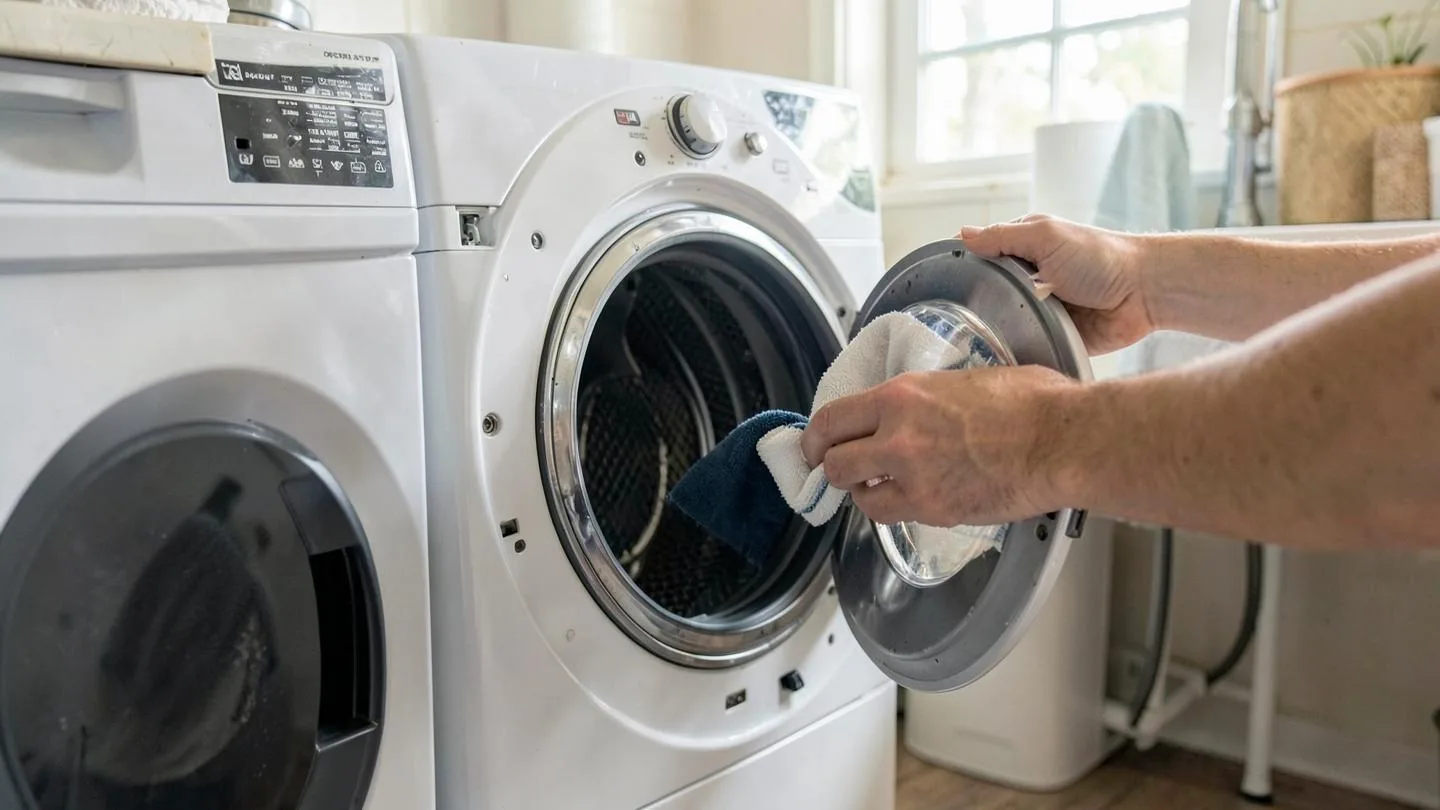
Washer mold grows where moisture sits: the door gasket, the detergent dispenser, the drain filter and the drum itself. Clean those four places, switch to the correct detergent type and dose, and leave the door and dispenser open between loads so the machine can dry. Persistent odor after a thorough cleaning usually points to a drain or standing water problem rather than the washer.
Key points
- Front load machines trap water in the door gasket. That fold is the usual culprit.
- Too much detergent leaves residue, and residue feeds odor.
- A washer that will not dry out between loads will keep growing mold.
Why it happens
Modern washers use less water and seal tightly, which is efficient but leaves damp surfaces behind. Detergent and fabric softener residue gives that moisture something to feed on, and a closed door keeps it from drying.
Cold wash cycles, high efficiency machines run with standard detergent, and laundry left sitting in the drum all accelerate the problem.
Clean the four places that matter
- Door gasket: pull back every fold and wipe the trapped water and grime out
- Detergent dispenser: remove it if it comes out and clear the residue and slime
- Drain pump filter: usually behind a small panel at the base, and usually overdue
- Drum: run the machine's cleaning cycle, or the hottest cycle available, empty
What to use
The manufacturer's cleaning cycle with a washer cleaning tablet is the safest starting point. Plain white vinegar or a diluted bleach solution can be used on surfaces, but never combine cleaning products and never mix bleach with anything else.
Check the manual before using bleach or vinegar routinely, since some manufacturers advise against them for specific components.
Keep it from coming back
- Leave the door and the dispenser drawer open between loads
- Use high efficiency detergent in a high efficiency machine, and use less than feels right
- Move wet laundry out of the drum promptly
- Wipe the gasket dry after the last load of the day
- Run a hot cleaning cycle on a regular schedule
- Ventilate the laundry room, especially in a basement or a closet
When it is not the washer
If odor persists after a full cleaning, look at the drain. A slow or improperly vented standpipe can hold water and send smell back up into the room. Water on the floor, a musty smell in the surrounding walls or discoloration on drywall are plumbing and moisture problems, not laundry problems.
Drain backing up or smelling?
Find a plumberCommon questions
- Why does my front load washer smell even after cleaning?
- The most commonly missed spots are the drain pump filter and the underside of the gasket fold. If both are clean and the odor remains, the drain line or standpipe is the next thing to check.
- Can I use bleach in my washing machine?
- Often yes, on a cleaning cycle, but check the manual first and never mix it with vinegar or any other cleaner.
- Do top load washers get mold too?
- Less often, because they dry out more easily, but the dispenser, the lid area and the underside of the agitator can still hold residue.