
Household pests that damage a home
Termites, carpenter ants, rodents, wood boring beetles and wildlife in the attic. What each one damages, the evidence they leave, and when to call.
By Elijah Canfield, Founder, Hire Best Pros · Updated August 26, 2026
Elijah Canfield is the founder of Hire Best Pros. He writes and edits the site's consumer guides, with a focus on how home service and moving projects are priced, scoped and compared.
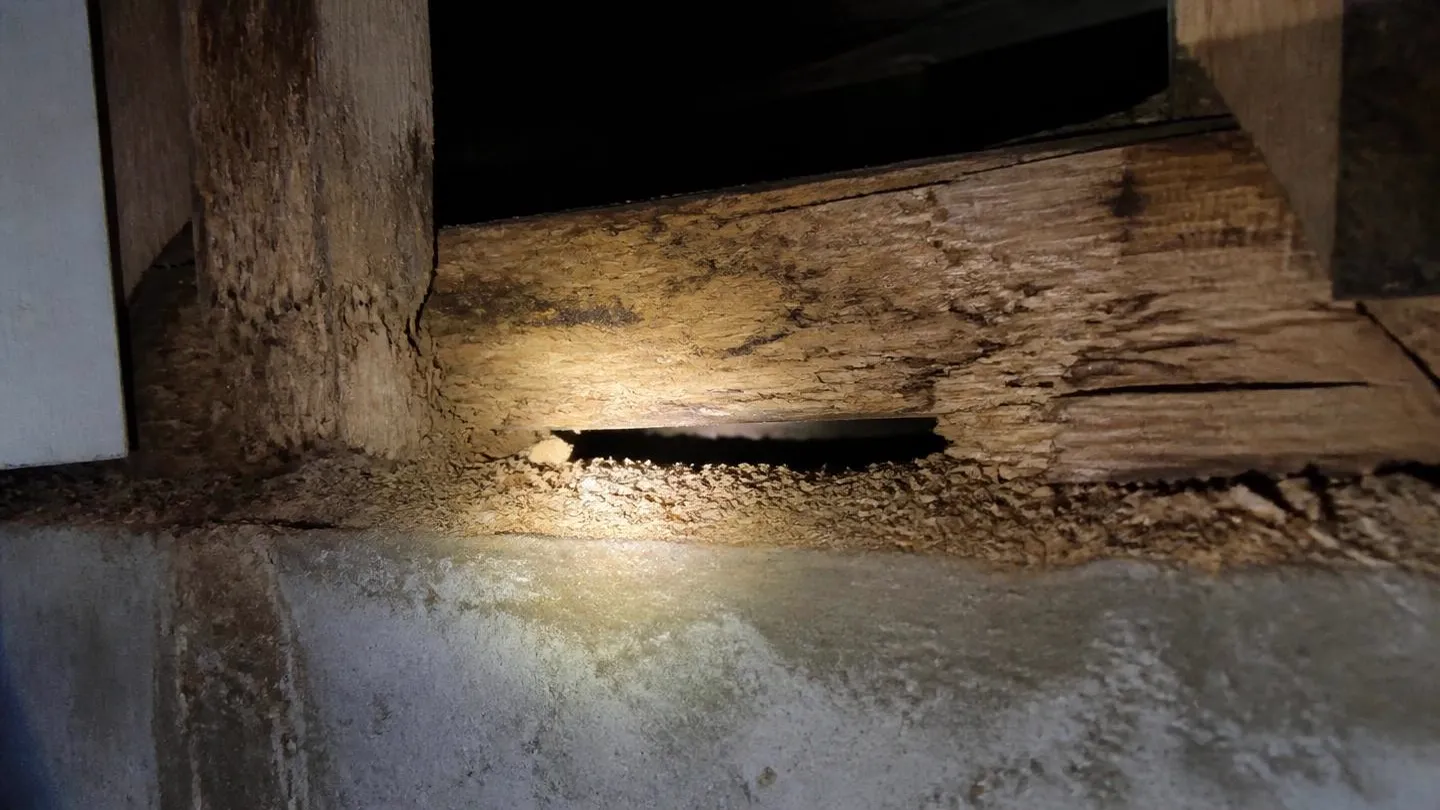
The pests that cause structural damage are the ones that eat, tunnel through or nest in building materials: termites and carpenter ants in framing, rodents in insulation and wiring, wood boring beetles in structural and finish wood, and wildlife that gets into attics and crawlspaces. Each leaves recognizable evidence before the damage becomes obvious.
Key points
- Damage is usually well underway by the time it is visible from a living space.
- Moisture attracts most wood destroying pests. Fix leaks and drainage first.
- Identification matters, because treatment differs completely by species.
What each one does and leaves behind
| Pest | What it damages | Evidence |
|---|---|---|
| Termites | Structural wood, often from the inside out | Mud tubes, discarded wings, wood that sounds hollow, blistered paint |
| Carpenter ants | Wood, especially where it has been damp | Coarse sawdust piles, rustling in walls, large ants indoors |
| Rodents | Insulation, wiring, stored goods, ductwork | Droppings, gnaw marks, nests, noise in walls or attic at night |
| Wood boring beetles | Framing, flooring and finish wood | Small exit holes and fine powder below them |
| Wildlife in attics | Insulation, wiring, vents and soffits | Noise overhead, damaged vents or soffit, droppings, odor |
Conditions that invite them in
- Moisture: leaks, poor drainage, gutters discharging at the foundation, damp crawlspaces
- Wood to soil contact, including landscaping timbers and firewood stacked against the house
- Gaps at the foundation, utility penetrations, soffits, vents and the roof line
- Overhanging branches that bridge the roof
- Food sources: pet food, bird feeders, unsealed trash, cluttered storage
Seeing evidence and not sure what it is?
Find pest control helpWhat a professional inspection covers
- Identification of the species, which determines everything else
- Where they are entering and where they are nesting or foraging
- Conditions supporting the activity, especially moisture
- A treatment plan with what is applied, where, and what follow up is needed
- What you should expect to see afterwards and over what time frame
Prevention that works year round
- Fix water problems first, indoors and around the foundation
- Seal gaps and screen vents, chimneys and crawlspace openings
- Keep firewood, mulch and stored wood away from the structure
- Trim branches back from the roof and siding
- Store food, pet food and trash in sealed containers
Common questions
- How do I tell termites from flying ants?
- The general differences are in antennae, waist shape and wing length, but identification from a distance is unreliable and the treatment is completely different. Collect a sample if you can and have it identified rather than guessing.
- Is wildlife removal the same as pest control?
- It is handled through the same visit on this site, but the work differs: wildlife usually involves exclusion, sealing entry points and repairing the damage, rather than treatment. Local regulations also apply to how certain animals may be handled.