
Animals digging up the lawn
How to tell which animal is causing lawn damage, why grubs are often the real reason, and the exclusion steps that work better than repellents.
By Elijah Canfield, Founder, Hire Best Pros · Updated August 26, 2026
Elijah Canfield is the founder of Hire Best Pros. He writes and edits the site's consumer guides, with a focus on how home service and moving projects are priced, scoped and compared.
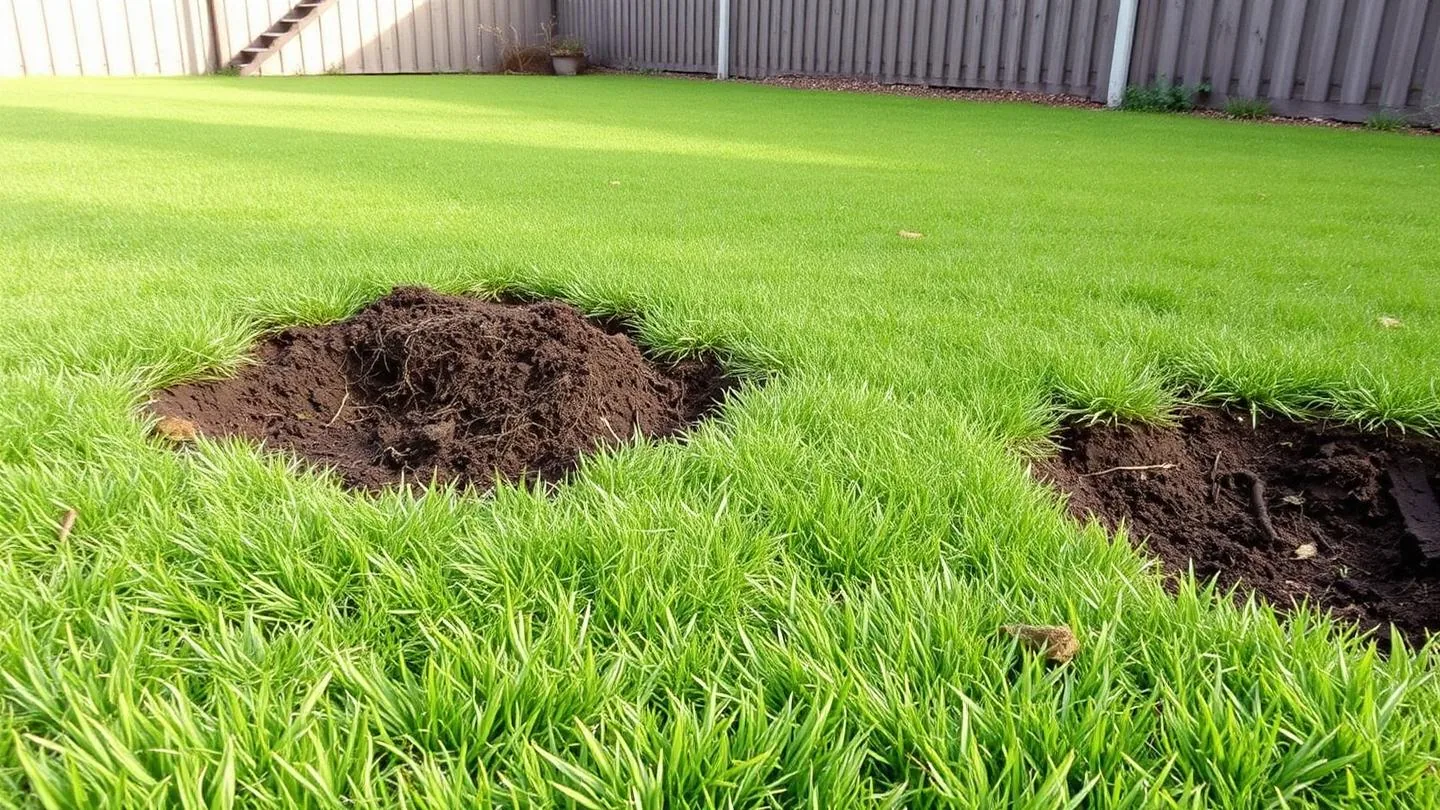
Lawn damage from animals is usually a symptom. Skunks, raccoons and birds tear turf to reach grubs beneath it, while moles tunnel for earthworms and voles run surface trails under cover. Identify the pattern first, address the food source where there is one, then use exclusion and habitat changes rather than relying on repellents.
Key points
- Turf peeled back in flaps usually means something is eating grubs.
- Raised tunnels are moles. Narrow surface runways are voles.
- Removing the attractant outlasts any repellent.
Reading the damage
| What you see | Likely cause | What it means |
|---|---|---|
| Sod rolled or flipped back in patches | Skunks, raccoons or birds | They are feeding on grubs below |
| Raised ridges and volcano shaped mounds | Moles | Tunneling for worms and insects |
| Narrow surface runways in grass | Voles | Feeding runs, worse under snow cover |
| Cone shaped holes, a few inches deep | Squirrels or chipmunks | Caching or retrieving food |
| Chewed bark low on trunks | Rabbits or voles | Winter feeding, needs trunk protection |
Deal with the food source
If turf lifts easily and you find white C shaped larvae in the top few inches of soil, grubs are the reason animals keep returning. Treating grubs is timing sensitive and product specific, which is where a professional is worth the call.
Keep in mind that a healthy, deeply rooted lawn tolerates a modest grub population without visible damage. The goal is not zero insects, it is a lawn that does not peel.
Not sure what you are dealing with?
Get pest and wildlife helpExclusion and habitat changes that hold
- Hardware cloth cylinders around young trunks, set below the soil line
- Buried fencing at beds where digging concentrates
- Remove ground cover and debris piles near foundations that shelter voles
- Secure trash, pet food and fallen fruit, which draw raccoons and skunks
- Fix the standing water and irrigation overspray that make soil easy to dig
A note on removal
Handling and relocating wildlife is regulated, and the rules differ by state and by species. Trapping without knowing those rules can create a legal problem and often does not solve the underlying attraction.
On this site, wildlife issues are handled through the same request as pest control, and the work usually involves exclusion, sealing entry points and repairing damage rather than treatment alone.