
Signs of faulty wiring you should not live with
Warm outlets, burning smells, repeated breaker trips and flickering lights are not quirks of an older house. Here is how to read them and what to do first.
By Elijah Canfield, Founder, Hire Best Pros · Updated August 26, 2026
Elijah Canfield is the founder of Hire Best Pros. He writes and edits the site's consumer guides, with a focus on how home service and moving projects are priced, scoped and compared.
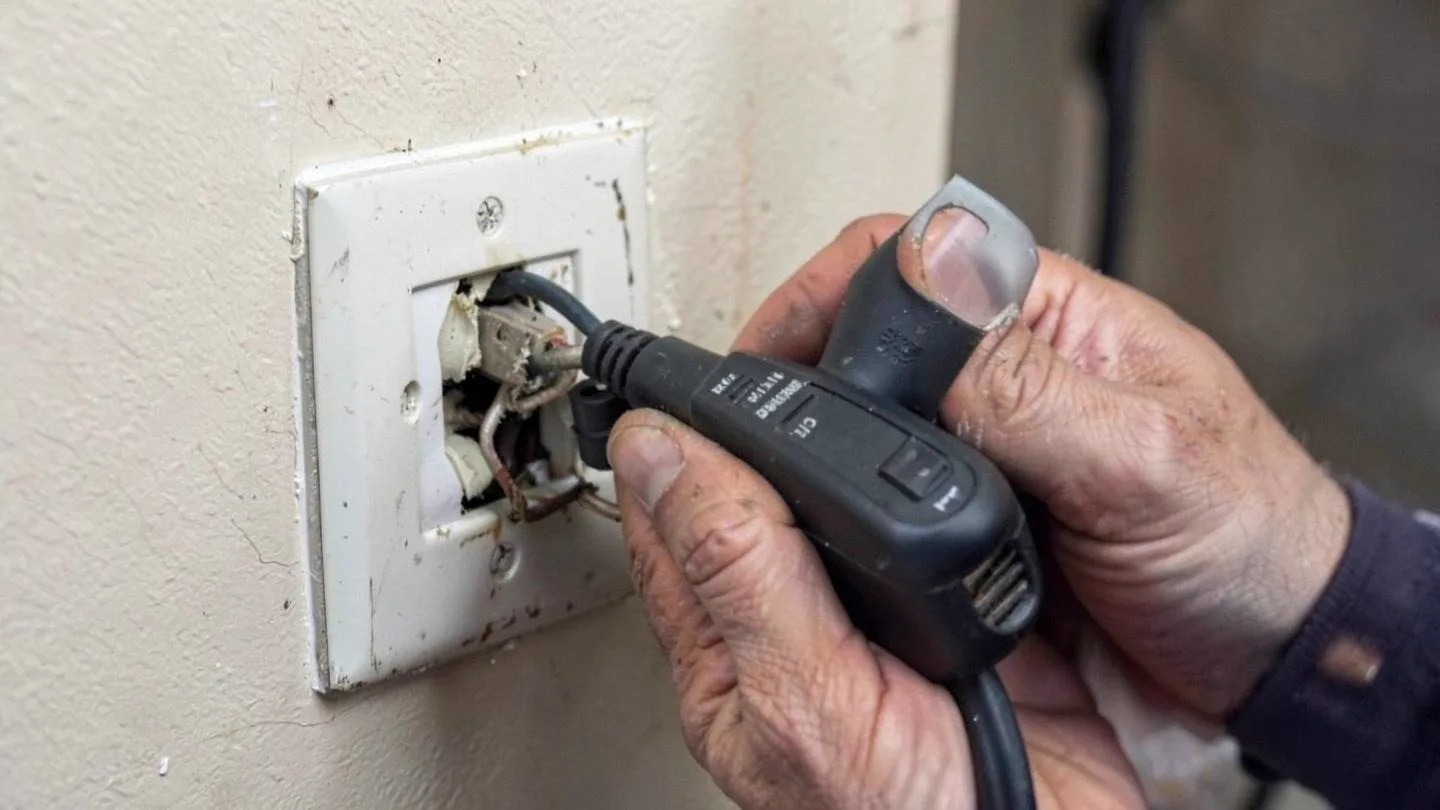
Treat heat, smell and scorching as urgent: a warm or discolored outlet or switch, a burning smell, or buzzing from a device or panel means shut the circuit off at the breaker and call an electrician. Repeated breaker trips, lights that dim when appliances start, and outlets that no longer hold a plug are less dramatic but still point at wiring or connections that need attention.
Key points
- A breaker that trips repeatedly is doing its job. Do not reset it endlessly, find the cause.
- Warmth, smell or scorch marks are stop now signals.
- Older homes with two prong outlets and no ground deserve an evaluation, not a workaround adapter.
Urgent signs
- A burning or fishy plastic smell near an outlet, switch or panel
- Outlets, switch plates or cover plates that feel warm
- Scorch marks, discoloration or melted plastic
- Buzzing, crackling or sizzling sounds
- Any shock, even a small one, when touching an appliance or plate
Seeing one of these right now?
Find an electricianSigns that need attention soon
- Breakers that trip repeatedly on the same circuit
- Lights that flicker or dim when a large appliance starts
- Outlets that no longer grip a plug
- Extension cords and power strips being used as permanent wiring
- Two prong ungrounded outlets, or no ground fault protection in kitchens, baths, garages and outdoors
- A panel with obsolete or recalled equipment, or one with no room left
What not to do
- Do not replace a breaker with a larger one to stop nuisance tripping. That removes the protection instead of the problem
- Do not use a three prong adapter on an ungrounded outlet and consider it solved
- Do not open the panel cover yourself
- Do not ignore a smell because it went away
How an electrician approaches it
Diagnosis usually starts with the circuit rather than the symptom: what is on it, what changed, and where the connections are. Loose connections at devices and terminations are a very common cause of heat and intermittent faults. Our guides on when to call an emergency electrician and hiring an electrician cover the urgency call and the vetting process.
Common questions
- Are flickering lights always a wiring problem?
- Not always. A loose bulb, a failing fixture or an incompatible dimmer and bulb combination can do it. Flickering across several fixtures, or flickering tied to appliances starting, is more likely a connection or supply issue and is worth investigating.
- Does an older home always need rewiring?
- No. Many older homes are safe with targeted upgrades such as grounded circuits in key areas, ground fault and arc fault protection, and panel work. An evaluation tells you which parts genuinely need attention.
- How urgent is a warm outlet or switch plate?
- Treat it as urgent. Warmth, discoloration, buzzing or a burning smell at a device usually means a loose connection or an overloaded circuit, and those are common causes of electrical fires. Stop using the outlet, switch off the circuit at the panel, and have an electrician inspect it rather than waiting to see whether it repeats.
- What will an electrician charge to diagnose the problem?
- Most electricians charge a service call or diagnostic fee, and rates rise after hours. Ask how the fee works when you book and whether it applies toward the repair. Describe the symptoms clearly, including which rooms and devices are affected, so the electrician arrives prepared rather than needing a second visit.