
Signs your home's electrical system needs updating
The signals that an older electrical system is no longer keeping up, why some of them are safety issues, and what an electrician will assess.
By Elijah Canfield, Founder, Hire Best Pros · Updated August 26, 2026
Elijah Canfield is the founder of Hire Best Pros. He writes and edits the site's consumer guides, with a focus on how home service and moving projects are priced, scoped and compared.
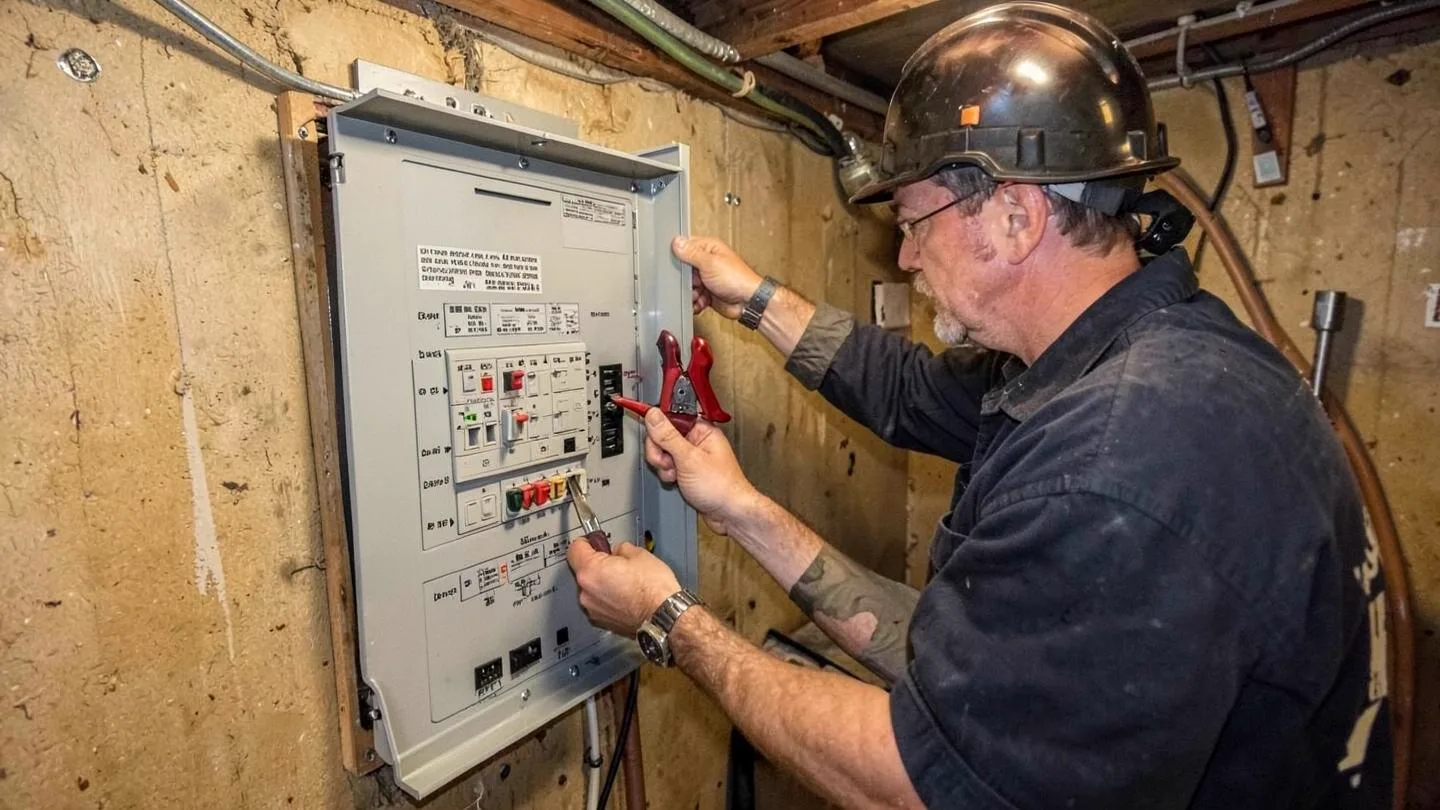
Breakers that trip repeatedly, warm or discoloured outlets and switches, lights that dim when large appliances start, two prong outlets throughout the house, and a panel that is full or obsolete all point at an electrical system that needs professional assessment. Some of these are convenience problems. Burning smells, scorch marks and warm devices are safety problems and should be treated as urgent.
Signals worth an assessment
- Breakers that trip regularly, or fuses that blow repeatedly
- Lights that flicker or dim when an appliance or air conditioner starts
- Two prong ungrounded outlets throughout the house
- No ground fault protection in kitchens, bathrooms, laundry, garage and outdoors
- Extension cords and power strips doing permanent duty because there are too few outlets
- A panel with no spare capacity, or an obsolete panel type
Signals to treat as urgent
- A burning or hot plastic smell near outlets, switches or the panel
- Scorch marks, discolouration or buzzing at a device
- Outlets or switch plates that are warm to the touch
- A mild shock or tingle when touching an appliance
Seeing any of these?
Find an electricianWhy loads changed
Electrical systems are sized for the way a house was used when it was built. Home offices, electric vehicle charging, heat pumps, induction cooking and a much larger number of always on devices all add demand. An older service can be perfectly safe and still be undersized for how a family lives now.
What an electrician will look at
- Service size, panel condition and available circuit capacity
- Wiring type and condition, including older cloth insulated or aluminium branch wiring
- Grounding and bonding
- Ground fault and arc fault protection where currently required
- Whether upgrades trigger permit and inspection requirements
Common questions
- Does an older house automatically need rewiring?
- No. Plenty of older systems are safe and serviceable. What matters is condition, capacity, grounding and protection, which is what an assessment establishes.
- Can I add outlets myself?
- Local rules vary and some jurisdictions allow homeowner work with a permit, but branch circuit work is a common source of hidden hazards. A licensed electrician and a permitted inspection is the safer path.
- What does an electrical assessment involve?
- An electrician typically reviews the panel and its capacity, the condition of breakers and connections, grounding and bonding, the wiring types present, protective devices at outlets in wet areas, and how the load is distributed across circuits. You should receive a written summary with recommendations ranked by safety rather than a verbal list.
- Do I need a panel upgrade before adding major appliances?
- It depends on the existing capacity and how loaded the panel already is. Additions such as an electric range, heat pump, hot tub or vehicle charger draw significant power, and the electrician should perform a load calculation instead of guessing. Ask for that calculation in writing, since it also tells you what else the house could support later.