
Toilet repair basics
How to identify the three common toilet faults, which ones are simple part swaps, and which ones mean calling a plumber.
By Elijah Canfield, Founder, Hire Best Pros · Updated August 27, 2026
Elijah Canfield is the founder of Hire Best Pros. He writes and edits the site's consumer guides, with a focus on how home service and moving projects are priced, scoped and compared.
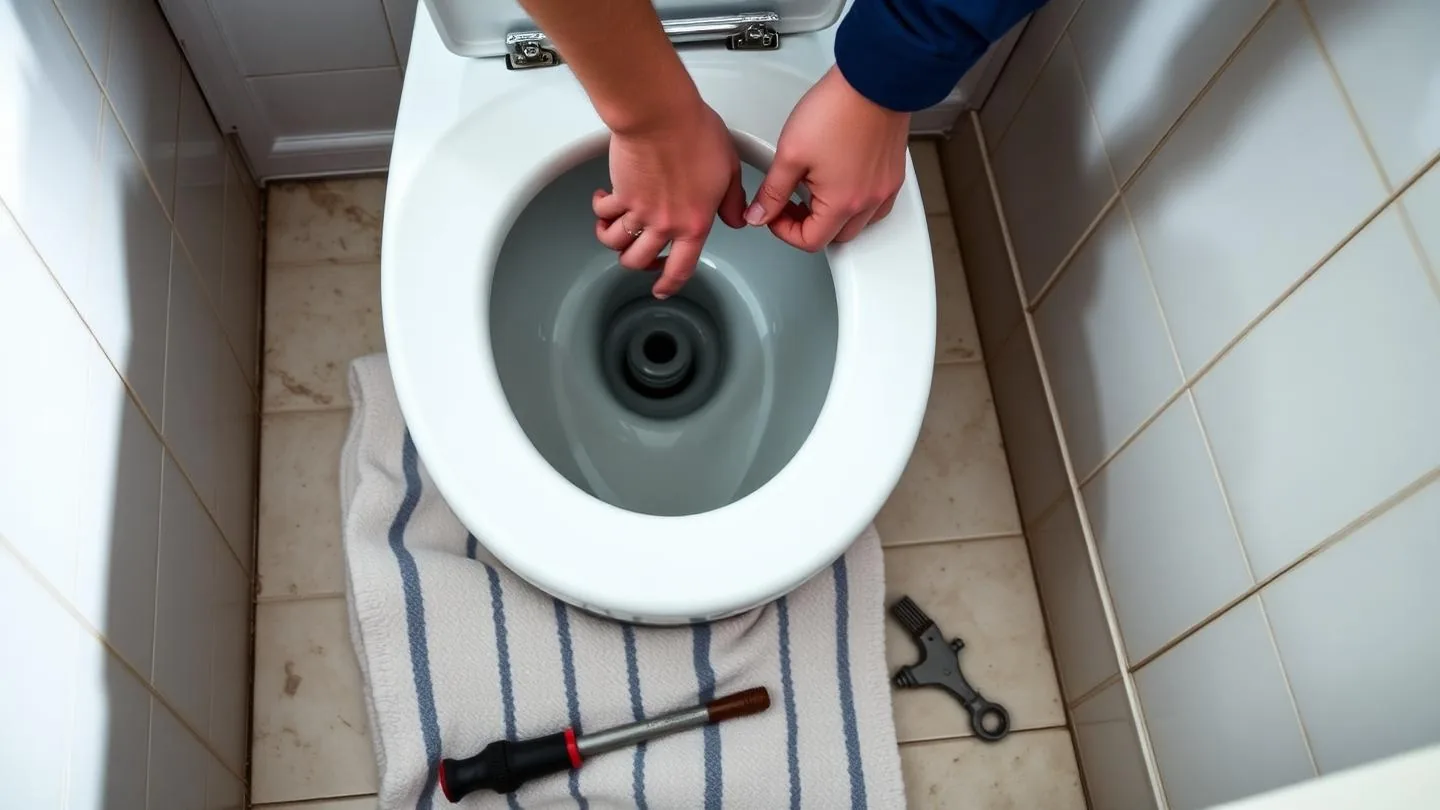
A toilet that runs constantly usually has a failed flapper or a fill valve set too high. A weak flush is often blocked rim holes or a partial clog. Water on the floor is the one to take seriously, because it can mean a failed wax ring, a cracked tank or a supply line, and it damages the subfloor while you decide.
Key points
- A running toilet wastes water continuously and is usually a cheap part.
- Rocking on the floor means the flange or bolts need attention, not caulk.
- Sewage smell or water at the base is a call, not a project.
The toilet that will not stop running
Lift the tank lid and watch a cycle. If water flows over the top of the overflow tube, the fill valve is set too high or has failed. If the tank drains slowly with no flush, the flapper is not sealing. Both are inexpensive parts, but match the model before buying.
Weak or incomplete flush
- Check the chain length so the flapper opens fully
- Confirm the water level reaches the marked fill line
- Clear mineral deposits from the rim holes under the bowl edge
- Rule out a partial clog in the trap or the branch drain
When to stop and call
- Water pooling at the base after every flush
- A toilet that rocks or has loosened from the floor
- Repeated clogs across multiple fixtures, which suggests a main line issue
- Any sewage odor that persists after cleaning
Need a plumber?
Find local plumbersCommon questions
- Which toilet repairs are reasonable for a homeowner?
- Replacing a flapper, fill valve or flush lever, adjusting the chain and float, tightening a loose seat, and clearing a routine clog with a flange plunger are all common homeowner tasks. Turn off the supply stop first and have a towel and bucket ready. If a part will not come loose or the shutoff will not hold, stop there.
- When should I stop and call a plumber?
- Call when water appears at the base, when the toilet rocks, when clogs return repeatedly, when other fixtures gurgle or back up at the same time, or when the tank or bowl is cracked. Those point to a wax seal, flange, venting or drain line problem rather than a tank part, and continuing to plunge can make the damage worse.
- Is it worth repairing an older toilet or replacing it?
- Internal parts are inexpensive and worth replacing on a toilet that flushes well and is not damaged. Replacement makes more sense when the bowl is cracked, the toilet flushes poorly even after new parts, the finish is heavily worn, or you want to change the height or footprint. Ask the plumber to price both when they are already on site.
- What causes a toilet to run intermittently?
- Usually a flapper that is no longer sealing, a chain that is too tight or too loose, or a fill valve that is letting water past. Water trickles into the bowl, the level drops, and the valve cycles to refill. A few drops of food coloring in the tank will show whether water is passing into the bowl without a flush.