
What happens when water damage goes ignored
Stains, odors, warped trim and peeling paint are early stages. Here is how water damage progresses and where to look for the source.
By Elijah Canfield, Founder, Hire Best Pros · Updated August 26, 2026
Elijah Canfield is the founder of Hire Best Pros. He writes and edits the site's consumer guides, with a focus on how home service and moving projects are priced, scoped and compared.
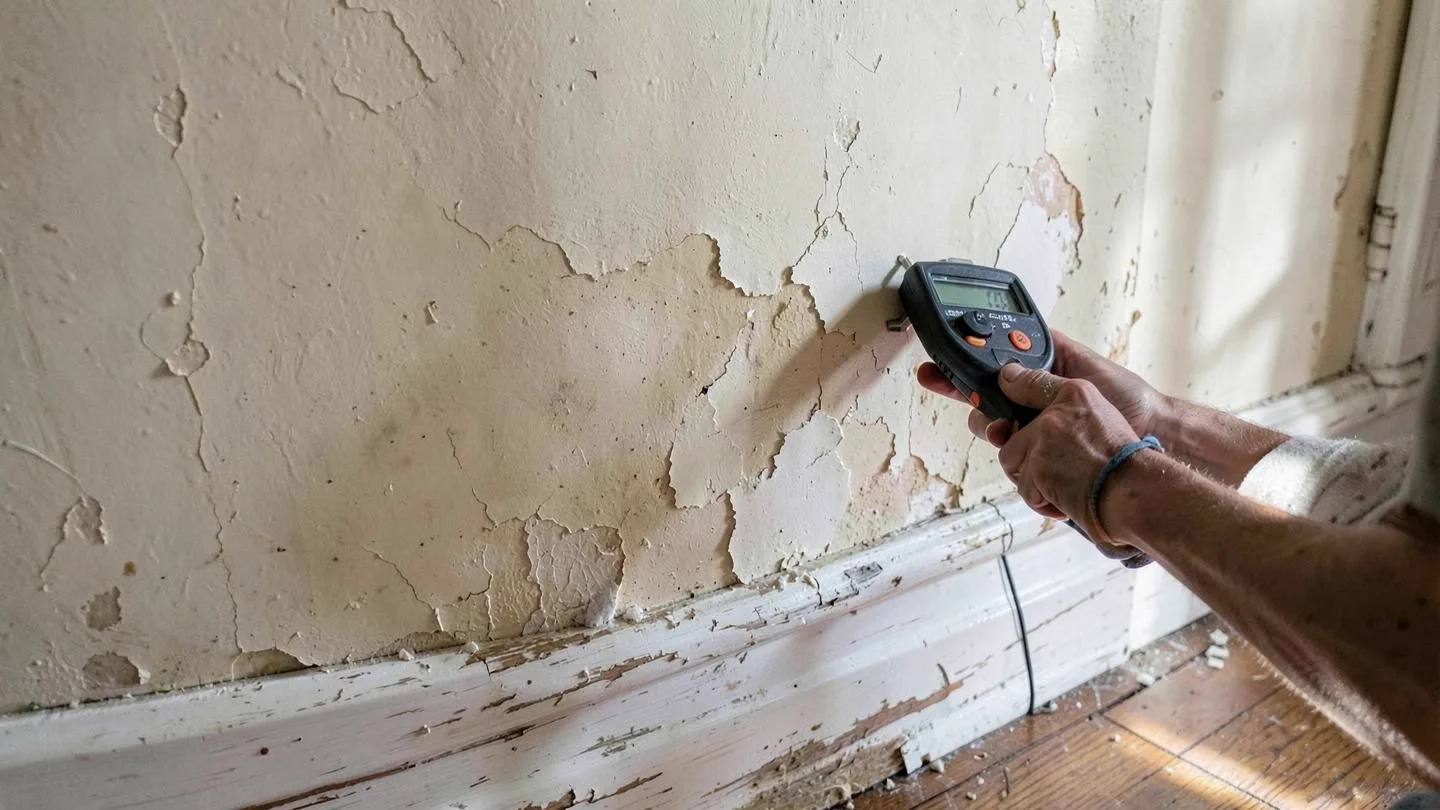
Water damage moves through predictable stages: a stain or musty smell, then softened and warped materials, then mold growth in the cavity, then compromised framing and finishes that must be removed rather than dried. The cost curve is steep, which is why finding the source early matters more than repairing the cosmetic evidence.
Key points
- A stain is the symptom. The source is usually above it or behind it.
- Musty smell with no visible stain still means moisture somewhere.
- Photograph and date everything if insurance may be involved.
The early signs
- Ceiling or wall staining, especially rings that grow after rain
- A musty or earthy smell in one room, closet or basement
- Peeling, bubbling or blistering paint and wallpaper
- Warped, swollen or separating trim, baseboard or flooring
- Efflorescence or white powder on basement masonry
- Condensation on windows and cold surfaces that never clears
Where the water usually comes from
| Where you see it | Likely sources |
|---|---|
| Ceiling below a roof | Roof, flashing, ice damming or attic condensation |
| Ceiling below a bathroom | Shower pan, supply line, drain or toilet seal |
| Wall near a kitchen or bath | Supply line, drain, or a failed tile or grout detail |
| Basement wall or floor | Exterior drainage, grading, gutters, or hydrostatic pressure |
| Around a window | Flashing, sealant, or condensation from indoor humidity |
What to do first
- Stop the source if you can: shut a valve, place a bucket, clear a blocked gutter
- Document with dated photos before anything is repaired
- Move belongings and dry the area with air movement
- Have the source diagnosed rather than only repainting the stain
Not sure where the water is coming from?
Find help for your projectPrevention that actually works
Most repeat water damage traces back to drainage and maintenance: gutters that overflow, downspouts discharging at the foundation, grading that slopes back toward the house, missed roof maintenance and slow plumbing leaks that were never chased down. Our guides on gutter maintenance mistakes and the plumbing maintenance checklist cover the routine that prevents most of it.
Common questions
- The stain dried and stopped growing. Is it fine?
- Not necessarily. A stain that stops growing may mean the leak is intermittent, such as one that only appears with wind driven rain or heavy use of a fixture above. It is worth identifying the source rather than assuming it resolved.
- What should I do in the first hours after finding water damage?
- Stop the source if you can, then document everything with dated photos before cleanup. Move belongings out, get air moving and start drying the area, and remove standing water. Avoid electrical equipment in wet areas. Then call a professional promptly, because how fast an area dries largely determines whether mold becomes part of the problem.
- Will homeowners insurance cover water damage?
- It depends on the cause and on your policy. Sudden accidental events are generally treated differently from gradual leaks, wear or maintenance issues, and flooding is usually handled separately. Document the damage, keep receipts for emergency mitigation, and speak with your insurer before major demolition. Read your own policy rather than relying on general guidance.
- Who do I call for water damage: a plumber or a restoration company?
- Call a plumber or roofer to stop the source, and a restoration company to dry the structure and handle affected materials when the area is more than a small spot you can dry yourself. For larger events, they often work together. Ask the restoration company what drying equipment they use and how they verify the space is dry before rebuilding.