
The best time to replace an HVAC system
Why offseason replacement is usually easier, how to compare efficiency options without guessing, and how to tell a planned replacement from an emergency one.
By Elijah Canfield, Founder, Hire Best Pros · Updated August 26, 2026
Elijah Canfield is the founder of Hire Best Pros. He writes and edits the site's consumer guides, with a focus on how home service and moving projects are priced, scoped and compared.
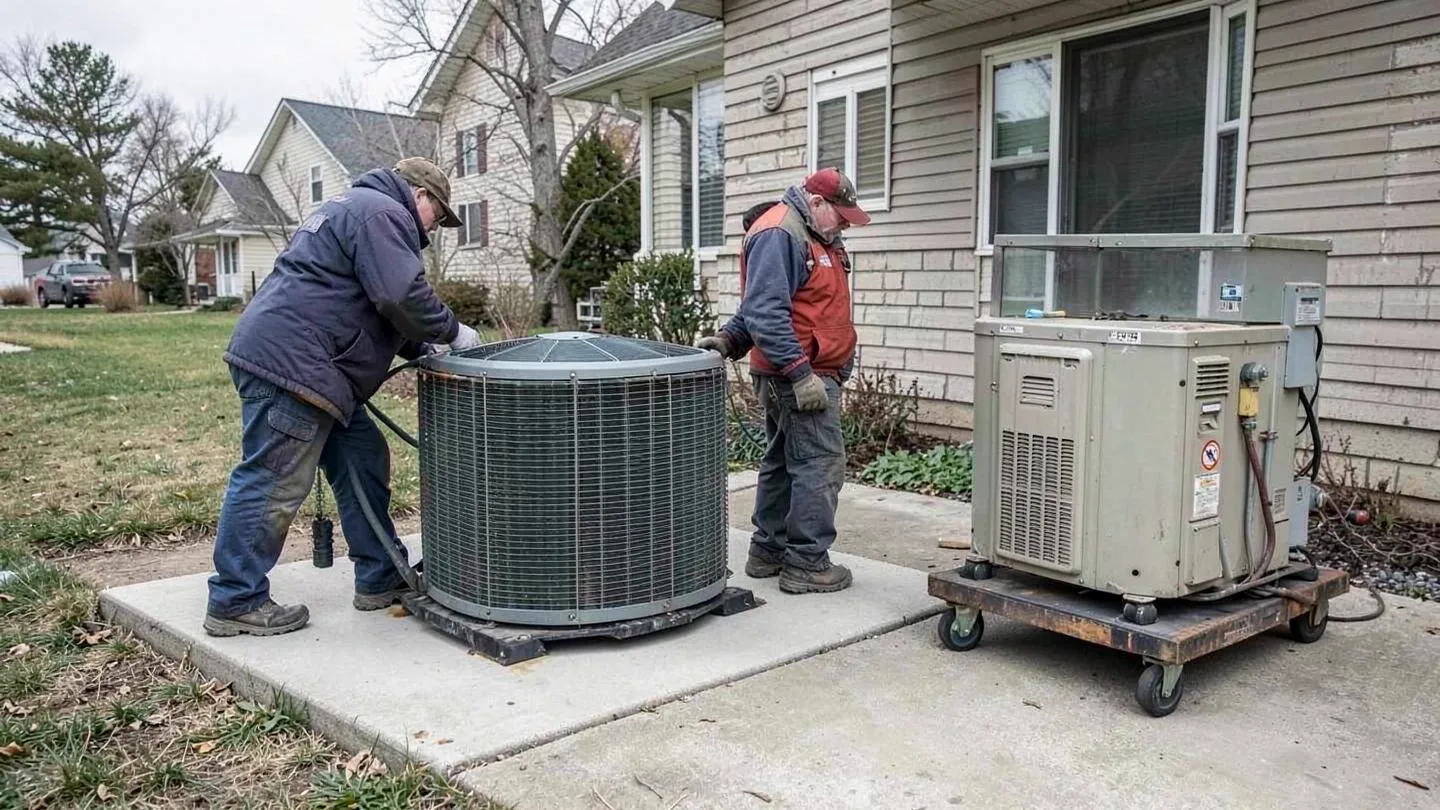
The easiest time to replace heating or cooling equipment is the offseason, in spring or fall, when contractors are not running emergency calls and you are not making a decision inside a hot or freezing house. Efficiency choices should be made against your climate, your ductwork and how long you plan to stay, not against a single rating number.
Key points
- An emergency replacement is a decision made under pressure. Offseason is not.
- Duct condition can limit what a new system delivers, whatever it is rated for.
- Match equipment to the load, not to the size of the old unit by default.
Why the offseason is easier
- Scheduling is flexible, so you can get more than one proposal
- You have time to compare equipment rather than accept what is on the truck
- The house is comfortable during the changeover
- Duct repairs and other related work can be bundled into the same visit
Choosing an efficient system without guessing
Efficiency ratings describe equipment performance under test conditions. Real performance in your home depends on sizing, duct leakage, insulation and how the system is commissioned after installation.
Ask any contractor to perform a load calculation rather than matching the old unit's capacity. Oversized equipment short cycles, controls humidity poorly and wears faster.
Getting quotes for a replacement?
Find HVAC helpWhat to compare across proposals
- The load calculation, and the capacity each contractor recommends
- Equipment model numbers so you are comparing the same tier
- Whether duct sealing, returns or line set replacement are included
- Thermostat and controls, and whether zoning is proposed
- Labor warranty length and what registration the manufacturer requires
- Costs vary based on location, project size, materials, complexity, access and the provider you hire.
Repair or replace
A single repair on a system that is well inside its expected life is usually worth doing. Repeated failures, a refrigerant type that is being phased down, or a major component failure on aging equipment shift the math toward replacement.
If you are in that gray zone, our guide on repairing versus replacing heating and cooling equipment walks through the tradeoff in more detail.
Common questions
- Is it a mistake to replace an HVAC system in an emergency?
- It is not a mistake, but it is the most expensive way to buy. When the house has no heat or cooling, you accept whatever is available and have little time to compare proposals. If your system is aging and already needing repairs, gathering quotes during a mild stretch puts you in a much better position.
- How should I compare HVAC proposals?
- Compare equipment model numbers and matched indoor and outdoor components, the sizing method used, ductwork and airflow work included, thermostat, permits, removal of the old system, startup and commissioning, and the labor warranty separate from the parts warranty. A proposal that only lists a price and a brand is not enough to compare fairly.
- Does replacing only half the system cause problems?
- It can. Outdoor and indoor components are engineered to work as a matched set, and pairing a new unit with an older coil or air handler may reduce performance and complicate warranty coverage. There are situations where a partial replacement is reasonable, so ask the contractor to explain the tradeoffs for your specific equipment in writing.
- What should I do while I wait to replace?
- Keep filters fresh, book a tune up, address small repairs that keep the system safe, and note the failures you are experiencing so contractors have real information. Use the time to gather two or three proposals and check financing or rebate options through your utility so you are not researching those under pressure.