
How to lower your air conditioning costs
Practical ways to cut cooling costs, from filters and thermostat habits to the shell of the house, and where professional service actually pays off.
By Elijah Canfield, Founder, Hire Best Pros · Updated August 26, 2026
Elijah Canfield is the founder of Hire Best Pros. He writes and edits the site's consumer guides, with a focus on how home service and moving projects are priced, scoped and compared.
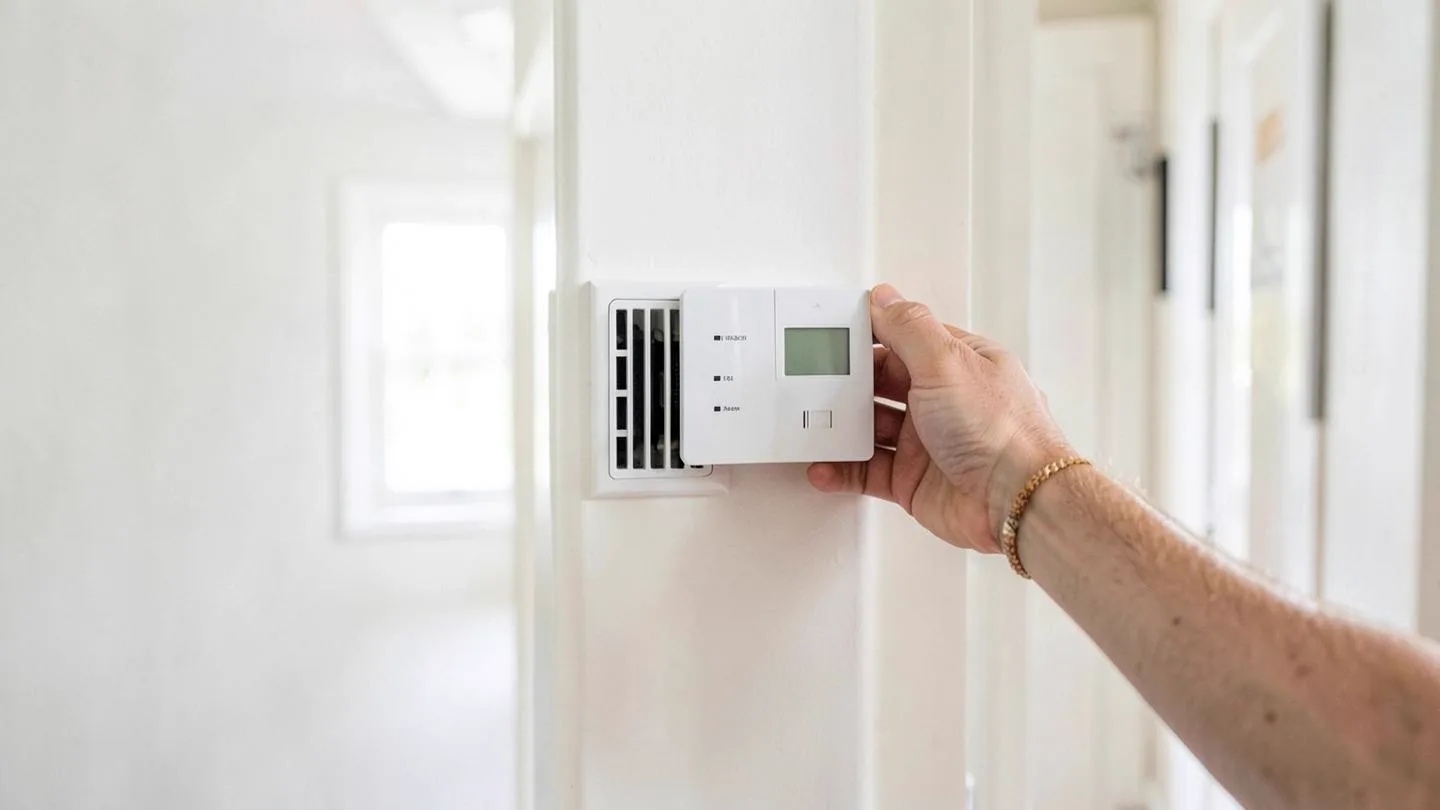
Cooling cost comes down to three things: how much heat gets into the house, how efficiently the system moves heat back out, and how long it has to run. Clean filters, clear the outdoor unit, seal the obvious leaks, use shade and window coverings during the hottest part of the day, and let a technician check refrigerant charge and airflow rather than guessing at them.
Key points
- A dirty filter or blocked condenser makes a healthy system work harder for the same result.
- Setting the thermostat much lower does not cool the house faster.
- Duct leaks in an unconditioned attic waste cooling you already paid for.
Start with the system
- Replace or clean the air filter on the schedule the manufacturer recommends
- Keep at least a couple of feet clear around the outdoor condenser and rinse debris off the coil fins
- Do not close vents in unused rooms on most residential systems, since that changes system pressure rather than saving energy
- Have a technician verify refrigerant charge, airflow and coil condition rather than adding refrigerant on assumption
Then the house
- Close blinds or curtains on sun facing windows during the afternoon
- Seal gaps around doors, windows, attic hatches and penetrations
- Check that attic insulation is at the depth recommended for your climate zone
- Run bath and kitchen exhaust fans only as long as needed, since they pull conditioned air out
System working harder than it should?
Find HVAC helpThen the habits
A programmable or smart thermostat lets the house drift a few degrees while nobody is home and recover before you return, which is normally cheaper than holding one temperature all day. Ceiling fans make a room feel cooler by moving air across skin, so they help only while someone is in the room.
When the fix is bigger than a habit
- Cooling runs constantly and still does not reach the set temperature
- Some rooms never cool while others are cold
- Bills rise sharply with no change in weather or occupancy
- The system is old, uses a phased out refrigerant, and needs frequent repair
Common questions
- Does turning the thermostat way down cool the house faster?
- No. A conventional system cools at one rate. Setting it lower only means it runs past the point you actually wanted.
- Is it cheaper to leave the air conditioning on all day?
- In most homes, letting the temperature drift up while nobody is home uses less energy than holding a low set point, even accounting for the recovery period.
- What is the cheapest change that actually lowers cooling bills?
- Keeping airflow clean and unobstructed. That means changing filters on schedule, keeping supply and return vents clear, rinsing the outdoor coil, and clearing plants back from the condenser. Add basic shading and sealing of obvious air leaks, and the system runs shorter cycles. These cost little and are the ones most often skipped.
- When should I stop optimizing and call a technician?
- Call when the house is not reaching the setpoint on a normal day, when the system runs constantly, when you hear grinding or repeated hard starting, when ice forms on the lines, or when bills jump without a change in weather or habits. Those point to a mechanical or refrigerant issue that thermostat settings will not solve.