
Common gas furnace problems
The usual reasons a gas furnace short cycles, blows cool air or will not start, what is safe to check yourself, and where a technician has to take over.
By Elijah Canfield, Founder, Hire Best Pros · Updated August 26, 2026
Elijah Canfield is the founder of Hire Best Pros. He writes and edits the site's consumer guides, with a focus on how home service and moving projects are priced, scoped and compared.
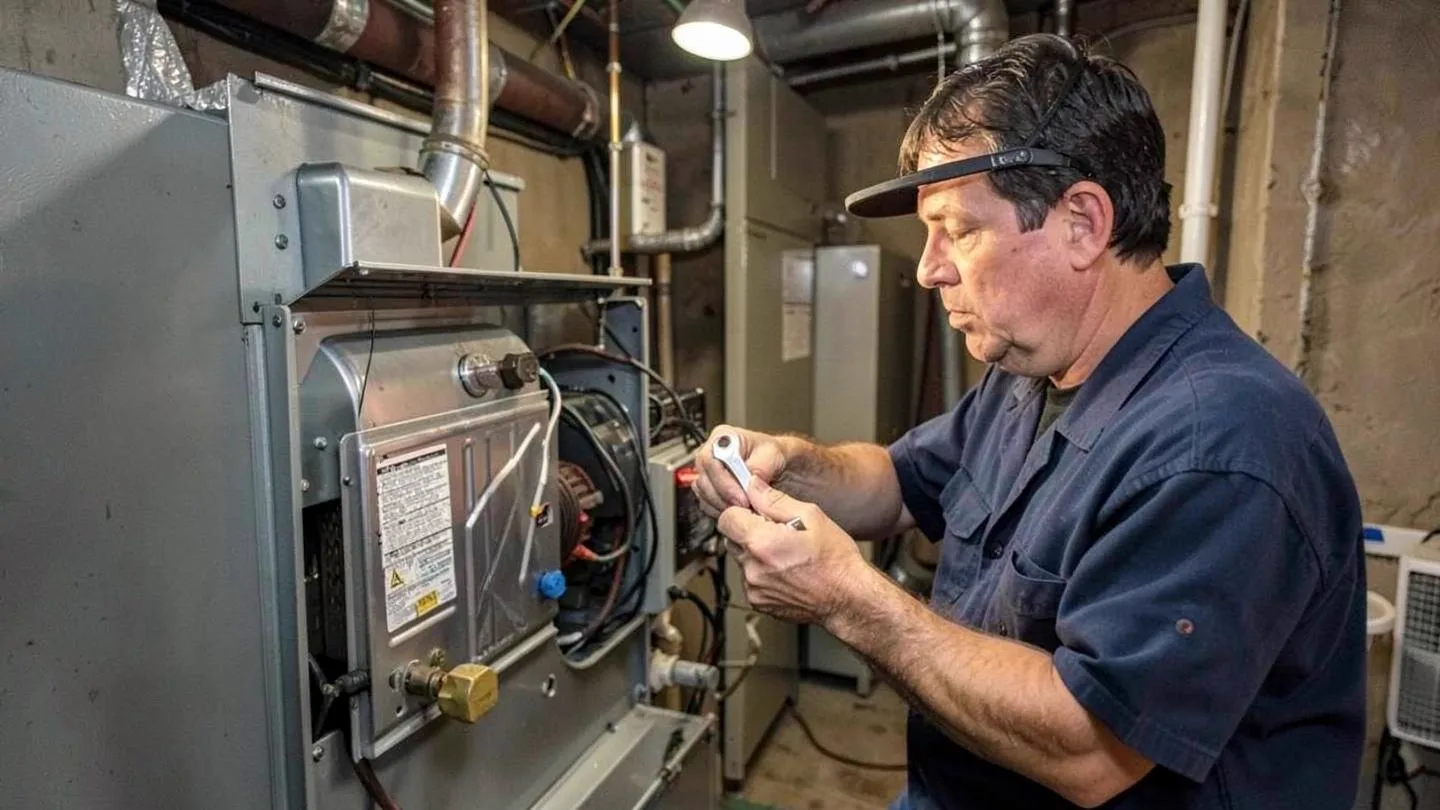
The most common furnace complaints trace back to a handful of causes: a thermostat or power problem, a clogged filter restricting airflow, a blocked flue or condensate line, a failed igniter or flame sensor, or a safety switch doing exactly what it is supposed to do. Check the thermostat, the breaker, the filter and the furnace switch. Anything involving gas, the burner assembly or the heat exchanger is technician work.
The furnace will not start
- Thermostat set to heat, batteries good, set point above room temperature
- Furnace switch on and the breaker not tripped
- Front panel seated properly, since a door switch stops the furnace when it is loose
- Gas supply valve open, and other gas appliances working
It runs but the air is not warm
A furnace blowing cool air is often running the blower while the burners are not firing. That points at ignition, flame sensing, or a safety lockout. A dirty flame sensor is one of the most common causes and it is a routine service item.
It turns on and off repeatedly
- A clogged filter restricting airflow and tripping the limit switch
- Blocked or closed supply registers
- An oversized system for the house
- A thermostat located near a heat source or in direct sun
Furnace short cycling?
Find HVAC helpStop and call for service
- Any smell of gas, which means leaving the house and calling the gas utility first
- A yellow, lazy burner flame rather than a steady blue one
- Soot around the furnace or a carbon monoxide alarm sounding
- Water pooling at a high efficiency furnace, which usually means a blocked condensate line
Common questions
- How often should a furnace be serviced?
- Annual service before the heating season is the common recommendation, and many manufacturer warranties expect documented maintenance.
- Can I replace the flame sensor or igniter myself?
- These are inexpensive parts, but they sit inside the burner compartment of a gas appliance. Unless you are confident and the manufacturer documents the procedure, this is worth handing to a technician.