
Ductwork maintenance and what it actually involves
What a duct inspection covers, the difference between sealing and cleaning, how filters fit in, and the signs your duct system is limiting your comfort.
By Elijah Canfield, Founder, Hire Best Pros · Updated August 26, 2026
Elijah Canfield is the founder of Hire Best Pros. He writes and edits the site's consumer guides, with a focus on how home service and moving projects are priced, scoped and compared.
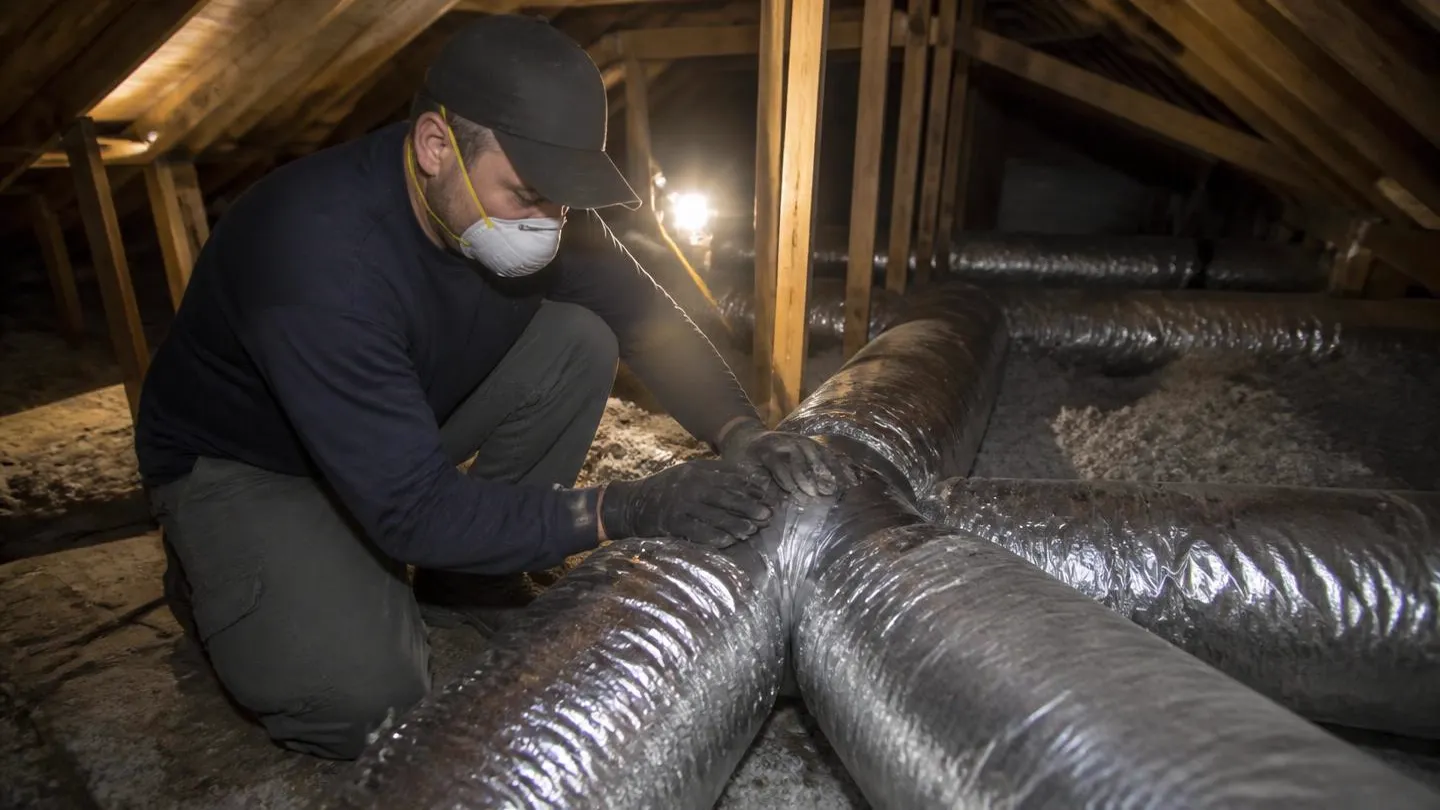
Duct maintenance is mostly inspection, sealing and airflow correction rather than cleaning. A technician looks for disconnected or crushed runs, leaking joints, missing insulation in unconditioned space and imbalanced airflow between rooms. Cleaning is a separate service that makes sense in specific situations rather than on a fixed schedule.
Key points
- Leaky ducts in an attic or crawlspace waste conditioned air before it reaches the room.
- Uneven room temperatures are often a duct problem, not a thermostat problem.
- Filters are the part homeowners actually own. Check monthly during heavy use.
What an inspection looks for
- Disconnected, crushed or kinked flexible duct runs
- Leaks at plenum, boot and joint connections
- Missing or fallen insulation on ducts running through attics, crawlspaces or garages
- Registers that deliver much less air than others
- Return air paths that are undersized or blocked
Sealing versus cleaning
Sealing addresses air escaping the system, which is a comfort and energy issue you can feel. Cleaning addresses debris inside the ducts, which is worth doing after a renovation, after visible mold or vermin activity, or when ducts are genuinely fouled. It is not a routine annual service for most homes.
If a company quotes cleaning without inspecting first, ask them to show you what they found before you agree to the work. Our guide on the signs your air ducts should be cleaned covers when it genuinely applies.
Rooms that never match the thermostat?
Find HVAC helpFilters, which are yours to manage
- Check monthly during heavy heating or cooling use and replace when light no longer passes easily
- Match the size and airflow rating your system is designed for. A very restrictive filter can starve the blower
- Write the date on the frame so the next check is not guesswork
- Keep at least one spare on hand
Common questions
- How often should ducts be cleaned?
- There is no universal schedule. Clean when there is a reason: a renovation that put dust into the system, visible mold, pests, or debris you can see at the registers. Otherwise inspection and sealing deliver more.
- Can I seal duct leaks myself?
- Accessible joints in a basement or garage can be sealed with mastic or foil backed tape. Standard cloth duct tape is not appropriate. Anything inside walls or requiring attic work is better left to a technician.