
Fall HVAC maintenance before the heating season
A short checklist for the changeover from cooling to heating, including what you can do yourself and what belongs on a technician's visit.
By Elijah Canfield, Founder, Hire Best Pros · Updated August 26, 2026
Elijah Canfield is the founder of Hire Best Pros. He writes and edits the site's consumer guides, with a focus on how home service and moving projects are priced, scoped and compared.
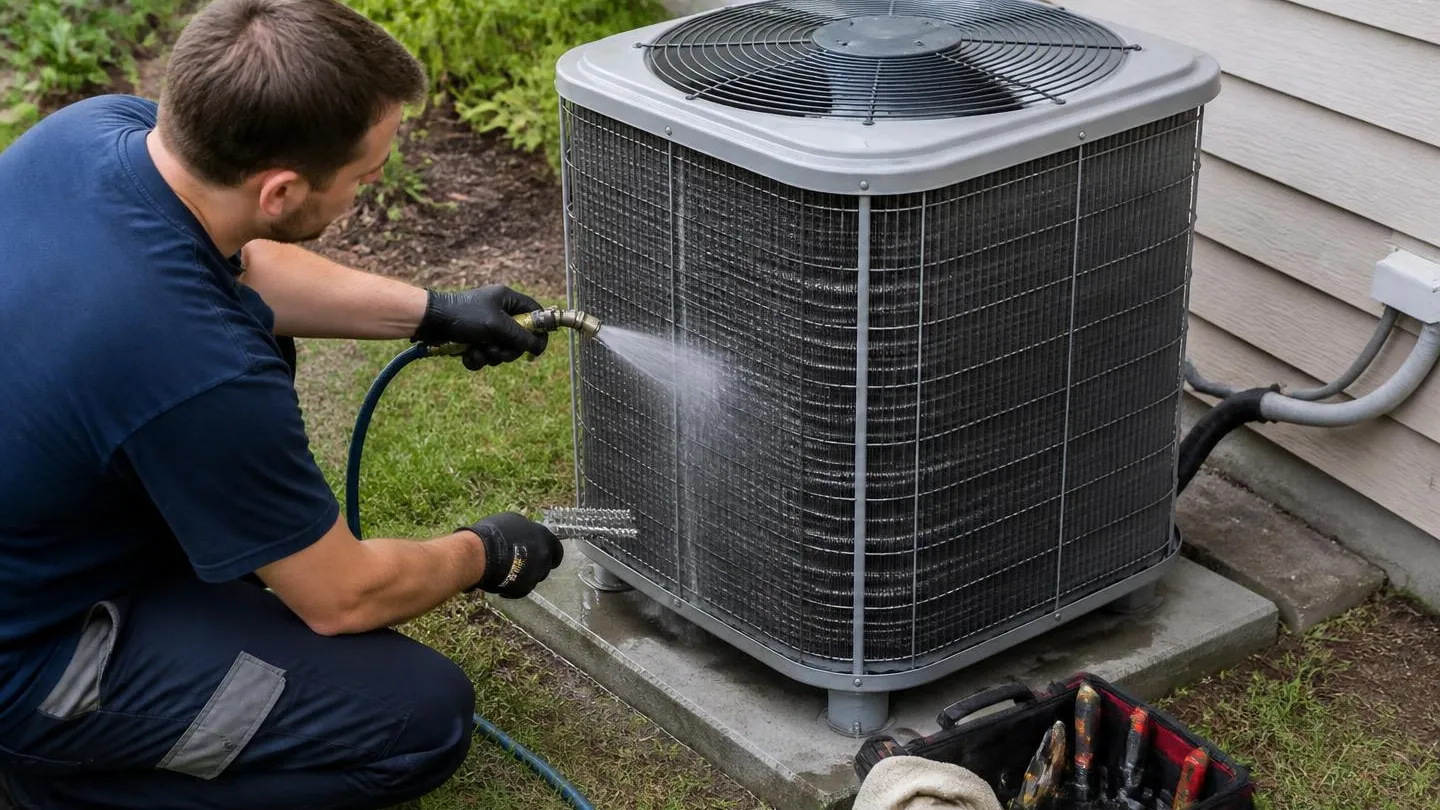
Before the first cold night, replace the filter, clear the area around indoor and outdoor equipment, test the heat while it is still optional, check that vents are open and unblocked, and confirm carbon monoxide detectors work. Book the professional tune up early, because availability tightens as soon as temperatures drop.
What you can do in an afternoon
- Replace the filter and note the date
- Run the heat for a cycle and listen for new noises or smells
- Clear leaves and debris from around the outdoor unit and from condensate drains
- Open and unblock supply and return registers, including behind furniture
- Test smoke and carbon monoxide detectors and replace batteries
- Reverse ceiling fans to push warm air down at low speed
What the technician should cover
- Combustion and heat exchanger inspection on gas equipment
- Burner and ignition operation, and flue condition
- Blower and motor condition, amperage draw and belt where applicable
- Thermostat calibration and safety control testing
- Condensate handling for high efficiency equipment
Ready to book the seasonal visit?
Find HVAC helpWhile you are already outside
Fall is the practical time to close out the rest of the exterior work that affects heating comfort: sealing drafts around windows and doors, clearing gutters so meltwater drains, and checking that attic access hatches close tightly. Our pre winter home maintenance checklist covers the full pass.
Common questions
- Why does the furnace smell when I first turn it on?
- A brief dusty smell as dust burns off the heat exchanger is common at the first run of the season. A persistent burning smell, a smell of gas, or smoke is not, and means shutting the system down and calling for service.
- When should I book the fall tune up?
- Book before the first cold week, ideally in early fall. Heating contractors get much busier once temperatures drop, and a tune up scheduled early means a problem gets found while you can still wait for a part. If your system is older or has been unreliable, being early in the queue matters more.
- What should be included in a heating tune up?
- Expect inspection and cleaning of the burner assembly, flame sensor and ignition components, safety and combustion checks, venting inspection, blower and filter check, thermostat operation, and a written summary of findings. Ask for that report. It is the record that helps you decide later whether to repair again or plan a replacement.