
Comparing flooring options room by room
How hardwood, engineered wood, luxury vinyl, laminate and tile compare on moisture, durability, comfort and repairability, and which rooms suit each.
By Elijah Canfield, Founder, Hire Best Pros · Updated September 9, 2026
Elijah Canfield is the founder of Hire Best Pros. He writes and edits the site's consumer guides, with a focus on how home service and moving projects are priced, scoped and compared.
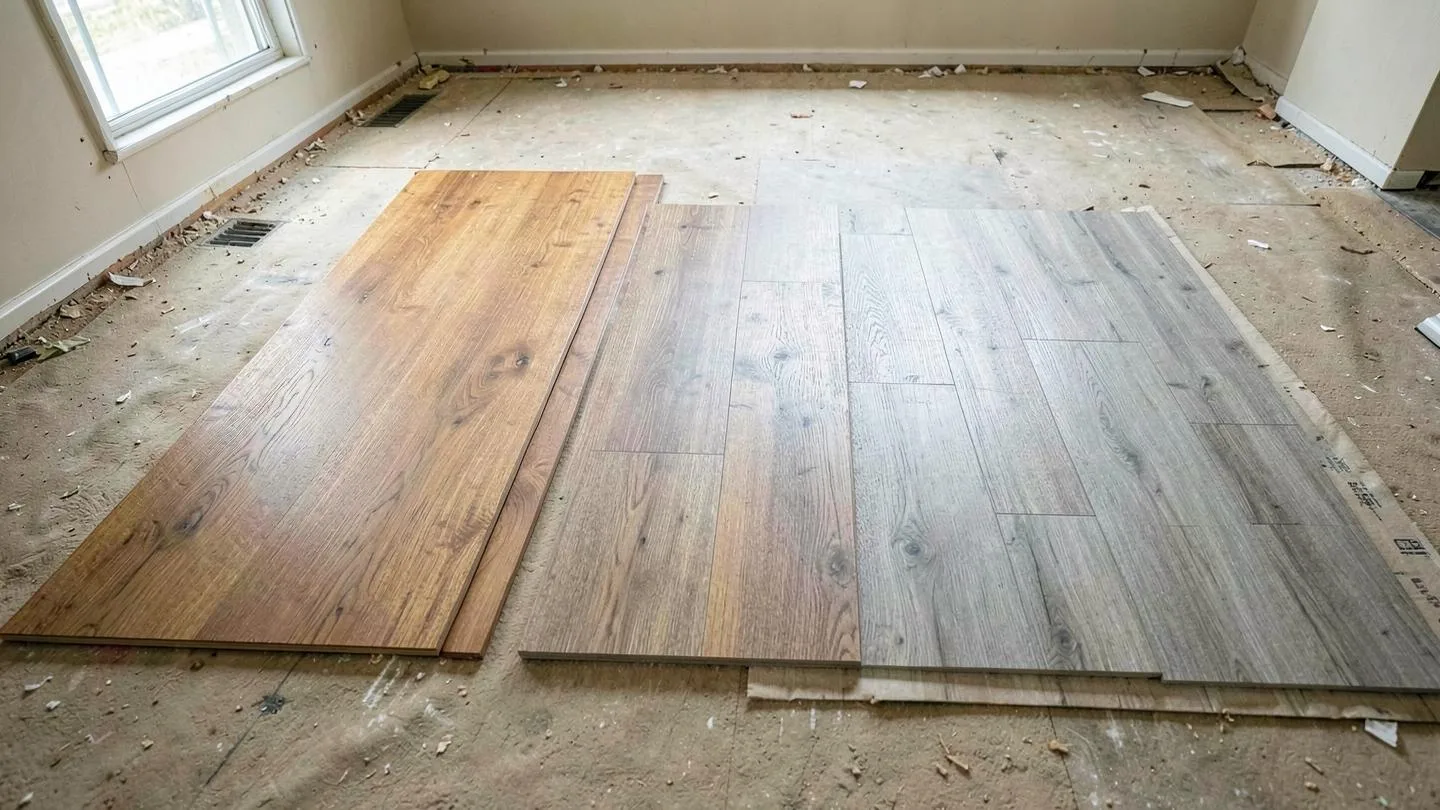
Choose flooring by room conditions first and appearance second. Solid hardwood is repairable and long lived but dislikes moisture. Engineered wood handles humidity better with a thinner wear layer. Luxury vinyl plank is waterproof and forgiving underfoot. Laminate is durable and budget friendly but not a wet area product unless rated. Tile handles water and wear best and is the hardest and coldest surface.
Key points
- Moisture exposure eliminates more options than budget does.
- Subfloor prep decides how the finished floor looks and lasts.
- Repairability matters: some floors are refinished, others are replaced.
Match the material to the room
| Material | Moisture tolerance | Repair path | Suits |
|---|---|---|---|
| Solid hardwood | Low | Sand and refinish multiple times | Living areas and bedrooms above grade |
| Engineered wood | Moderate | Refinish once or twice depending on wear layer | Above and on grade, and over concrete |
| Luxury vinyl plank | High | Replace planks | Kitchens, baths, basements, high traffic |
| Laminate | Low unless rated | Replace planks | Bedrooms and dry living areas |
| Tile | High | Replace individual tiles | Baths, entries, laundry, mudrooms |
The things people underestimate
- Subfloor flatness and moisture, which cause more failures than the flooring itself
- Transitions and thresholds between rooms of different heights
- Underlayment, which affects sound, comfort and warranty compliance
- Pets and claw marks, which favor harder wear layers and matte finishes
- Radiant heat compatibility, which is product specific
Comfort, sound and warmth
Tile is durable and easy to clean but hard and cold without radiant heat. Vinyl and laminate over a good underlayment are softer underfoot and quieter. Wood sits in the middle and is the most forgiving to stand on for long periods.
In apartments and upper floors, check building rules on sound transmission before choosing, since many require a specified underlayment.
Ready to price a floor for your rooms?
Find a flooring proHow to compare quotes
- Whether removal and disposal of the old floor is included
- What subfloor preparation is assumed, and the price if more is needed
- Underlayment, transitions, trim and reinstallation of baseboards
- Moving furniture and appliances, and disconnecting them
- Waste factor and whether attic stock is included
- Warranty terms for both the product and the installation
Common questions
- What is the most durable flooring for a busy household?
- Tile and quality luxury vinyl plank generally handle traffic, pets and moisture best. Wood is durable too, and it is the option that can be refinished rather than replaced.
- Can I put wood flooring in a basement?
- Solid wood is a poor fit below grade because of moisture. Engineered wood rated for below grade, or luxury vinyl, are the usual choices, with a moisture test on the slab first.
- Is luxury vinyl the same as laminate?
- No. Laminate uses a fiberboard core with a printed layer and is vulnerable to standing water unless specifically rated. Luxury vinyl uses a plastic core and handles water far better.