
How often flooring needs replacing
How long common floor types tend to last, what shortens that, and how to tell whether a floor needs refinishing or full replacement.
By Elijah Canfield, Founder, Hire Best Pros · Updated August 26, 2026
Elijah Canfield is the founder of Hire Best Pros. He writes and edits the site's consumer guides, with a focus on how home service and moving projects are priced, scoped and compared.
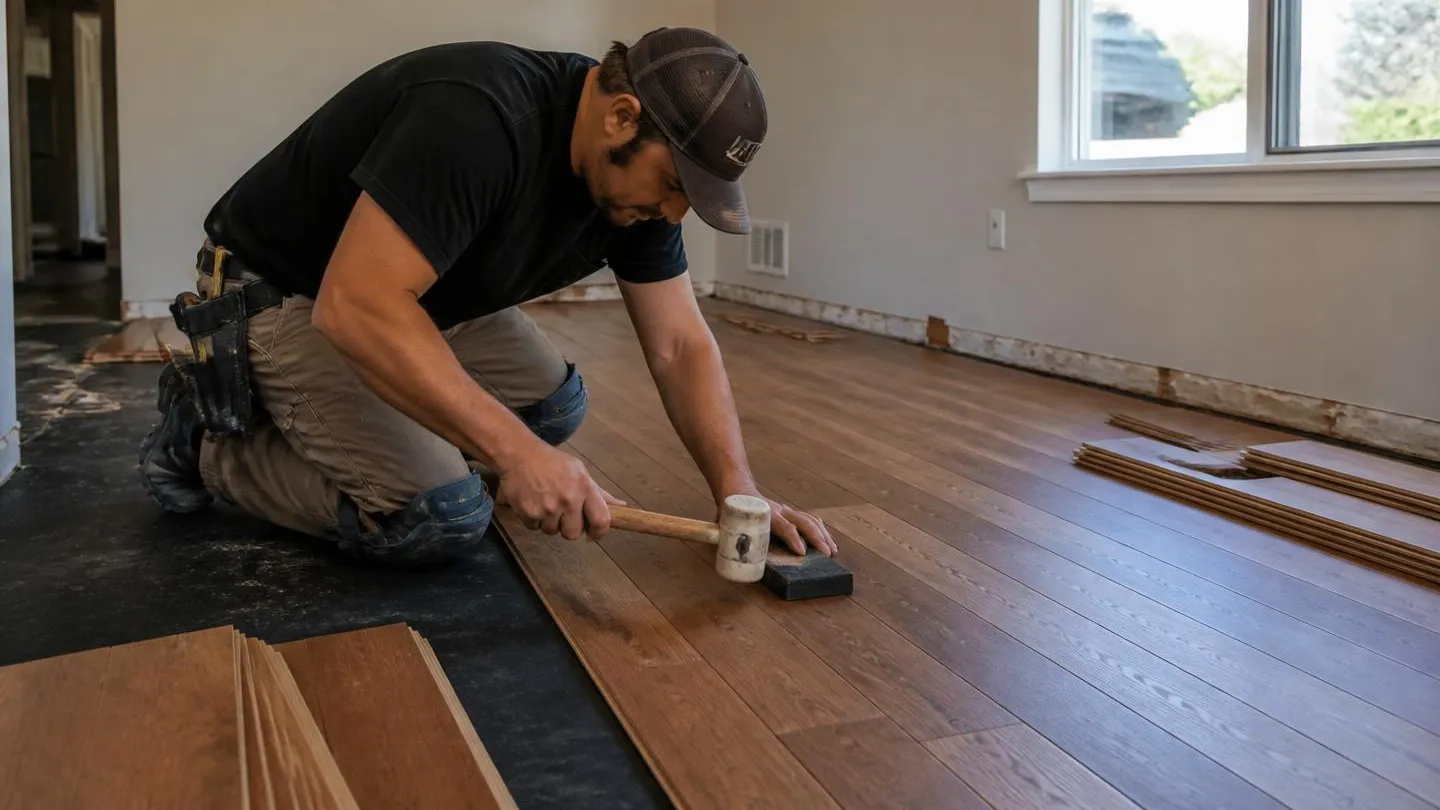
Service life depends far more on wear, moisture and installation quality than on the calendar. Solid hardwood can be refinished repeatedly and last for decades. Engineered wood can be refinished a limited number of times. Laminate, vinyl and carpet wear out and are replaced rather than restored. Tile often outlives everything except its grout. Replace when the wear layer is gone, when moisture damage is present, or when the surface no longer cleans up.
How each type ages
- Solid hardwood: refinishable several times, so it is usually restored rather than replaced
- Engineered wood: refinishable a limited number of times depending on the wear layer thickness
- Laminate: cannot be refinished, so surface wear, chipping or swelling means replacement
- Luxury vinyl: durable and water resistant, replaced when the wear layer dulls or seams open
- Tile: long lived, though grout and cracked units need periodic attention
- Carpet: matting, staining and worn traffic paths decide the timing rather than any set number of years
What shortens the life of a floor
- Standing water and repeated moisture, especially at entries, kitchens and bathrooms
- Grit tracked in, which acts like sandpaper without mats at the doors
- Furniture without felt pads and pet claws on soft finishes
- Sun exposure, which fades and can dry out timber
- Poor subfloor preparation, which causes movement, gaps and hollow spots
Not sure whether to refinish or replace?
Find a flooring proRefinish or replace
If the boards are sound and thick enough, refinishing is usually cheaper and less disruptive than replacement. Replacement makes more sense when there is water damage, structural movement, an unsuitable material for the room, or when the wear layer is already gone.
Making a floor last
- Mats at every entry, inside and out
- Felt pads under furniture legs
- Clean with the method the manufacturer specifies rather than excess water
- Deal with leaks and humidity swings promptly
Common questions
- How do I know if a wood floor can be refinished again?
- A flooring professional can measure the remaining thickness above the tongue on solid wood, or check the wear layer on engineered board. That measurement, not the age of the floor, is the answer.
- Does replacing flooring add value?
- Buyers notice floors, but the effect on price depends on your market and the condition of the rest of the house. Treat resale value as a general expectation rather than a guaranteed return.
- What are the signs a floor needs replacing rather than repairing?
- Look for widespread water damage, soft or spongy areas, persistent odor, boards or planks lifting across a large area, tile failing in multiple places, or wear that keeps returning after refinishing. Isolated damage in one room usually calls for repair. Damage spread across the surface or coming from below usually means replacement plus fixing the source.
- Should I replace flooring before selling?
- Focus on condition rather than fashion. Badly worn, stained or damaged flooring is worth addressing because buyers notice it immediately. Replacing a serviceable floor purely to change the color rarely pays back. If you are unsure, ask a local agent what buyers in your price range expect, and get a quote for repairs or refinishing before committing to full replacement.