
What to know before installing hardwood floors
Subfloor condition, acclimation, solid against engineered, finish choices and transitions. The decisions that determine whether a hardwood floor stays flat and quiet.
By Elijah Canfield, Founder, Hire Best Pros · Updated August 26, 2026
Elijah Canfield is the founder of Hire Best Pros. He writes and edits the site's consumer guides, with a focus on how home service and moving projects are priced, scoped and compared.
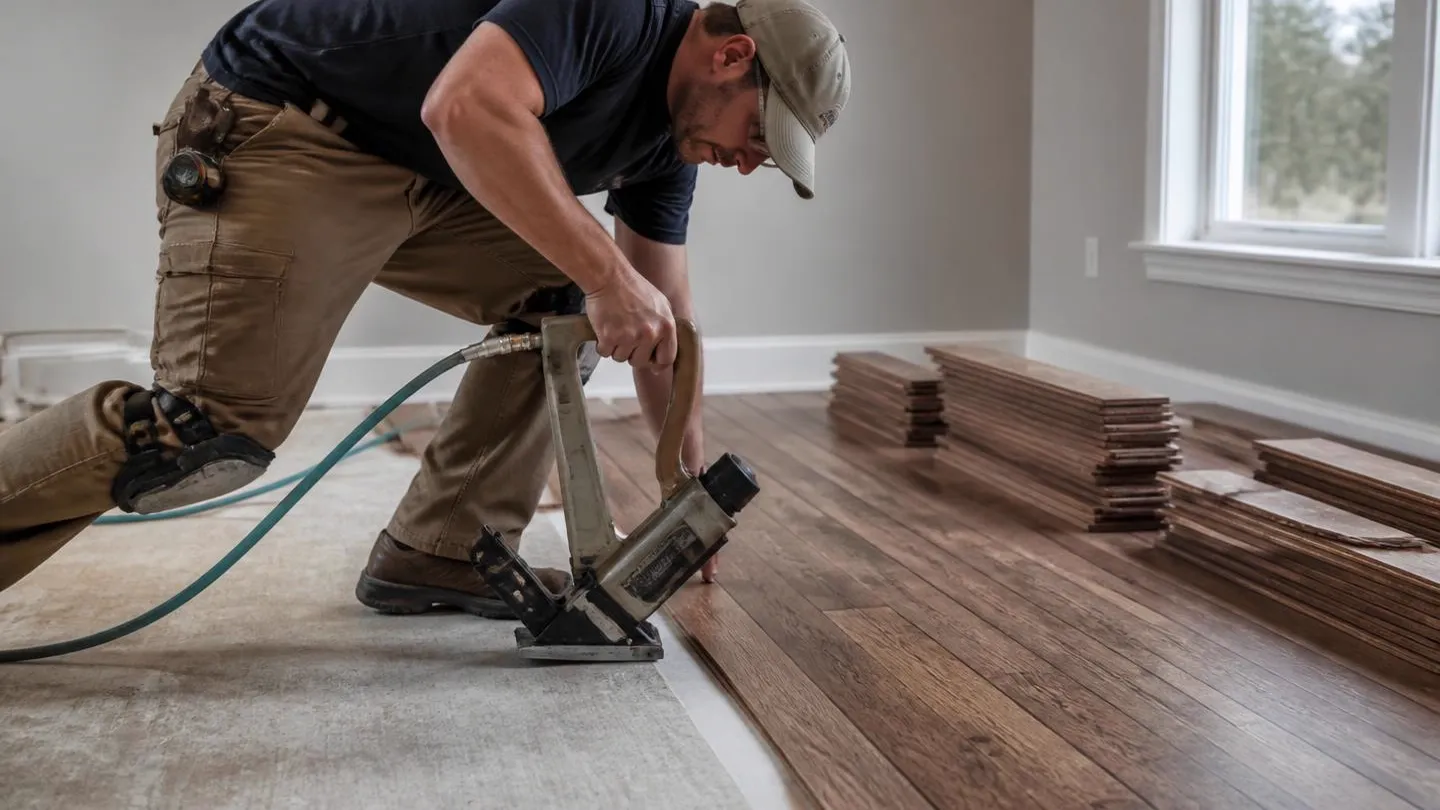
Hardwood succeeds or fails below the surface. The subfloor has to be flat, dry and sound, the material has to acclimate to the home before installation, and the product type has to suit the location: solid wood is a poor choice below grade or over concrete without the right assembly, where engineered flooring is usually the better fit.
Key points
- Flatness tolerance and moisture testing come before anything is nailed or glued.
- Acclimation is not optional, and rushing it is a common cause of gaps and cupping.
- Order extra material from the same production run for waste and future repairs.
Subfloor and moisture
- The subfloor must be flat within the manufacturer's tolerance, which often means grinding or leveling first
- Moisture testing of both the subfloor and the wood is standard practice, especially over concrete
- Squeaks are fixed before the new floor goes down, not after
- Below grade rooms, bathrooms and laundry areas need a product suited to moisture
Solid or engineered
| Type | Where it fits | What to consider |
|---|---|---|
| Solid hardwood | On or above grade over wood subfloor | Can be refinished multiple times, moves more with humidity |
| Engineered hardwood | Most locations, including over concrete | Stability from the layered core, refinishing depends on wear layer thickness |
Finish, installation method and detail work
- Prefinished planks arrive with a factory finish and no site sanding or fumes. Site finished floors allow custom color and a seamless surface
- Nail down, glue down and floating installations each suit different subfloors and products
- Transitions to tile, carpet and thresholds should be planned before installation, not improvised at the end
- Expansion gaps at walls are required, and trim covers them
- Ask about dust control if the floor is being sanded on site
Getting hardwood quoted?
Find flooring helpBefore the crew arrives
- Deliver material early enough to acclimate as the manufacturer specifies
- Clear the rooms, including closets, and plan where furniture goes
- Decide whether existing baseboard is removed and reinstalled or left with shoe molding added
- Agree on daily working hours and how the house is protected between rooms
Common questions
- Can hardwood go over concrete?
- Engineered hardwood commonly can, with the right moisture barrier and installation method for the slab. Solid hardwood over concrete requires a specific assembly and is not the default choice. Have the slab moisture tested either way.
- How much extra material should I order?
- Installers typically add a waste allowance for cuts and defects, and many homeowners keep a small surplus from the same run for future repairs. Ask your installer what allowance they are including in the quote.
- Do I need to leave the house during installation?
- You can usually stay for nail down or click together installation, though it is loud and dusty. Site applied finishes are the bigger question, since fumes and cure times can make rooms unusable for a period. Ask which products are being used, how long you must stay off the floor, and when furniture and rugs can come back.
- What is acclimation and does it matter?
- Acclimation is letting the wood sit in the room until its moisture content is in balance with the home. It matters because wood that is installed too wet or too dry can gap, cup or buckle later. Ask the installer how long they acclimate, whether they take moisture readings of the wood and subfloor, and what readings they consider acceptable.