
Furnace repair or replacement
The symptoms worth a service call, the faults that usually end a furnace, and the safety issues that override the financial question.
By Elijah Canfield, Founder, Hire Best Pros · Updated August 27, 2026
Elijah Canfield is the founder of Hire Best Pros. He writes and edits the site's consumer guides, with a focus on how home service and moving projects are priced, scoped and compared.
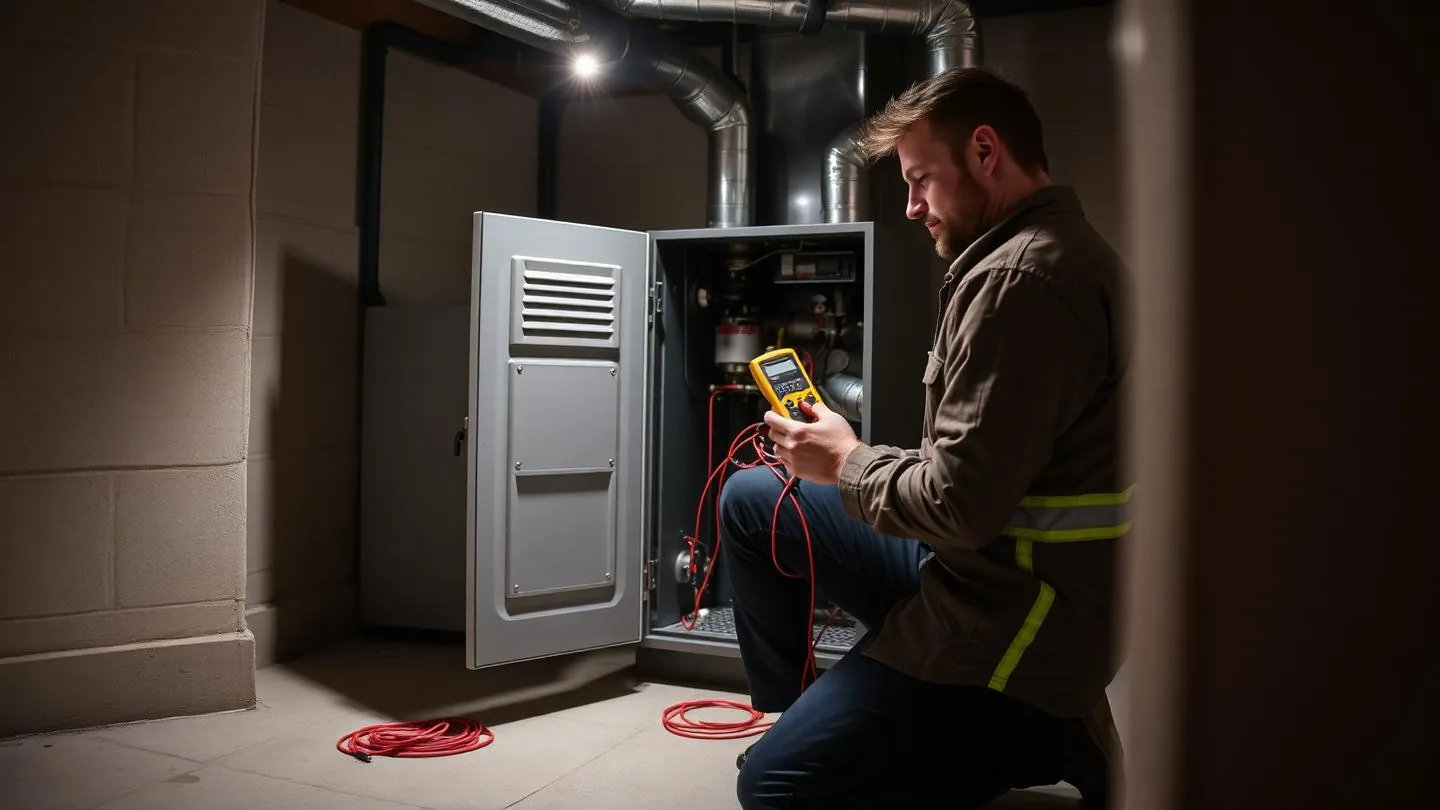
Repair a furnace that is within its expected service life, heats evenly and has a fault confined to one component. Replace when the heat exchanger is cracked, when repairs are becoming frequent and expensive, or when the unit can no longer hold the house at temperature. Any suspected cracked heat exchanger or carbon monoxide alarm is a safety matter first and a cost decision second.
Key points
- A carbon monoxide alarm means leave and call, not diagnose.
- Short cycling and uneven heat are diagnosable, not automatically terminal.
- Get the specific failed part named in writing before agreeing to replacement.
Symptoms and what they usually mean
- Short cycling: airflow restriction, a dirty filter or a control fault
- Cold air from vents: ignition, flame sensor or gas supply issues
- Banging or scraping: a blower or motor problem that should be looked at promptly
- Yellow rather than blue burner flame: a combustion problem, call immediately
When replacement makes more sense
Age alone is not a verdict, but an older unit with a major component failure rarely justifies the repair. Ask the technician which component failed, what the remaining components look like, and what a replacement would include. A written comparison of both paths is a fair request.
Costs vary based on location, project size, materials, complexity, access and the provider you hire.
Safety first
- Working carbon monoxide alarms on every level of the home
- Never operate a furnace with a suspected cracked heat exchanger
- Keep the area around the unit clear of stored materials
- Have combustion and venting checked as part of annual service
Get an HVAC assessment
Find HVAC prosCommon questions
- Should I get a second opinion on a replacement quote?
- Yes, particularly when the recommendation follows a single service call. Ask each company to name the failed component and to quote repair and replacement separately, then compare like with like.
- Does annual service actually help?
- Regular service catches airflow, combustion and safety issues early and keeps manufacturer warranty requirements intact. It does not make a failing component last forever, but it reduces surprise winter failures.
- How do I compare a repair quote against a replacement quote?
- Put the repair cost next to the age of the unit, the expected remaining life, and what your heating bills look like now. A single repair on a mid life furnace is usually the better value. A significant repair on a furnace that is already at the end of its range, especially the heat exchanger or a failing control system, is often money spent twice.
- What should a furnace replacement proposal include?
- The model and efficiency rating, heating capacity and how it was determined, any ductwork or venting changes, thermostat, permit, removal of the old unit, startup and commissioning, labor warranty, and the manufacturer parts warranty with registration requirements. Sizing based on the house rather than simply matching the old unit is the detail most worth asking about.