
Cleaning gutters yourself or hiring it out
How to decide whether to clean your own gutters, what a professional visit includes, and the ladder and roof conditions that should end the debate.
By Elijah Canfield, Founder, Hire Best Pros · Updated September 9, 2026
Elijah Canfield is the founder of Hire Best Pros. He writes and edits the site's consumer guides, with a focus on how home service and moving projects are priced, scoped and compared.
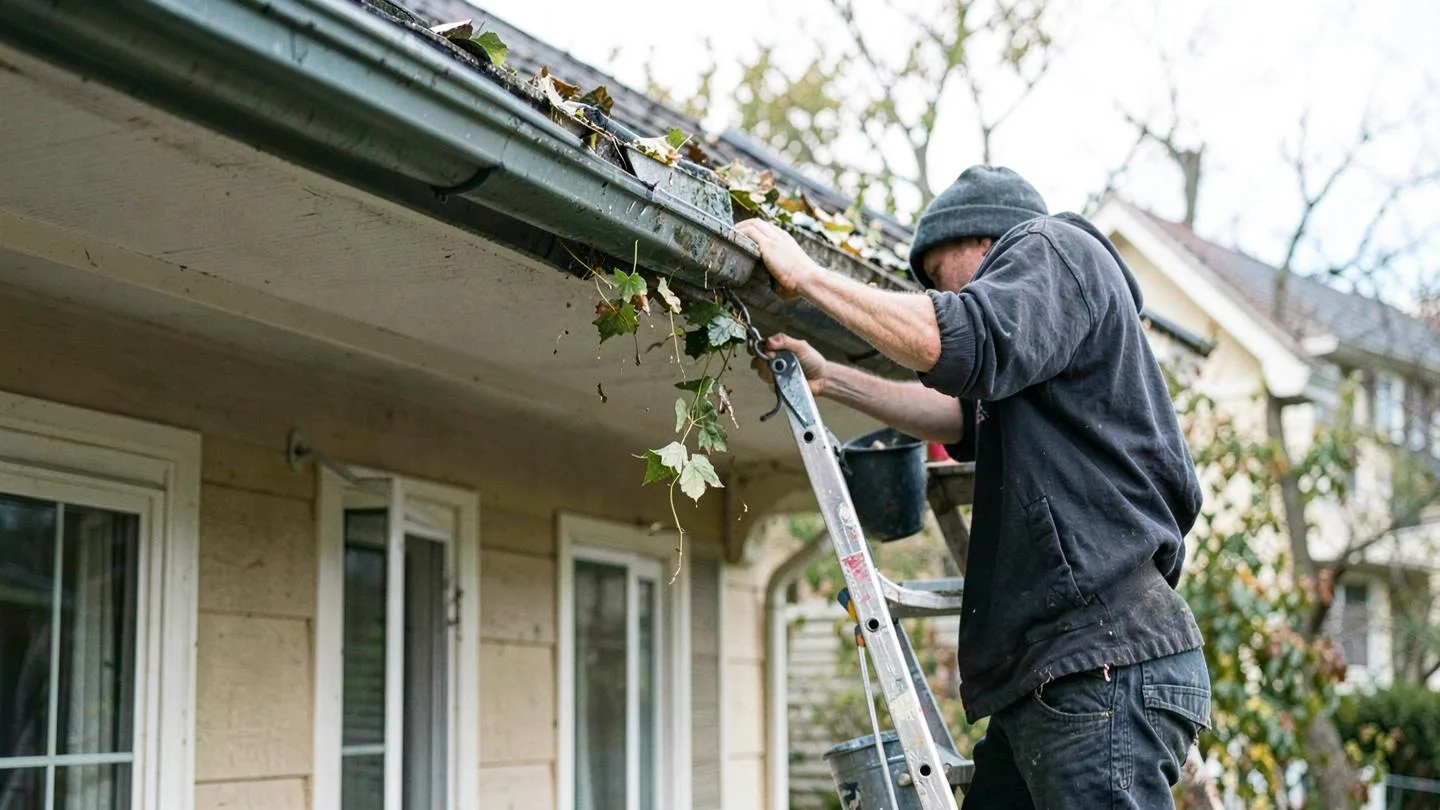
Cleaning your own gutters is reasonable on a single story home with safe, level ladder footing, dry conditions and a helper. Hire a professional for two or more stories, steep or slick roofs, soft or uneven ground, overhanging power lines, or any situation where you would be leaning off a ladder to reach. A professional visit should also include flushing the downspouts and reporting on hangers, seams and slope.
Key points
- Most gutter injuries are ladder injuries, not roof injuries.
- Clearing the trough is only half the job. The downspouts have to flow.
- Twice a year is a common baseline, more if you are under trees.
When doing it yourself is reasonable
- Single story roofline with firm, level ground for the ladder
- Dry weather and no wind
- A stable extension or step ladder rated for your weight plus tools
- Someone home who knows you are up there
- No power service drop near the work area
When to hire it out
- Two stories or higher, or any roofline you cannot reach without stretching
- Steep pitch, metal or tile roofing, or moss and algae growth
- Soft ground, slopes, decks or landscaping that prevent solid ladder footing
- Gutters that are sagging, separated or full of standing water
- Any mobility, balance or health reason to stay off a ladder
Would rather have it handled?
Find roofing and gutter helpDoing it safely if you do it yourself
- Set the ladder at a stable angle on firm ground and use a stabilizer at the top so you never rest it on the gutter
- Move the ladder rather than reaching sideways
- Wear gloves, since debris hides sharp metal edges and screws
- Scoop debris into a bucket instead of dropping it on beds and walkways
- Flush each run with a hose afterward and watch where the water goes
- Never work on wet, icy or windy days
What a professional visit should include
- Full debris removal from every run, not just the accessible ones
- Downspouts flushed and confirmed flowing at the outlet
- Hangers, spikes and seams checked and reported
- Slope checked so water reaches the outlets instead of pooling
- Debris bagged and removed from the property
- A short report of anything that needs repair, with photos where possible
How often
Twice a year suits many homes, typically late spring and after leaf fall. Homes under pines, oaks or maples often need more, and homes with guards still need periodic inspection, because guards reduce cleaning rather than eliminate it.
Overflowing gutters right after a cleaning usually point at capacity, slope or downspout problems rather than debris.
Common questions
- How often should gutters be cleaned?
- Twice a year is a common baseline. Heavy tree cover, pine needles or a nearby construction site can make it quarterly.
- Do gutter guards mean I never have to clean them?
- No. Guards keep out larger debris and reduce how often you clean, but fine grit, shingle granules and seeds still accumulate, and the guards themselves need inspection.
- What does a professional gutter cleaning include?
- Debris removal from all runs, flushing and confirming the downspouts, a check of hangers and seams, cleanup, and a report of any repairs needed.