
Choosing gutter styles and materials
How gutter profile, material, size and color affect performance and appearance, including whether dark gutters such as black are a good idea.
By Elijah Canfield, Founder, Hire Best Pros · Updated September 8, 2026
Elijah Canfield is the founder of Hire Best Pros. He writes and edits the site's consumer guides, with a focus on how home service and moving projects are priced, scoped and compared.
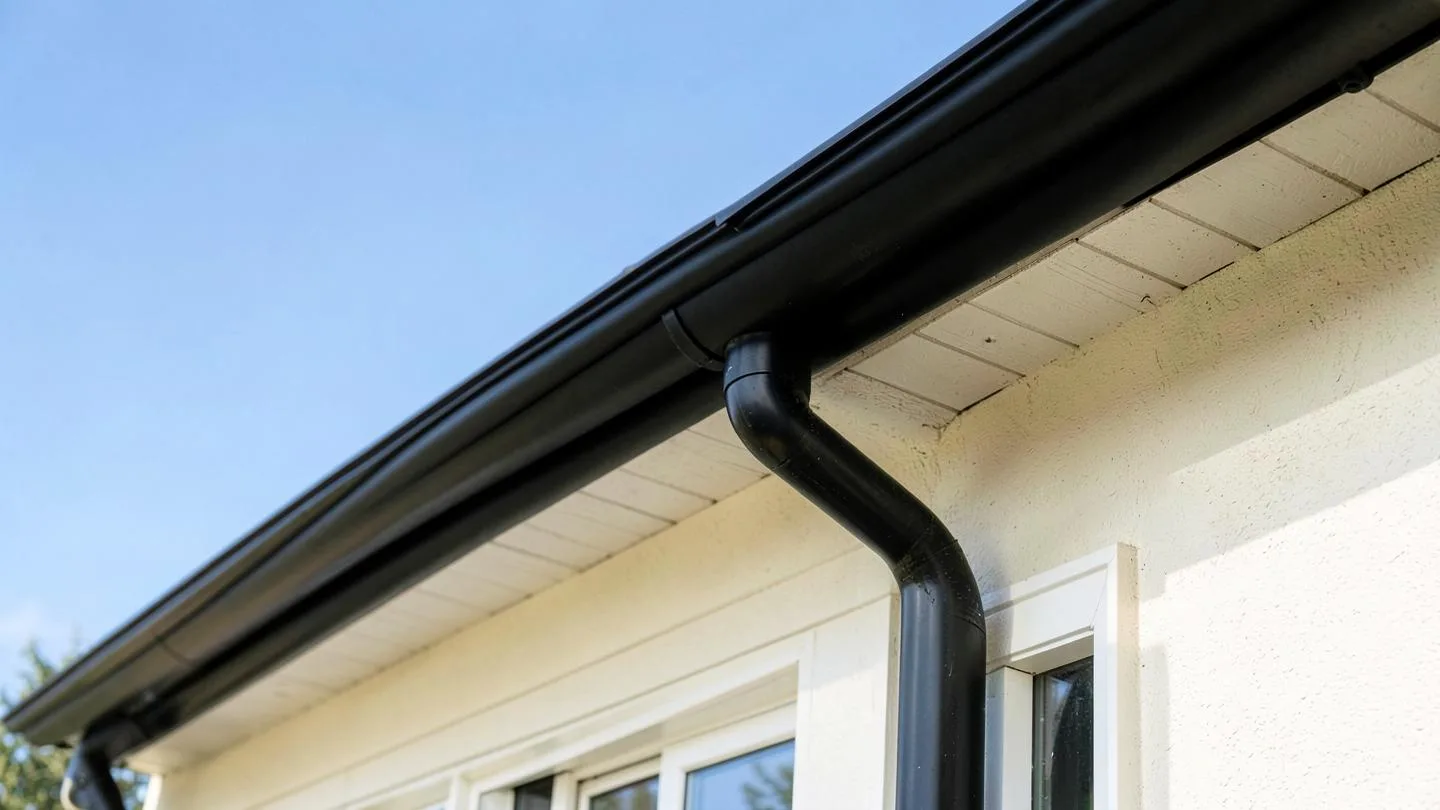
Choose gutters on capacity and material first, then appearance. Profile and size decide whether the system can carry the water your roof sheds, material decides how long it lasts and how it handles your climate, and color is mostly aesthetic. Dark gutters, including black, perform the same as light ones on a properly installed system, though they show hard water streaks and heat up more in direct sun.
Key points
- Undersized gutters and too few downspouts cause more problems than material choice.
- Seamless runs reduce the number of joints, and joints are where leaks start.
- Color is a design decision. Slope, hangers and downspouts are the performance decisions.
Profiles
K style gutters have a decorative front face and are the common residential profile. Half round gutters have a rounded trough, suit older and traditional homes, and shed debris a little more readily. Box gutters are larger capacity systems more often seen on commercial or custom work.
Materials
- Aluminum: light, rust resistant and the common seamless choice
- Steel: stronger against impact and ladder damage, heavier, and needs a sound coating
- Copper: long lived and distinctive, at a premium price, and it patinas over time
- Vinyl: inexpensive and easy to handle, but it becomes brittle in cold and sags over long runs
Size, slope and downspouts
Capacity is a function of gutter size, roof area, roof pitch and local rainfall intensity. A steep roof over a large area sheds water fast, and an undersized gutter overshoots regardless of how good it looks.
Downspout count and placement matter as much as trough size. Water needs somewhere to go, and it needs to leave the foundation rather than pool beside it.
Water spilling over or pooling at the foundation?
Get roofing and gutter helpAbout black and other dark gutters
Dark gutters are a popular way to outline a roofline or match dark trim and windows. Functionally they behave like any other gutter of the same profile and material.
Two practical notes: mineral streaks and dust show more against a dark finish, and dark metal in direct sun runs hotter, which is worth mentioning to an installer if you are pairing it with vinyl components.
Guards, seams and installation quality
- Seamless runs formed on site reduce joints and leak points
- Hanger spacing and fastening decide whether a gutter stays straight over the years
- Guards reduce cleaning frequency but do not eliminate maintenance
- Confirm that downspout extensions carry water clear of the foundation
Common questions
- Are black gutters a bad idea?
- No. They perform the same as lighter gutters of the same profile and material. They simply show streaking more readily and absorb more heat in direct sun.
- Is seamless better than sectional?
- Usually, because fewer joints means fewer places to leak. Sectional systems remain easier to repair piece by piece.
- How do I know if my gutters are too small?
- Water overshooting the trough in heavy rain, spilling at corners, or pooling near the foundation typically signals capacity or downspout problems rather than clogs, especially if it happens right after cleaning.