
Gutter maintenance mistakes that cause real damage
Cleaning too rarely, ignoring the downspout, working from an unsafe ladder and treating gutter guards as maintenance free are the mistakes that end in water damage.
By Elijah Canfield, Founder, Hire Best Pros · Updated August 26, 2026
Elijah Canfield is the founder of Hire Best Pros. He writes and edits the site's consumer guides, with a focus on how home service and moving projects are priced, scoped and compared.
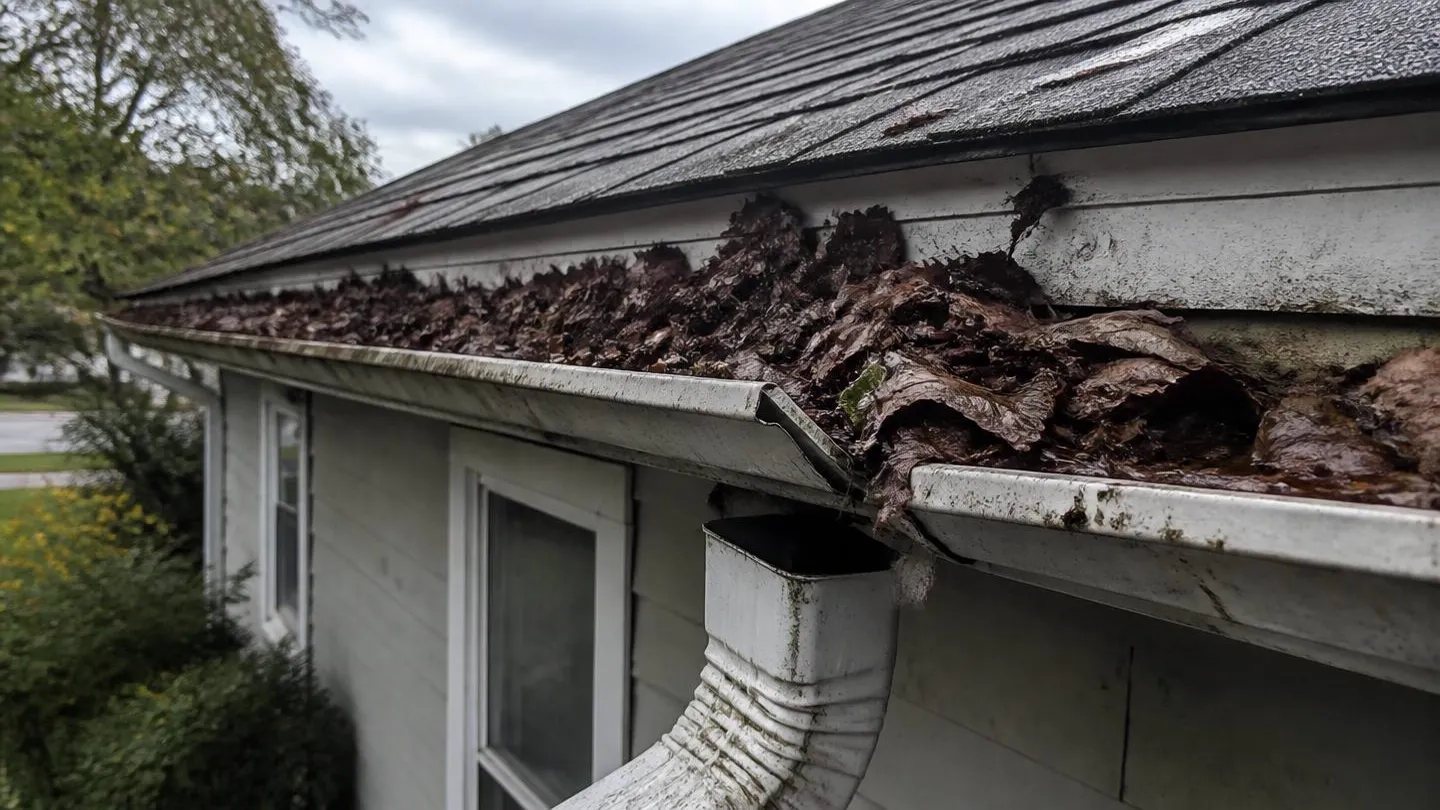
The common gutter mistakes are all versions of the same thing: treating gutters as decoration rather than as the drainage system that keeps water away from the foundation. Skipping seasonal cleaning, ignoring where the downspout discharges, missing loose hangers and pitch problems, and assuming guards eliminate maintenance are what turn a small job into a foundation, siding or basement problem.
Key points
- A clean gutter with a blocked downspout still overflows.
- Discharge water at least several feet from the foundation.
- Ladder safety matters more than the gutter does.
The mistakes
- Cleaning only once a year in an area with heavy leaf fall
- Clearing the trough but never checking that the downspout runs freely
- Letting downspouts discharge right at the foundation
- Ignoring loose hangers, separated seams and sections that no longer slope to the outlet
- Assuming gutter guards mean nothing needs checking
- Using a pressure washer that drives water behind the fascia
- Standing on the roof edge or leaning off a ladder instead of moving it
What overflowing gutters actually damage
Water that spills at the roof edge lands where you least want it. Over time that shows up as rotted fascia and soffit, stained and swollen siding, saturated soil against the foundation, basement or crawlspace moisture, and washed out beds and walkways. Our guide to problems caused by clogged gutters covers those consequences in more detail.
Gutters pulling away or overflowing?
Find roofing and gutter helpA routine that works
- Clear twice a year in most areas, and more often under heavy tree cover
- Flush each downspout with a hose and confirm water exits at the bottom
- Watch the gutters during a real rain, which is the fastest way to find pitch and overflow problems
- Check hangers and seams while you are up there
- Extend discharge away from the foundation and make sure the ground slopes away too
Common questions
- Are gutter guards worth it?
- They reduce how much debris collects and how often you clean, which is meaningful under heavy tree cover. They do not eliminate maintenance, and fine debris still needs clearing, so plan on inspection either way.
- How do I know if the pitch is wrong?
- Standing water in the trough after the rain stops is the simplest test. Gutters should drain toward the outlet and empty out rather than hold a pool.
- How often should gutters be cleaned?
- At least twice a year is a common baseline, and more often when the house sits under mature trees or you have had overflow before. The important part is timing it around leaf drop and before heavy rain or freezing weather. If you notice water spilling over the front edge during a storm, that is your signal regardless of the calendar.
- Is gutter cleaning worth hiring out?
- For single story homes with easy access, many owners handle it themselves. Hire it out for two story homes, steep roofs, wet or brittle gutters, and anywhere ladder work feels risky. Falls are the real cost here. Professionals also spot loose hangers, seam leaks and pitch problems while they are up there.