
Air filters and coil cleaning
How to choose and change a filter, why a filter rating that is too high can hurt airflow, and what coil cleaning is for.
By Elijah Canfield, Founder, Hire Best Pros · Updated August 26, 2026
Elijah Canfield is the founder of Hire Best Pros. He writes and edits the site's consumer guides, with a focus on how home service and moving projects are priced, scoped and compared.
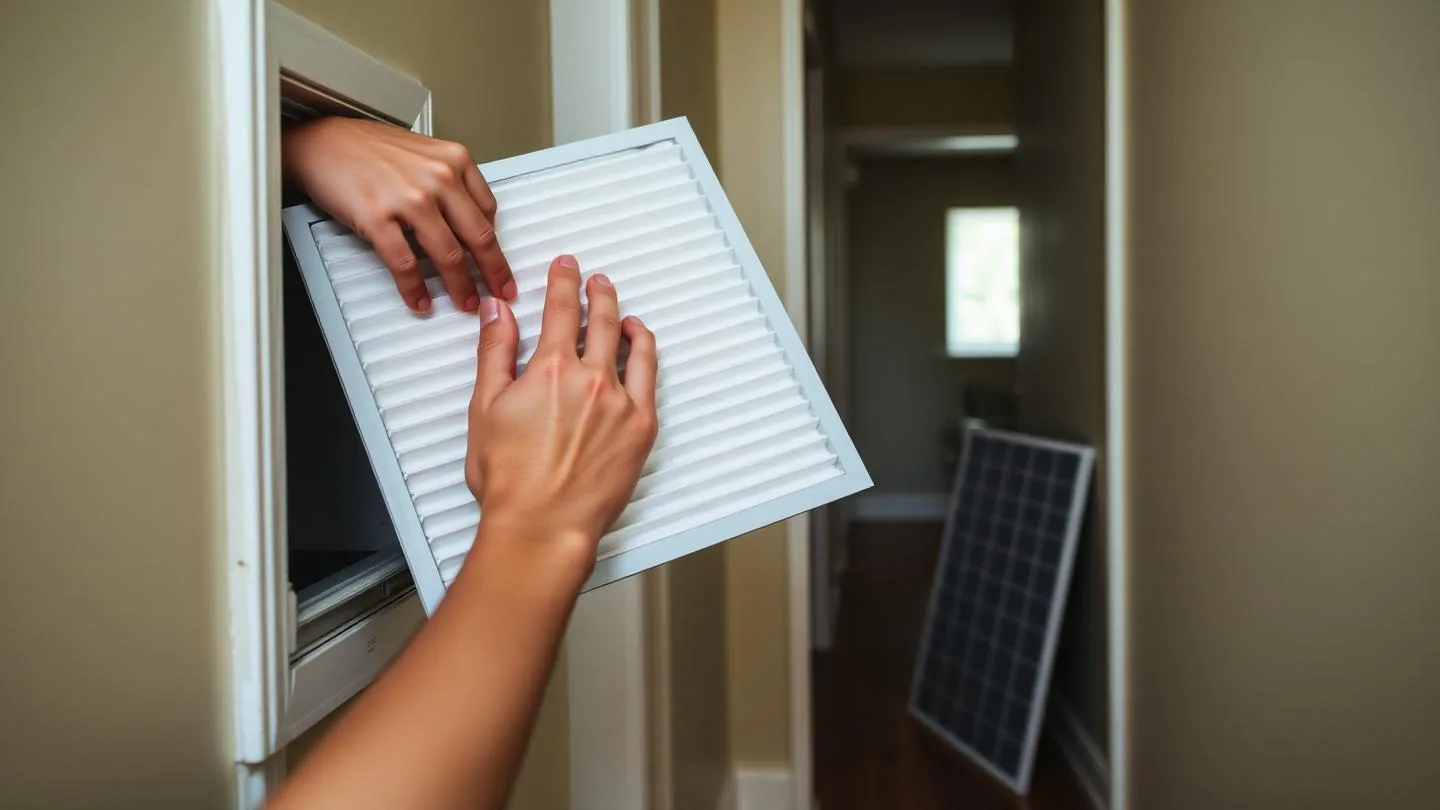
Changing filters is the highest value maintenance task a homeowner can do without tools. Match the size printed on the existing filter, install it with the airflow arrow pointing toward the equipment, and change it on a schedule rather than by appearance. Coil cleaning is a separate job: it restores heat transfer on coils that dust and grease have coated, and the indoor coil normally belongs to a technician.
Key points
- The arrow on the filter frame points in the direction air travels, toward the blower.
- A higher rating is not automatically better. Restricted airflow strains equipment.
- A dirty coil raises run time long before it triggers a breakdown.
Changing a filter correctly
- Read the size off the old filter frame rather than measuring
- Turn the system off at the thermostat before you pull the old one
- Note the airflow arrow direction before removing the old filter
- Slide the new one in with the arrow pointing toward the equipment
- Write the date on the frame edge so the next change is not a guess
How often, and which rating
Filter life depends on the filter type and the house: pets, nearby construction, smokers and high occupancy all shorten it. Follow the manufacturer's interval as a baseline, then check monthly and adjust.
Filters are rated for how much they capture. A denser filter also resists airflow, and equipment designed for a low resistance filter can suffer with a very dense one. If you want higher filtration, ask your technician what your specific system can handle.
What coil cleaning actually does
Coils transfer heat. A film of dust on the indoor coil or a mat of debris on the outdoor coil insulates it, so the system runs longer for the same result and the compressor works harder.
The outdoor coil is homeowner friendly: cut power at the disconnect, clear leaves and grass clippings, and gently rinse the fins from the inside out with a hose. The indoor coil sits inside the air handler and normally requires a technician to access without damaging fins or the drain pan.
Want the coils and drain checked properly?
Find HVAC helpSigns the filter or coil is the problem
- Weak airflow at registers with the blower clearly running
- Longer run times without a temperature change outdoors
- Ice on the refrigerant line or the indoor coil
- Dust accumulating quickly after cleaning
- A musty smell when the system starts