
Signs it is time to replace your air conditioner
How to read age, repair history, refrigerant type and comfort problems together so you can decide between one more repair and a replacement.
By Elijah Canfield, Founder, Hire Best Pros · Updated August 26, 2026
Elijah Canfield is the founder of Hire Best Pros. He writes and edits the site's consumer guides, with a focus on how home service and moving projects are priced, scoped and compared.
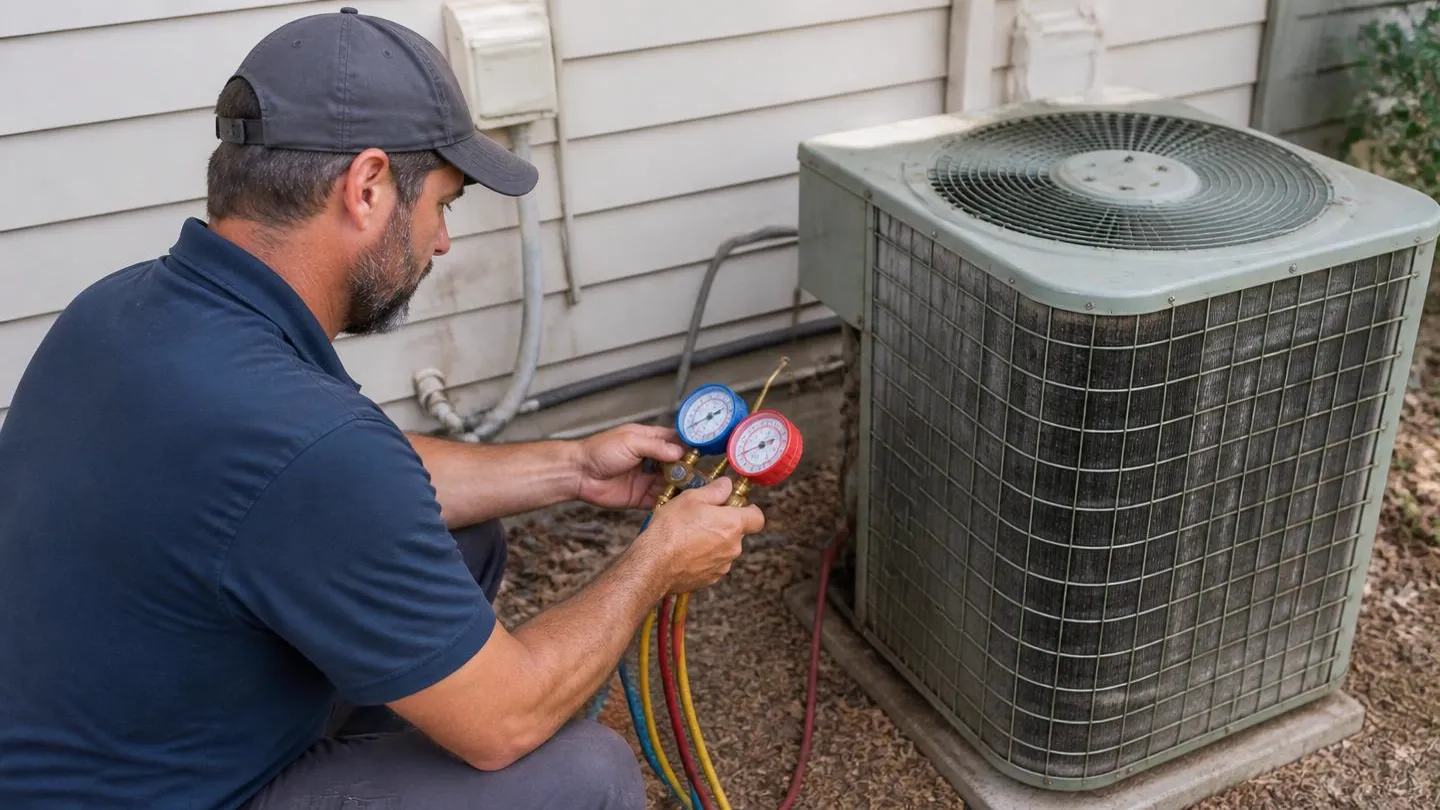
Consider replacement when the system is near or past its expected service life, when repairs are becoming routine rather than rare, when the refrigerant it uses is being phased down and is getting harder to source, or when it can no longer hold the house at temperature on a normal hot day. A single repair on an otherwise healthy system is usually still worth doing.
Key points
- Age alone does not decide it. Age plus repair frequency plus refrigerant type usually does.
- Ask for both quotes: the repair and the replacement, with what each buys you.
- Replacement is easier to schedule and price outside peak season.
The signals that matter
- The system runs constantly on hot days and still does not reach the thermostat setting
- You have paid for more than one significant repair in recent seasons
- The system uses an older refrigerant that is being phased down, which raises the cost of any leak repair
- Rooms that were once comfortable no longer are
- Humidity stays high indoors even when the air feels cool
- Electricity use has climbed with no change in habits or rates
How to compare repair against replacement
Ask the technician to price the repair, tell you what else on the system is close to end of life, and quote a replacement separately. A fair conversation covers what the repair buys you in expected remaining life, not just what it costs today.
Our guide to HVAC repair or replacement walks through the same decision for heating equipment.
Want a second opinion before you decide?
Find HVAC helpIf you do replace
- Ask for a load calculation rather than matching the old equipment size by default
- Have the ductwork evaluated at the same time, since undersized or leaking ducts limit any new system
- Compare quotes on the same equipment tier, warranty and labor coverage
- Ask who registers the warranty and what maintenance it requires to stay valid
Timing
Replacing during the shoulder seasons usually means better scheduling and a less rushed decision than replacing in the middle of a heat wave when the house is already uncomfortable.
Common questions
- Can I replace just the outdoor unit?
- Sometimes, but a mismatched indoor coil and outdoor unit can reduce efficiency and complicate warranty coverage. Ask your contractor to explain whether the existing indoor equipment is compatible with what they are proposing.
- Is a bigger system better?
- No. An oversized system short cycles, which leaves humidity in the house and wears the equipment. Sizing should come from a load calculation for your home, not from the size of the old unit.
- How do I decide between one more repair and replacement?
- Weigh the repair cost against the age of the system, how many repairs it has needed recently, and how well it keeps the house comfortable on hot days. One repair on a mid life system is usually worth it. Repeated failures, a major component failure on an old unit, or a system that never quite keeps up point toward replacement.
- What should I ask a contractor before replacing?
- Ask how they sized the system for your home, whether the ductwork can handle the new equipment, which components are being replaced as a matched set, what permits and inspections apply, what the labor warranty covers, and what is required to keep the manufacturer warranty valid. Get it in writing so proposals can be compared.