
Fence installation
The boundary and permit work that happens before a post goes in, how materials compare, and what makes a fence stay straight.
By Elijah Canfield, Founder, Hire Best Pros · Updated August 27, 2026
Elijah Canfield is the founder of Hire Best Pros. He writes and edits the site's consumer guides, with a focus on how home service and moving projects are priced, scoped and compared.
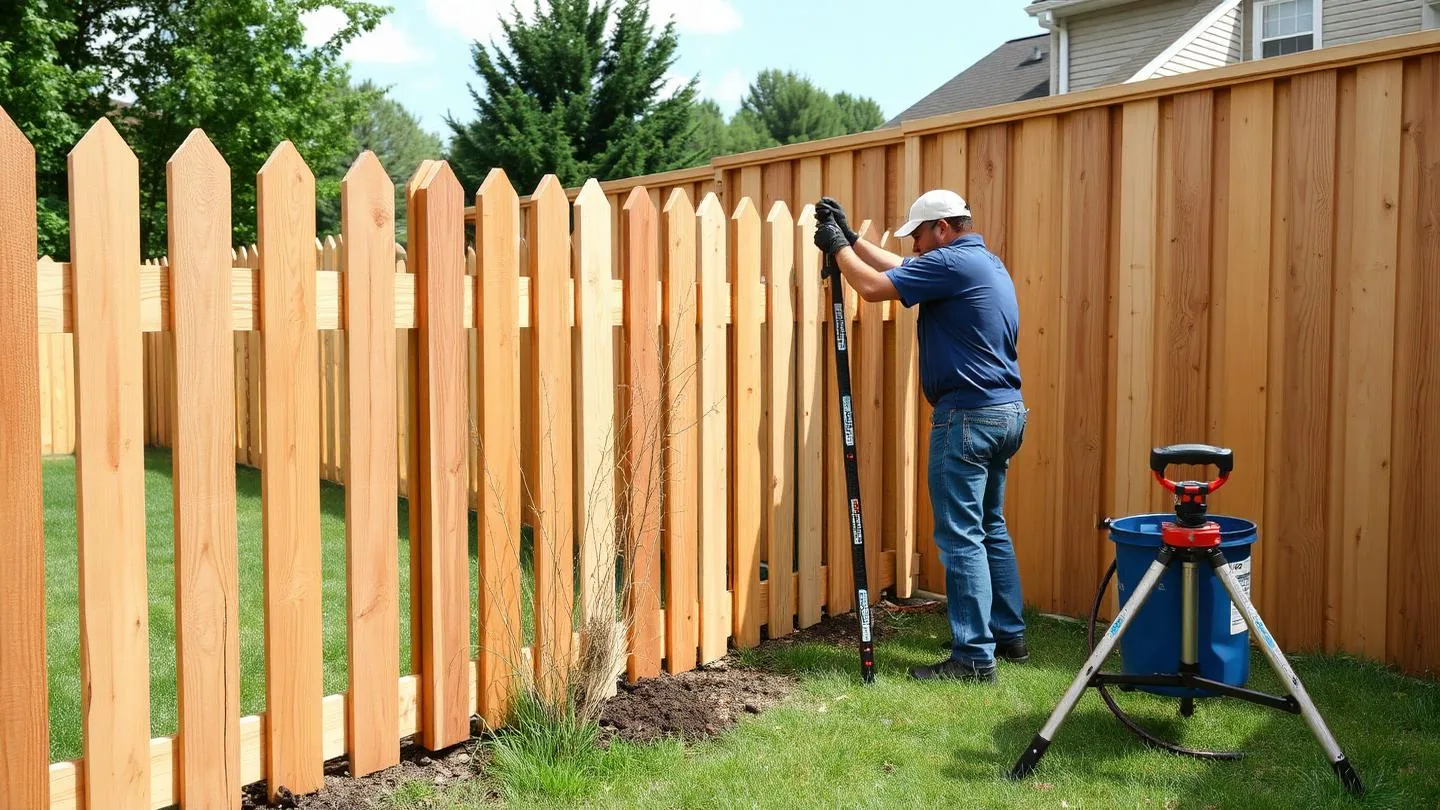
A fence project succeeds or fails before installation. Confirm the property line, check local height and setback rules, review any homeowner association requirements, and have utilities located. Then choose a material for the maintenance you are willing to do, and set posts below the frost line.
Key points
- Guessing the property line is how a fence gets moved at your expense.
- Call for a utility locate before digging, every time.
- Post depth and concrete are what keep a fence from leaning.
Before installation
- Confirm the boundary with a survey or recorded plat
- Check municipal height, setback and corner visibility rules
- Review homeowner association style and material restrictions
- Request a utility locate and mark the route
- Talk to the neighbor if the fence sits on a shared line
Materials compared
Pressure treated wood and cedar are common and need periodic sealing or staining. Vinyl needs washing rather than refinishing. Aluminum and steel suit open boundaries and pool codes. Chain link is the most economical for containment. Match the material to the purpose: privacy, containment, or boundary marking.
Costs vary based on location, project size, materials, complexity, access and the provider you hire.
Installation details that matter
- Post depth below the local frost line
- Concrete footings sized to the post and the fence height
- Gate posts sized larger and braced, since gates fail first
- Consistent line and grade, especially on a slope
Getting fence quotes?
Find landscaping prosCommon questions
- Do I need a permit or approval to install a fence?
- Many places regulate fence height, materials and placement, and homeowner associations often have their own rules. Requirements depend entirely on your jurisdiction and community. Ask your contractor which approvals apply to your address and get confirmation before materials are ordered, since a fence built to the wrong height or setback can have to come down.
- How do I know where my property line is?
- A survey is the reliable answer. Existing fences, hedges and driveways are not proof of a boundary, and building over the line is an expensive dispute to fix. If a recent survey does not exist, ask whether the installer requires one, and talk with neighbors before the posts go in rather than after.
- What should a fence quote include?
- Post material, spacing and depth, whether posts are set in concrete, panel or picket material and grade, gate hardware, grading or stepping on slopes, removal and disposal of the old fence, utility locating, cleanup, and the workmanship warranty. Ask how they handle rock, roots or unexpected conditions found while digging.
- How long does a fence installation take?
- A typical residential yard is often a few days of work once materials are on site, sometimes split across visits when posts need time to set before panels go up. Weather, soil conditions, gate work and slope all extend it. Ask for the schedule in writing, including the expected gap between the post day and the panel day.