
Choosing countertops that last
How granite, quartz and other surfaces differ in real kitchens, what actually damages cabinets, and the maintenance each choice commits you to.
By Elijah Canfield, Founder, Hire Best Pros · Updated August 26, 2026
Elijah Canfield is the founder of Hire Best Pros. He writes and edits the site's consumer guides, with a focus on how home service and moving projects are priced, scoped and compared.
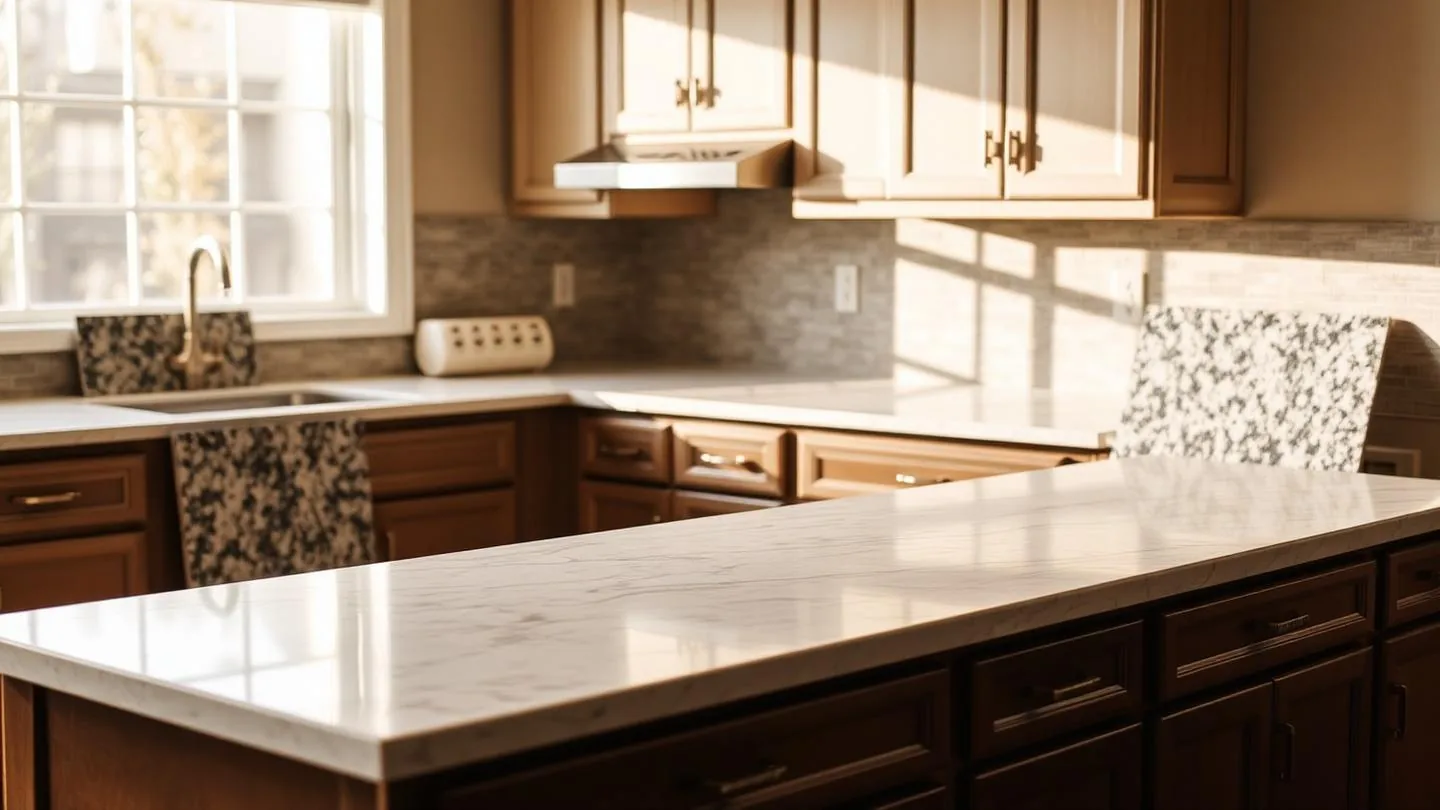
Granite is natural stone with visible variation that generally needs periodic sealing. Engineered quartz is consistent, non porous and does not need sealing, but it is more sensitive to heat. Solid surface repairs easily and scratches easily. Laminate and butcher block cost less and trade durability for warmth or price. Cabinets fail from water and heat long before they fail from use.
Key points
- Choose for how you cook, not for a showroom slab.
- Every surface has a maintenance commitment. Pick the one you will keep.
- Cabinet damage is almost always water, steam or heat at a specific spot.
- Costs vary based on location, project size, materials, complexity, access and the provider you hire.
Comparing the common surfaces
| Material | Strengths | Tradeoffs |
|---|---|---|
| Granite | Natural variation, heat tolerant, hard wearing | Periodic sealing, each slab differs from the sample |
| Engineered quartz | Consistent pattern, non porous, no sealing | Less heat tolerant, always use trivets |
| Solid surface | Seamless joints, repairable, renewable | Scratches and marks from hot pans |
| Laminate | Lowest cost, wide range of looks | Edge and seam damage from water, difficult to repair |
| Butcher block | Warm look, sandable and repairable | Regular oiling, poor near sinks without care |
Questions to ask before you buy stone
- Am I seeing the actual slab, or a small sample?
- Where will the seams fall, and how will they be finished?
- What edge profile is included, and what does an upgrade cost?
- How are cutouts for the sink and cooktop handled?
- What is the sealing schedule, and who does the first application?
Planning a kitchen project?
Find kitchen remodeling helpWhat actually damages cabinets
- Standing water at the sink base, the single most common cause of failure
- Steam from a dishwasher or kettle hitting an unprotected door edge
- Heat from a nearby appliance or an unvented range
- Harsh cleaners stripping the finish over time
- Hinges and slides that were never adjusted after settling
Maintenance that extends both
Wipe spills quickly on any porous surface, use cutting boards and trivets regardless of what the marketing promises, and clean with products the manufacturer approves rather than whatever is under the sink.
For cabinets, check the sink base every few months for moisture, add a drip tray, adjust hinges annually and reseal the caulk line at the backsplash before water finds a way behind it.