
Removing snow and ice safely
How to clear a driveway with less effort, which de-icers suit which surfaces and temperatures, and how to prevent the ice you keep re-clearing.
By Elijah Canfield, Founder, Hire Best Pros · Updated August 26, 2026
Elijah Canfield is the founder of Hire Best Pros. He writes and edits the site's consumer guides, with a focus on how home service and moving projects are priced, scoped and compared.
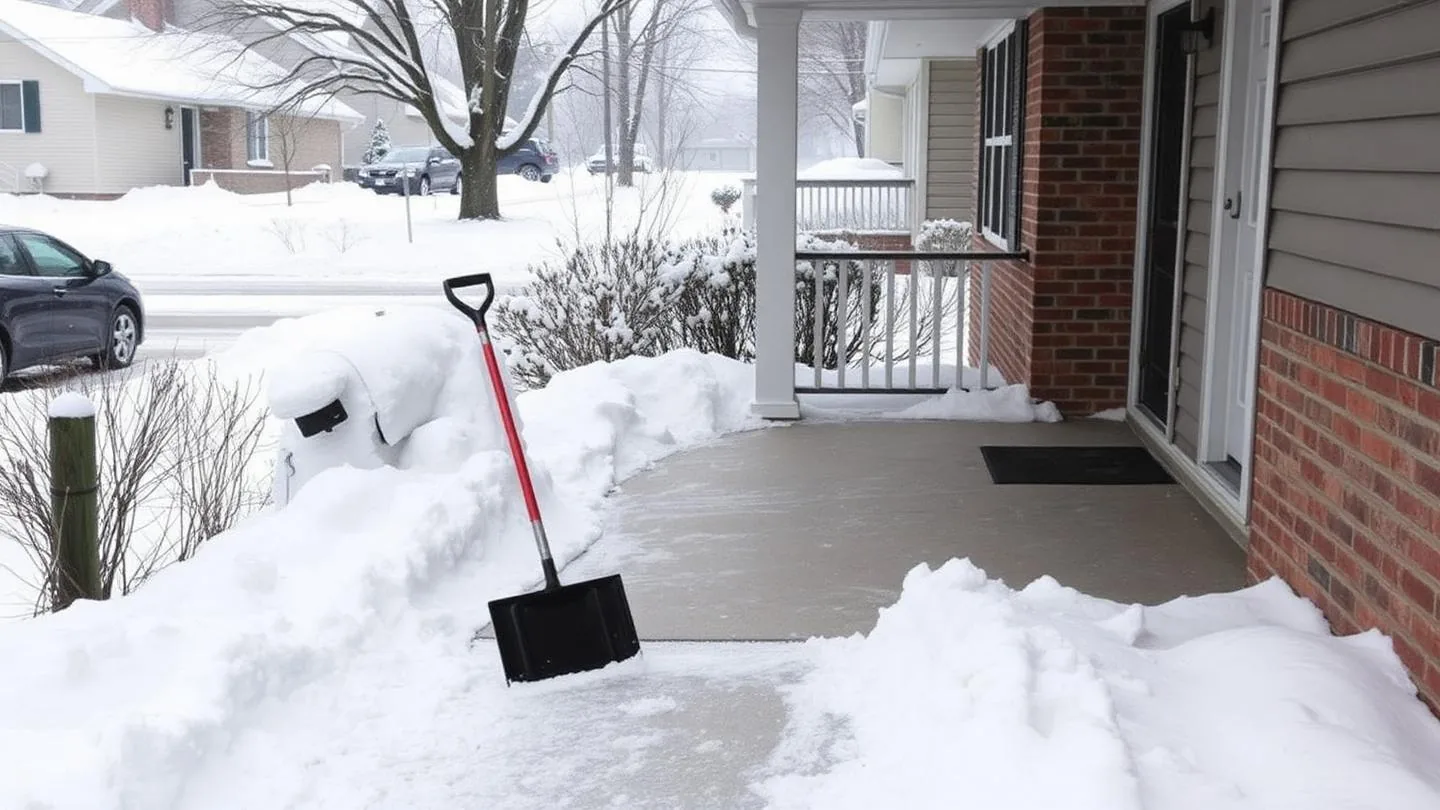
Clearing early and often beats clearing once. Snow that is walked or driven on compacts into ice that no shovel will lift. Pre-treating before a storm prevents bonding to the surface, most de-icers stop working below a specific temperature, and rock salt is hard on concrete, plantings and pets. Ice that returns in the same spot is usually a drainage or roof runoff problem.
Key points
- Clearing in layers during a long storm is easier than clearing depth once.
- De-icers have temperature limits. Below them, they do nothing.
- Recurring ice in one place is a water problem, not a snow problem.
Clearing with less effort
- Pre-treat before the storm so snow does not bond to the surface
- Clear in layers rather than waiting for the storm to finish
- Push snow rather than lift it, and keep the load small when you must lift
- Pile snow downhill and away from where meltwater will refreeze on the path
- Keep a path clear to gas meters, hydrants, vents and the mailbox
Choosing a de-icer
| Material | Notes | Watch out for |
|---|---|---|
| Rock salt (sodium chloride) | Inexpensive and widely available | Stops working in deep cold, hard on concrete and plants |
| Calcium chloride | Works at lower temperatures | Can leave residue, follow application rates |
| Magnesium chloride | Lower temperature range, often marketed as gentler | Still a salt, still affects plantings |
| Sand or grit | Traction only, no melting | Needs cleanup in spring |
Protecting surfaces and plants
New or unsealed concrete is the most vulnerable surface, and repeated freeze and thaw with salt accelerates scaling. Use the lowest effective amount and sweep up leftover product once the ice is gone.
Keep de-icers off lawn edges and beds where runoff collects, and rinse pet paws after walks. Pet safe products still deserve the same restraint.
Ice that keeps coming back
If the same patch glazes over after every thaw, look up and look downhill. A downspout discharging onto the walk, a gutter that overflows, or a grade that sends meltwater across the driveway will beat any amount of salt.
Ice dams at the roof edge are a related symptom and usually point to attic heat loss and ventilation rather than gutters alone.
Ice dams or gutter overflow every winter?
Find roofing help